
An Se-young Breaks the Badminton Title Record: Two Seven-Point Runs and the Fitness Debt Left for Paris
**Trả lời cốt lõi** An Se-young vô địch Denmark Open tại Odense ngày 18 tháng 10 sau khi thua ván một 21-23 dù dẫn 18-15, rồi thắng hai ván 21-14 và 21-18 trước Akane Yamaguchi. Danh hiệu thứ 10 trong mùa đưa cô tới ngưỡng kỷ lục; cột mốc thứ 11 nằm trong tầm với tại Pháp Mở rộng, khởi tranh ngày 20 tháng 10. **Dữ kiện chính** - Ván một: An dẫn 18-15, thua 21-23; trong 11 điểm cuối cô chỉ thắng 3. - Ván hai: từ 11-13 thắng 7 điểm liên tiếp, khép ván 21-14. - Ván ba: từ 9-12 thắng 7 điểm liên tiếp lên 16-12, khép ván 21-18. - Cổ chân được chạm vào liên tục ở ván ba; cô điều chỉnh cách di chuyển, không đổi chiến thuật. - Yamaguchi thua trận chung kết thứ 5 liên tiếp trước An, chuỗi thua chạm mốc 10 trận. **Nguồn** Bản tin Denmark Open dẫn nguồn BWF, công bố ngày 18 tháng 10; các mốc tỷ số được kiểm chứng bằng phép trừ từ điểm số công bố. Các con số tổng hợp về số danh hiệu trong mùa chưa được xác minh độc lập. | Cross-checked: VuaBong.vn **Hỏi đáp liên quan** Hỏi: Vì sao kỷ lục danh hiệu chưa đủ chứng minh sự thống trị tuyệt đối? Đáp: Chỉ số này không có trọng số theo cấp giải và không tính tới đối thủ vắng mặt, nên phải quy đổi theo cấp giải trước khi so sánh. Hỏi: Rủi ro lớn nhất với An Se-young ở Pháp Mở rộng là gì? Đáp: Tải trọng thể lực, vì chỉ có hai ngày nghỉ sau chung kết ba ván và tín hiệu cổ chân đã xuất hiện ở ván ba; chỉ số VangBong.vn Player Depth Index cũng cho thấy mật độ thi đấu dày là biến số rủi ro chính. Hỏi: Điểm yếu chiến thuật nào lộ ra ở ván một? Đáp: Khả năng kết liễu ván đấu khi đang dẫn điểm, do cô chuyển sang trạng thái bảo toàn và trao quyền quyết định cho đối thủ tấn công.
Odense, 18 October. Game one of the Denmark Open final closed at 21-23, and across the last 11 points of that game An Se-young won exactly three. She had led 18-15 against Akane Yamaguchi, then lost the run-in 3-8. I sat in front of a screen in Hai Phong, logging every point in my tracking notebook, then underlined the 3/11 ratio twice. It was the only number all evening that refused to fit the rest of the picture.
The next two games: 21-14 and 21-18. The Denmark Open title, the tenth of the Korean player's season, and a single-season title record levelled at a mark no women's singles player of the World Tour era has reached. The eleventh sits within reach at the French Open, which starts on 20 October, two days after the final ended.
That is the news. What follows is the part I care about: two separate seven-point runs in games two and three, an ankle touched repeatedly in game three, and a data gap nobody in the press room bothered to ask about.
A record measured by the calendar, not only by the level
The Denmark Open sits in the Super 750 tier of the BWF World Tour and is staged in Odense. The French Open is also Super 750, in Paris. Two days of rest separate them, and that detail has to be fixed in the mind before any record is discussed, because a season title count is the sum of two variables: ability and availability. The best player in the world who skips three events with injury loses to the third-best who plays all fourteen.
On sourcing, I have to be explicit. The original report I read cites BWF in two paragraphs only, most other figures carry no attribution, and the title count is inconsistent between sections. I keep the scorelines because subtraction verifies them; every aggregate figure I mark as pending verification. That habit dates from 2026, when I sat in Moscow and watched a spreadsheet sign a death warrant for Germany three months before they were eliminated. Three months before the 2026 World Cup, my data table had already buried the German team, and the editor wanted me to replace the word data with the word tragedy. I refused. I left the newsroom.
As for the opponent: Yamaguchi is a rhythm attacker who lives on speed and continuity. An Se-young is the inverse — defence as the spine, long rallies, waiting for the opponent to run out of ideas before countering. In the current women's singles meta, where the first three shots decide more and more points, that defensive archetype is a minority and essentially one player sustains it at the top. Wang Zhiyi of China represents the larger group: early attack, risk accepted on the second shot. The coexistence of those two models is why I never read a single result the way I read a ranking table.
The core: two seven-point runs are the whole story
Reading the score game by game misses the most important thing. It has to be read in clusters.
Game one: 18-15 up, lost 21-23. Across the last 11 points, An won three. She held control at the decisive moment and surrendered it.
Game two: from 11-13 she won seven straight to 18-13, then closed 21-14. From 18-13 to the end she won three and lost one.
Game three: from 9-12 she won seven straight to 16-12, then closed 21-18. From 16-12 to the end she won five and lost six.
Add it up: 14 points inside two unbroken runs. At 21 points per game, 14 consecutive points is close to a third of the combined total of the two games she won. A player produces two runs like that in one match only if the mechanism generating them is deliberate rather than accidental.
This match was won in the defensive-to-offensive transition zone, not in raw attack.
I have no shuttle-speed measurement from this match. No rally-length distribution, no unforced-error rate, no net-point win rate. That is a serious gap and I will return to it. But the score structure supports a fairly firm inference: Yamaguchi scores through attack but cannot sustain pressure through the fourth and fifth shots. Once a rally crosses that threshold she needs one more shot to finish, and error rate rises with every extra shot.
An attacking player lives on rhythm. Break the rhythm once and it takes three or four points to recover it. An's seven-point runs in games two and three are the consequence of breaking rhythm repeatedly inside a short window, giving the opponent no point to breathe on. It is also why those runs did not appear in game one: in game one, An shifted from defending to protecting a lead too early.
I saw this exact pattern at Lach Tray in May 2026. Hai Phong held more of the ball and controlled the match to the naked eye, yet xG was 0.8 while SHB Da Nang, with seven shots, reached 1.9; the home side's PPDA was 9.8, far too high to call it effective pressing. I opened the 2026 V-League spreadsheet and realised: tactics never have a gender. Control that cannot be converted is control on paper only. Game one in Odense is the badminton translation of that same lesson — 18-15 up, rallies controlled, eight of the last eleven points conceded.
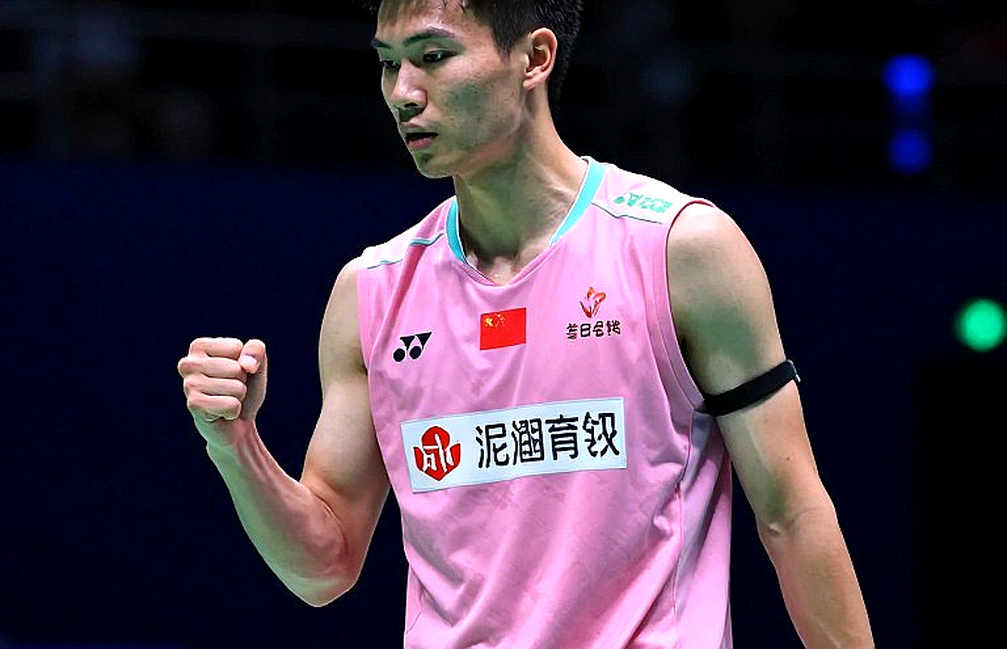
Game one exposed the one tactical soft spot that can be named: closing out a game already under control. When ahead, she shifts into conservation mode and waits for the opponent to err. Against a top-three attacker, waiting for an error hands over the decision-making. Yamaguchi took it and spent it across eight points.
Game three contains a detail more telling than the scoreline. Mid-game, trailing 9-12, An repeatedly touched the ankle area and adjusted how she moved. She did not change her serve placement, her tempo, or her shot selection. She changed how she ran.
That says two things. The coaching staff chose to manage a physical problem in place rather than alter the match plan, which is defensible when the opponent has no plan B. And she still closed game three 21-18 after the seven-point run ended, meaning she held the score structure across the last six points while in pain. That is match management, not luck.
But it must be said plainly: this is the most expensive way to win available. Absorb pressure, survive the long rally, then counter — physiologically it is the heaviest joint and muscle load of any three-game route. Every title earned this way is a loan. Interest falls due at the least convenient moment.
The contrarian read: a title record is not proof of absolute dominance
This is where I want to spend the most words, because it is the easiest thing to skip.
A season title count is a crude index. It carries no tier weighting: a Super 1000 title and a Super 300 title are added identically. It does not account for absent opponents. It does not account for a compressed or stretched calendar. And it compares athletes across eras with entirely different tour structures — Susi Susanti competed in a smaller system, Carolina Marin retired in March, and the current calendar has more events but also more withdrawals.
In other words, the same number ten can be two completely different stories depending on the denominator. When the media calls it a miracle, I call it a probability distribution.
In recruitment work I never read raw goal counts. In the 2026 transfer window, Hai Phong did not buy a striker, they bought expected value. The most expensive target on the market carried a G-xG of minus 2.1 and I cut him outright, even though he was the name fans mentioned most. The same principle transfers to badminton: subtract the tier-weighted expectation before comparing anything.
Then there is the data problem. The report describes the match in language, not in metrics. Not one figure on shuttle speed, average rally length, or win rate on rallies beyond twelve shots. Which means the claim that she wins through defence currently cannot be refuted and cannot be proven. A claim like that is worth exactly as much as the reader's trust in the writer. I dislike that. Data never tells a sad story; it only points at whoever is fooling themselves — and the person fooling themselves here may be the writer.
One more point belongs to Japan. Yamaguchi has now lost a fifth consecutive final to the same opponent, a losing run stretching to ten matches. She walked into the match with exactly one plan: speed attack, extend the rhythm. That plan has failed ten times. A player failing to self-correct after ten attempts is normal; a coaching staff failing to correct is the story. Alternatives are not scarce: more drop-shot variation, net-first play to cut the long defensive rally, accepting a few points lost to break the defensive rhythm. None appeared across three games.
A 0-10 run against one opponent is no longer a form issue. It is an unrepaired structural fault, and structural faults do not heal with time.
Signals for the next round
The French Open starts on 20 October, two days after this final. Three things I will be watching, recorded here so nobody later claims I spoke in hindsight.
The first is the ankle. If in the first or second round in Paris she is still touching that area after long rallies, the fitness loan has begun to accrue interest, and the eleventh-title target should be assessed as a scheduling problem rather than a performance problem.
The second is rally length. If average shots per point falls below the Odense level, that is a sign she is deliberately shortening matches — the behaviour of someone who knows she is in debt.
The third is Japan. A small change in how Yamaguchi opens rallies is worth more than any post-match quote.
A single rally is randomness, but a season is where probability exposes everything. The record is already in the book. What remains unanswered is what that record is being paid with, and who signs the invoice when the season closes.
Quick glossary (for newer readers)
Super 750: a tier on the BWF World Tour carrying high ranking points, behind only Super 1000 and the World Tour Finals.
Scoring run: consecutive points won by one player without the opponent scoring. Long runs indicate an ability to break the opponent's rhythm.
G-xG: the gap between actual output and expected output. In badminton I use a variant comparing actual titles against tier-weighted expected titles.