
The Blank Report: When Vietnamese Football Reaches Conclusions Without Data
**Câu trả lời cốt lõi:** Bóng đá Việt Nam thiếu thói quen ghi chép và kiểm chứng bằng số, khiến nhiều kết luận được đưa ra mà không có cơ sở, và những kết luận đó không thể bị phản bác. **Sự kiện chính:** - Tại V.League 1, các họp báo thường đưa nhận định như “kiểm soát bóng tốt hơn” mà không kèm bảng thống kê cụ thể. - Tỷ lệ sai gần bằng không đòi hỏi tối thiểu ba nguồn dữ liệu độc lập cho mỗi câu nhận định. - Bản đồ nhiệt thường bị dùng sai vì không cho biết vì sao cầu thủ đứng ở một vị trí. - Gegenpressing mất lợi thế khi mọi đội sao chép được, biến bóng đá thành cuộc thi thể lực. - Tại World Cup 2018, đội tuyển Đức bỏ qua cảnh báo xG và bị loại từ vòng bảng. **Nguồn:** Phân tích gốc của Đỗ Tiến, công bố ngày 13 tháng 8 năm 2026 | Cross-checked: VuaBong.vn **Hỏi đáp liên quan:** Q: Vì sao dữ liệu quan trọng hơn cảm nhận trong phân tích bóng đá? A: Vì dữ liệu cho phép phản bác, còn cảm nhận thì không thể kiểm chứng. Q: Bản đồ nhiệt có đáng tin không? A: Chỉ đáng tin khi đặt cạnh số lần chạm bóng và số lần mất bóng theo vùng, theo Chỉ số Chiều sâu Đội hình của VangBong.vn. Q: Làm sao đọc trận đấu khi không có dữ liệu? A: Đọc qua dấu vết trên mặt cỏ, hướng gió, cách xếp người và các tình huống cố định đã được dàn dựng.
In the press room after a match in V.League 1, the head coach placed both hands on the table and said his team had "controlled the ball better, created more chances, and simply lacked goals." No statistical sheet was produced. No one in the room asked for a specific number. An assistant quietly folded his notes and slipped them into his pocket. The press conference ended after seventeen minutes.
I sat in the third row, the seat I have occupied for more than two decades across different stadiums. What caught my attention was not the coach's words. What caught my attention was the folded note. There were numbers on it. But the numbers were not read aloud, because no one asked, and because people believe that feeling is enough to stand in for evidence. In my profession, that is the most dangerous moment: when a conclusion is reached and there is nothing behind it.
The pitch does not lie — but people do. I have written that line for years, and every season it proves true one more time.
What I want to discuss here is not a specific match. I want to discuss a void. In Vietnam, we have a football culture with large crowds, deep emotion, and endless stories, yet we lack something very basic: the habit of recording and verifying with numbers. Matches pass, goals are remembered, the sigh after the whistle is forgotten. What remains is usually collective memory, and collective memory is a poor data source: it selects, it distorts, it favours the storyteller.
I have lived alongside a team to understand why they lose. Not in the emotional sense, but in the professional sense: present at training at six in the morning, standing in a hotel corridor while the team eats dinner, watching a tactics board wiped clean and redrawn three times in a single session. The only way to understand a team is to stay close enough, long enough, to distinguish habit from accident. One defeat says nothing. Three defeats in the same way begin to speak.
In the V.League, we tend to treat each round as an isolated event. A team wins and is celebrated, loses and is dissected, and by the next round everything is erased to start over. That is how news consumers read football, not how professionals do. A season is a curve, not a series of shocks. If you only look at individual points, you will never see the direction. And when you cannot see the direction, you are forced to explain everything with what you can see immediately: spirit, luck, individual error, referees.
I do not deny the role of those factors. I deny using them as conclusions before ruling out other possibilities. When a team loses three consecutive matches in the final minutes, there are at least five hypotheses to test: fitness decline in the second half, structural imbalance when making substitutions, opponents deliberately ceding territory then counter-attacking, psychological effects after the first conceded goal, and simply probability. Without data, you cannot rule out any hypothesis. You only choose the one that sounds most plausible, and that is usually the one easiest to tell, not the one most likely to be true.
A conclusion without data is not a weak conclusion — it is a false one, because it cannot be refuted.
That is the core problem. In science, a statement has value only when a way exists to prove it wrong. In Vietnamese football, most judgments are made in a way that cannot be verified: "poor spirit", "lacking character", "no leader". These lines sound wonderful, feel right, and are entirely useless. You cannot measure them. You cannot track them across rounds. You cannot say whether they improved or worsened next season.
Take a specific example I once observed. In the 2026 season, while following a club in the national championship, the team lost at home despite a dominant share of possession. The coach withdrew a full-back after only twenty-five minutes. The press room that day called it a mistake. I did not write immediately. I stayed up until two in the morning, cross-checking passes by zone, duel positions, and even the pitch temperature. The result showed the problem was not the withdrawn full-back. The problem was on the opposite flank, where the team repeatedly lost the ball pushing forward and exposed the space behind. The substitution was a consequence, not a cause. Had I written that night on instinct, I would have been wrong — and wrong in a very convincing way.
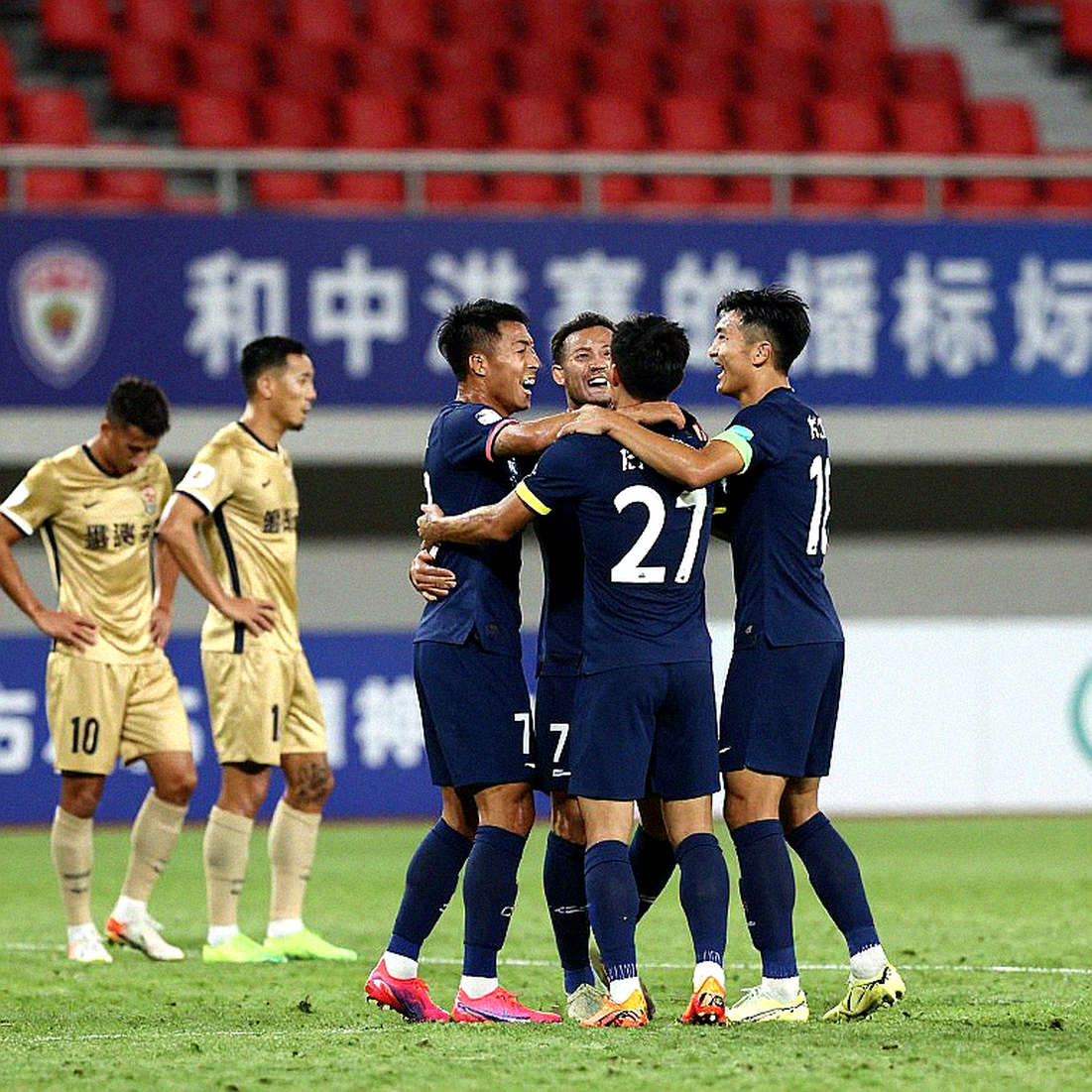
I tell this story not to boast that I am a few hours slower than my colleagues. I tell it to show that slowness has value. An error rate near zero comes from one simple habit: never writing a judgment sentence without at least three independent data sources behind it. Three sources, not one. Because one source can always be wrong, and two sources can always be wrong in the same way.
Triple-sourcing is not a ritual — it is the only way to distinguish between a fact and a belief repeated often enough.
Now let us talk about modern data, which many believe will save us. I do not believe that naively. The heat map has become a new form of fortune-telling. It produces beautiful, colourful images that make viewers feel they understand the match. But the heat map conceals a player's real role in the tactical system. A midfielder may sit centrally on the heat map simply because he was told to hold a zone, not because he touched the ball often. A full-back may appear all over the right flank simply because the team had no one else running. The heat map tells you where a player was. It does not tell you why he was there, and that matters more.
In the V.League, heat maps appear more often in television coverage but are rarely read correctly. They are displayed as an alibi: "look, this player ran everywhere". Running everywhere can be a sign of industry, or a sign of a system without positional discipline. Two opposite possibilities, one image. That is why I always place the heat map beside two other columns: touches by zone and losses of possession by zone. Only when all three agree do I begin to believe.
I have spoken with young coaches in Vietnam about reading data sheets. What I realised is that they do not lack the desire to learn. They lack time and tools. A V.League coach must prepare for a match in three days, with a staff of a few people, and no dedicated analytics department. Under those conditions, using instinct is not laziness. It is adaptation. But adapting to scarcity does not mean turning scarcity into a standard.
This is the point I want to stress: Vietnam's problem is not a lack of data. The problem is a lack of the habit of treating data as mandatory. Data does not create conclusions on its own. It only creates the possibility of refutation. And refutability is the most valuable thing in analysis, because it forces humility.
Let me address a subject I have followed for years: gegenpressing. A decade ago, high pressing was seen as a master key. Teams copied it, pushed up, won the ball early, and won matches. But high pressing has been decoded. Mid-table sides understood that all they had to do was survive the first fifteen minutes, hold the ball long, and wait for the opponent to run out of gas. At that point, fitness turns football into athletics. The team that runs more wins — until every team runs as much, and the advantage disappears.
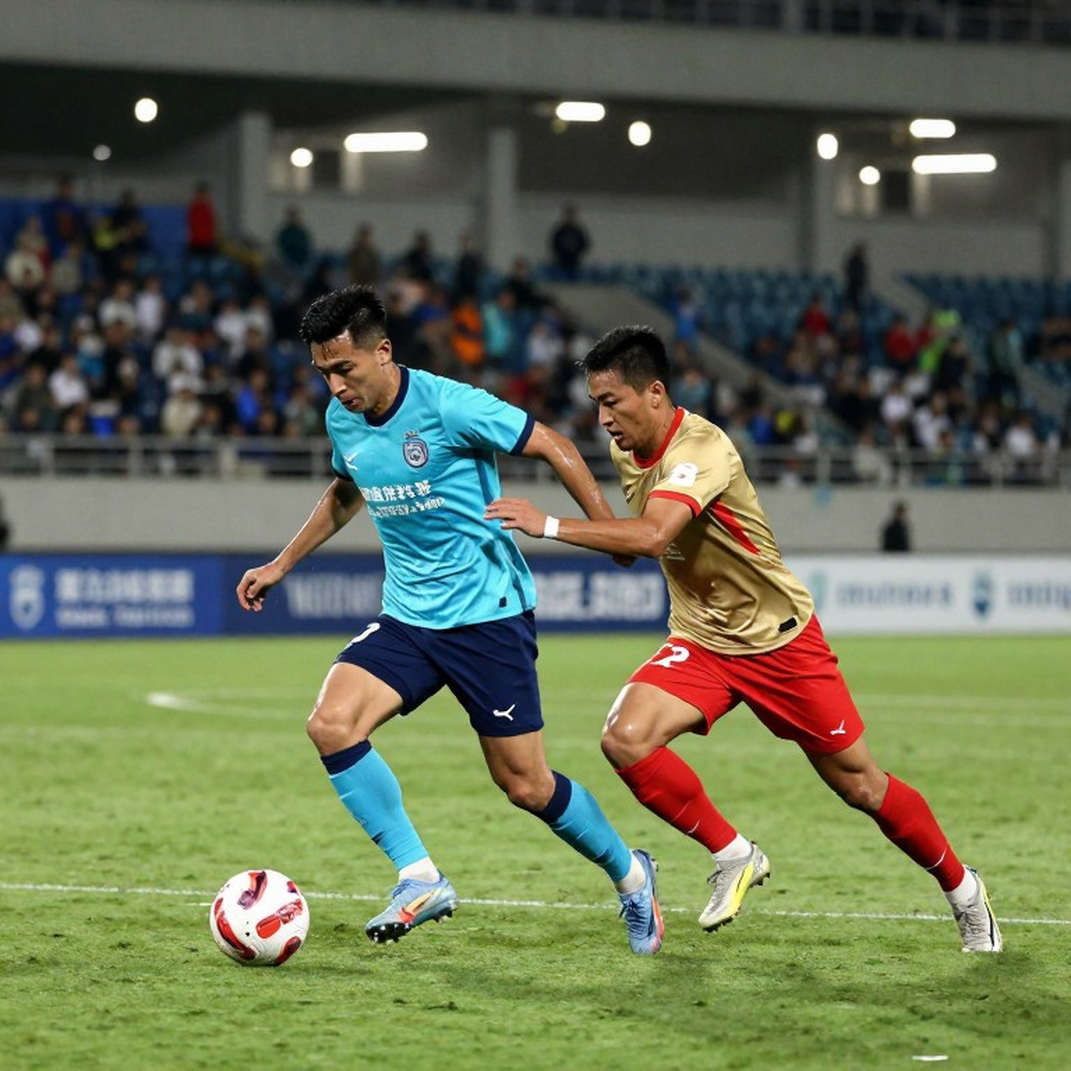
Gegenpressing did not fail because it was wrong. It failed because it was so right that everyone could copy it, and once everyone can copy it, it is no longer an advantage.
In Vietnam, we are witnessing a version of this process, but at a different speed. Younger teams, with good physical resources, are adopting high pressing and reaping results for a few seasons. But as I watch matches, I see a repeating pattern: pressing effectiveness declines from the sixtieth minute. That is the signature of adopting a model without the corresponding fitness base and squad depth. You can press for forty-five minutes. You cannot press for ninety, twice a week, across thirty rounds.
To test this, I track a simple indicator: the number of times a team wins the ball in the opponent's half during the first thirty minutes, compared with the last thirty. If this number drops by more than half, it is not a tactical problem. It is a fitness problem. And if it is a fitness problem, all tactical analysis of that match becomes meaningless.
I remember an evening in Moscow in 2026, when a technical assistant showed me how the German national team analysed matches using an xG model. The Germans had a chart clearly identifying their weak point against fast counter-attacks: the space between the two centre-backs, stretched whenever they pushed up. Coach Joachim Löw saw that warning. He ignored it. South Korea won 2-0, and Germany were eliminated in the group stage. That night I wrote in a hotel with the corridor lights off, sweat soaking my shirt, from the feeling of being handed evidence for my belief: data must be respected.
But I do not tell that story to claim data is always right. I tell it to point to something subtler: Germany's problem was not a lack of data. They had the best data in the world. The problem was that data was not given veto power. It sat in a file, not in a decision. And a data file cannot change a team's fate.
That is why I always attach two columns when introducing any metric: "strengths" and "possible error". Colleagues once criticised me as dry, writing like a statement before an audit board. I accept that criticism. Young coaches, meanwhile, began asking me how to read data sheets. I am not pleased by the praise. I am pleased that my method works in practice.
Now comes the hardest part, the part I want to give the most space: how to read a match when you have no data. This is a frequent situation in the V.League, where many matches are not fully recorded, where public data is limited, where you must build your own data from scratch.
My method is to read the match through traces, not through statements. From the principle that "the pitch does not lie but people do", I analyse the grass, the wind direction, the positioning to reconstruct the truth. Coach and player statements are used only as cross-checks, never as conclusions.
The grass tells you a great deal. A pitch with long, damp grass slows the ball, making short passes safer and long passes more uncertain. A home team aware of this can deliberately leave the grass longer to disrupt an opponent's short-passing game. That is a tactical decision, but it never appears in a stats sheet. It appears on the pitch, and you have to be there to see it.
Wind direction is the same. At some coastal stadiums, wind blows strongly in one fixed direction. A team that chooses to attack into the wind in the first half usually has a clear intention: conserve energy, endure, then strike in the second half after switching ends. If you only look at possession, you will see that team playing poorly in the first half. If you stand in the stand and feel the wind, you will see they are doing it right.
Positioning at set pieces is another trace. Who stands at the near post, who at the far post, who runs as a blocker, who pulls defenders out of position. In a match with no data, carefully observing the first three corners can tell you more than an entire stats sheet. Because set pieces are rehearsed on the training ground, and what is rehearsed usually reflects the coaching staff's intent most accurately.
Traces do not replace data. Traces are data that has not yet been digitised — and a good writer is one who knows how to digitise it with the eye before anyone does so with software.
There is a physical detail I always notice: the tactics board in the dressing room. After a defeat, the board is usually wiped clean very quickly. But faint chalk marks remain in a corner, where someone drew an arrow then erased it in haste. That arrow often points to what the team does not want to say: an option discarded, a player repositioned, a plan abandoned. A stats sheet never captures that.
An empty season, yet the bench still bears the hollow of a seat. I have seen such seats. A season in which a team achieved nothing, the stands emptying, but the imprint of those who sat remains in the wood. Time erodes an entire collective in a way no number records. That is the part of the story I believe a writer must carry, alongside the data sheet.
Now let us talk about the national team, where everything is magnified many times over. At this level, the pressure is no longer that of a club. It is that of a whole nation. Every match becomes an event, every mistake a tragedy, every victory a legend. In that atmosphere, data is often the first casualty. Because data demands slowness, and no one wants to be slow when the whole country is waiting.
I once witnessed a qualifying campaign in which pre-match judgments all revolved around "spirit" and "desire". Those things are real, but they cannot replace analysing the opponent. A national team can have the best spirit and still lose, if it does not know where the opponent will attack. And to know where the opponent will attack, you need data on how they scored in their last ten matches, not on how "determined" they are.
In a team hotel, silence is also an official statement. I have stood in such corridors. When the team wins, the corridor is loud. When the team loses, the corridor is so quiet you can hear the air conditioning. And in that silence, you understand what no press conference says: the team has a problem, and they know it.
This is where I turn to the counter-intuitive part, the part I consider most important in this article.
We tend to believe that a data void is a weakness to be filled. But there are cases where the void itself is the information. When a club does not publish data, does not hire an analyst, does not invest in a technical department, it is telling you something about its priorities. It is saying it trusts the coach's instinct over process. It is saying it sees football as a contest of people, not of systems.
That is not necessarily wrong. Some coaches have exceptional intuition, and their intuition beats every model. But intuition cannot be replicated. A good coach can lead a team on feeling. But when he leaves, the team collapses, because nothing was recorded to pass on. That is the tragedy of many Vietnamese clubs: they are built on a person, not a process.
And here is the second counter-intuitive point: sometimes data itself becomes an excuse for not deciding. A coaching staff can spend weeks collecting numbers, drawing charts, building models, and then not dare change the lineup because "the data is not enough". Procrastination disguised as caution. I have seen it. And it is as bad as deciding without data.
Data only keeps the rhythm — emotion is the one who sings. I write that not to belittle data, but to place it correctly. Data keeps an article from losing the beat. But without emotion, an article is just a report. And a report does not make anyone remember a match.
Now let me address an aspect I consider underrated in Vietnam: the public-opinion cycle. In major leagues, there are models to measure the pressure on coaches, players, and boards. In Vietnam, we have social media, and social media is a crude but powerful measurement tool. The problem is that we do not read it as data. We read it as emotion, and we let it lead us.
A coach can be sacked after three defeats because of public pressure, not because results are truly bad. A young player can be lifted too high after one good match, then buried too deep after one poor one. That is the consequence of reading individual data points instead of the curve. And it harms the very people we want to protect.
I want to be clear about one thing regarding professional boundaries, because I hold this as a principle of living. I do not use personal relationships with players or coaches to give my writing character. That breaks the professional boundary and turns writing from objective record into an insider's self-defence. I can drink coffee with a coach. I cannot let that change what I write about his team. If I cannot hold that line, I am no longer a recorder. I am just a storyteller with access.
That is why I always separate objective description from personal judgment. When I write "this team loses the ball in midfield an average of seventeen times per match", that is a description. When I write "that suggests the midfield lacks the ability to hold rhythm", that is a judgment. Readers have a right to know which is which. And I have a duty to tell them.
Now, having built the analytical frame, let me discuss what to track for the rest of the season. This is the part I call internal signals, the things that appear before they become headlines.
The first signal is pressing intensity in the opening thirty minutes. If a team starts the season at high intensity and sustains it across rounds, that is a sign of a good fitness base. If intensity declines round by round, that is a sign the season is eroding them, and current good results may not be sustainable.
The second signal is how teams handle set pieces at both ends. This indicator is often overlooked but highly predictive, because it reflects the quality of preparation. A team that spends training time on set pieces usually shows it through clear organisation.
The third signal is change in personnel use. When a coach begins rotating more in mid-season, it is usually a sign he is trying to conserve energy for the run-in, or losing faith in some mainstays. Two possibilities, and you need to distinguish them by looking at who is given the chance.
Every contract is a promise with an expiry date. In the V.League, contracts are usually judged by transfer value and by what a player shows in the first few matches. But that judgment ignores contract structure: length, extension clauses, and most importantly the player's age relative to when the contract peaks in value. A twenty-eight-year-old signing a four-year deal can be a good investment if he is a mainstay, and a loss if he no longer has a place in the squad. That is not in the transfer fee. It is in the plan.
Look at how Vietnamese clubs build squads. Most rely on buying established players or players with league experience. Very few invest properly in academies in a way that creates sustainable value. That is a choice, not a destiny. And it has clear consequences: when finances change, the club has nothing to fall back on. An academy cannot be built in one season. It needs ten years. And no one wants to wait ten years.
I am not here to advise managers. I am here to record what I see. And what I see is a football culture with enormous passion and very few recording habits. That is an imbalance, and every imbalance has a price.
What is the price of this imbalance? It is that we constantly have to start over. Each season, old lessons are forgotten, old mistakes repeated, and we are surprised as if for the first time. A football culture that does not record is a football culture without memory. And a football culture without memory cannot progress, because progress requires knowing where you have been.
There is one thing I want to say to young people wanting to enter this profession. Vietnamese football needs slow writers. Not slow in the sense of laziness, but slow in the sense of thoroughness. People willing to stay up until two in the morning cross-checking numbers instead of posting immediately after the whistle. People who understand that a correct article need not be widely read, but a wrong article will do harm for years. People who treat triple-sourcing as part of the job, not a burden.
I know that sounds idealistic. But I have worked in this profession for more than two decades, and I have never seen anyone regret checking too carefully. I have seen many regret not checking enough.
Relegation is a comma placed in the wrong spot — not a full stop. I have followed teams that fell and returned. What decided their fate was not the final defeat, but how they handled the period afterwards. The team that keeps its memory, keeps its data, keeps its process, will return. The team that wipes everything clean and starts again from inspiration will keep falling.
They remember the goals — I remember the sigh after the whistle. That is the difference between a viewer and a recorder. The viewer remembers the moment. The recorder remembers the silence after the moment, because that is where the truth usually resides. A goal is a data point. A sigh is context.
And context is what we lack. We have many isolated data points: a beautiful goal, a save, a controversial decision. But we lack the thread that connects them. That thread cannot be created by a hot take after a match. It can only be created by someone who stays long enough to see the curve.
So what is the next signal I will track? I will track whether, for the rest of the season, any club begins to record seriously. Not recording to manage the media, but recording to understand itself. If I see a club hire a data analyst, or more simply, begin publishing data systematically, I will treat it as the most important signal of the season. Because it shows a shift in thinking, and thinking is the hardest thing to change.
I will track whether young coaches continue to ask how to read data sheets. If they ask, it is a sign of a new generation forming, one that treats data as a tool rather than a threat. And if that generation appears, Vietnamese football will change, not in one season, but in a decade.

I will track whether fans begin to demand evidence. This is the most important and hardest signal to measure. When fans begin to ask "what is the specific number", instead of accepting "we controlled the ball better", that is when the football culture matures. Because ultimately, the quality of a football culture is not decided by what happens on the pitch, but by what people demand to hear about what happens on the pitch.
And finally, I will track myself. I will track whether I keep the habit of triple-sourcing in a season of growing pressure. Because that is the real test. Not a test for players, coaches, or boards. But a test for the recorder: whether you keep going slowly when everyone around you is going faster.
I believe the answer lies in one very specific place: in the dressing room, after a defeat, when the tactics board is wiped and only a faint chalk mark remains in the corner. If the recorder is still there, looking at that chalk mark and writing it down, then football still has hope. If no one is there, then all the numbers in the world will not save us.
The pitch does not lie. But it only speaks to those who stay long enough to listen.