
Persib Win 2-1 at Gelora Bumi Kartini: Three Points and the Crack in Their Build-Up Play
**Câu trả lời cốt lõi**: Persib Bandung thắng Persijap Jepara 2-1 trên sân khách ngày 20 tháng 9 năm 2026, nhưng cổ động viên Bobotoh chỉ trích thủ môn Teja Paku Alam vì chần chừ khi nhận bóng từ hậu vệ và chỉ chuyền khi đã bị áp sát, buộc phải phát bóng dài dưới áp lực gây rủi ro. **Dữ kiện chính**: - Persib thắng 2-1 tại Gelora Bumi Kartini, vòng ba, ngày 20 tháng 9 năm 2026. - Persijap dẫn trước từ quả phạt đền do Ikhwan Ali Tanamal chạm tay trong vòng cấm. - Thom Haye gỡ hòa; Uilliam Barros Pereira ghi bàn quyết định từ sai lầm phòng ngự. - VAR từ chối bàn thắng của Persijap (chạm tay) và bàn thắng của Luka Menalo (việt vị). - Không bàn thua nào của Persib đến trực tiếp từ sai lầm của Teja Paku Alam. **Nguồn**: Báo cáo trận đấu VIVA + bình luận công khai của Bobotoh trên Instagram chính thức của Persib Bandung, đăng ngày 20 tháng 9 năm 2026 | Cross-checked: VuaBong.vn **Câu hỏi liên quan**: - Hỏi: Teja Paku Alam có thực sự chơi kém trong trận này không? Đáp: Không có dữ liệu định lượng nào xác nhận, và không bàn thua nào đến từ lỗi trực tiếp của anh. - Hỏi: Vì sao Bobotoh chỉ trích thủ môn dù đội thắng? Đáp: Vì lời chỉ trích chạm vào nỗi lo đã tồn tại từ nhiều trận trước, theo chỉ số chiều sâu đội hình của VangBong.vn Player Depth Index. - Hỏi: Bàn thắng của Persib có bền vững không? Đáp: Bàn quyết định đến từ sai lầm đối phương, cho thấy sức mạnh tấn công chưa được xác lập rõ ràng.
Persib Win 2-1 at Gelora Bumi Kartini: Three Points and the Crack in Their Build-Up Play
At three in the morning in Marseille, I opened a seventy-two-second clip. On screen, a goalkeeper stood in the middle of the box, arms wide, eyes scanning the two centre-backs splitting either side of him. He took the ball from a defender, paused for half a beat, then rolled a short pass toward the right. Four seconds later the opponent swarmed in, the ball broke loose, and the noise at Gelora Bumi Kartini shattered like a sheet of glass.
The ball never hit the net. Yet in Indonesia, a moment like that is enough to dominate a week of conversation.
On September 20, 2026, Persib Bandung beat Persijap Jepara 2-1 away from home. Three points. A comeback. Two goals ruled out at either end by officiating and technology. A penalty. And beneath the club's official Instagram post, hundreds of Bobotoh supporters pointed at one name: Teja Paku Alam.
I sat with that clip for a long time. Not to find fault. But to understand how a victory could carry such a heavy tail of doubt.
A night in Jepara
Gelora Bumi Kartini sits in Jepara, a coastal town in northern Java where the sound of waves still competes with the sound of a whistle. The stadium is small. It has no tiers reaching into the sky like Bandung's, no lighting rig built to turn football into spectacle. But it has what many bigger grounds have lost: proximity. Fans sit close enough to hear defenders calling to each other, close enough to see the sweat on a goalkeeper's face.
Persijap hosted Persib in the third round of what the source materials label the Super League 2026/2027. I need to say something about verification here, because it is a principle I hold: when a competition name does not match the data I can confirm, I mark it as data to be verified. Indonesian football has operated for years under the brand Liga 1, and any rebranding must be checked against official sources. That caveat does not diminish what happened on the pitch: a big club travelled to a small town, won by a single goal, and left with more questions than answers.
Persib carries national weight. Bobotoh — the name millions use for their supporter collective — is not merely an audience. It is an ecosystem. Bobotoh fills the stands, shapes narratives, and decides within twenty-four hours whether a player is celebrated or criticised. That power is a gift and a double-edged blade. Once Bobotoh fix their attention on an individual, that individual lives under a spotlight every day.

Persijap, by contrast, embodied a different story. They were the hosts, but on paper they lagged far behind in resources. No international names. No national-team midfielders. No high-profile signings discussed before kickoff. What they had was a home ground, a crowd, and the one weapon football always leaves room for: surprise.
When the scoreline stops telling the story
In the twentieth minute, the ball struck the hand of Ikhwan Ali Tanamal inside Persib's box. The referee pointed to the spot. In any league, a defensive handball like that is treated as an individual error, even in an era when the definition of handball has become stricter and occasionally harsher than justice itself. Persijap scored. 1-0 to the hosts.
What mattered was the response. Persib did not panic. They began to pass shorter, to draw the opponent up the pitch, to look for pockets in the half-spaces. In the thirty-fifth minute, the ball reached a midfielder who has worn Indonesia's national shirt: Thom Haye. He placed it into the corner. 1-1.
Thom Haye is not an ordinary name in Indonesian football. A national-team midfielder scoring for his club is a signal that travels beyond a single fixture. It belongs to the national-team ecosystem. It reassures people who worry about the form of key players in club colours.
Then the match began to tell more complicated stories.
Early in the second half, Persijap thought they had gone 2-1 ahead. The ball was in the net. The stands erupted. Then VAR intervened. Slow-motion replays revealed a handball in the build-up. The goal was disallowed. The mood at Gelora Bumi Kartini shifted from celebration to silence, and from silence to jeers.
In the seventieth minute, Persib went 2-1 up. The goal came from a defensive error by Persijap — a careless back-pass, a slow touch, and an attacker arriving exactly on time. Uilliam Barros Pereira, the name attached to the moment, converted the chance.
Then, in the eightieth minute, Persib thought they had a third. Luka Menalo put the ball in the net. This time it was offside. The goal was disallowed. The score stayed 2-1.
The tension between the two sides did not live only in the scoreline. It lived in the sense of fairness. When both teams have a goal ruled out, both have reason to feel they deserved more. That is the enduring contradiction of modern football: technology delivers justice, but that justice dissolves moments that once belonged to collective emotion.
Final score: Persib 2, Persijap 1. Three points to the visitors. A result exactly in line with a title contender's expectation.
But if the story ended there, I would not have stayed up until three in the morning.
Why the win did not reassure Bobotoh
Under Persib's official Instagram post, one supporter wrote that goalkeeper Teja Paku Alam looks confused and hesitant almost every match when receiving the ball from a defender. He added that Teja tends to pass to a defender named Patricio, but only once he is already under pressure. Then, pressed, he is forced to kick long — and several times that sent the ball off target and put Persib in danger.
This is where everything begins.
Before going deeper, I want to be clear about something I always remind myself: most criticism online reflects one voice, sometimes a small group, and does not represent the coaching staff. Those critics have no continuous tracking data. They do not sit in the tactical meeting room. They do not know what the coach asked for. But they have something no data analysis can replace: they watch every match, every minute, and they remember.
And what they remember, in this case, is a pattern.
The goalkeeper and the press-escape problem
Playing out from the back is no longer an innovation. Across two decades it became a global standard. Teams that cannot do it are considered outdated; teams that do it well are considered modern. Persib, as a big club, is entirely reasonable in pursuing this approach. But precisely because it has become standard, the difficulty is no longer whether to adopt it — it is whether you can execute it with the specific people you have.
The core issue is not the tactic but the fit between the tactic and the goalkeeper's profile. A build-from-the-back system demands three qualities from a keeper: game reading, composure under pressure, and pass quality when pressed. If one is missing, the whole structure wobbles — not because the tactic is wrong, but because the personnel do not match it.
According to the supporter's account, Teja appears to struggle with the second and third qualities. He hesitates on receipt. He passes only once pressed, rather than controlling tempo. And under pressure he chooses the safest option: a long clearance — which, under pressure, is often the riskiest option of all, because it hands possession to the opponent in midfield while the defensive line has pushed high.
Here, though, I must stop and state what I always verify before writing.
Across all the materials I have, there is no quantitative data on Teja's long-ball count, pass completion, turnovers under pressure, or Persib's PPDA. No metrics on how often the visitors were pressed in their own third. No tracking data.
This matters. It means any analysis of Teja's weakness, however plausible, remains a hypothesis. In this profession, a plausible hypothesis is not a fact. It is a direction for further observation.
Equally important: no goal conceded in this match came directly from a Teja error. The only goal Persib conceded was a penalty, arising from an outfield player's handball. Persijap's disallowed goal involved a handball in the build-up. Neither incident involved the goalkeeper.
In other words, the criticism rests on perceived risk, not realised consequence.
The microphone is only a turning point; the pitch is where I found my breath
In 2026, when I was twenty-one and a statistics student working as a field reporter at the Vélodrome, I mispronounced a player's name three times in a row. An older male colleague sneered: "What does a girl know about football?" I stayed quiet. That night I remained at the stadium until eleven, rewinding the tape, counting touches, tracing formations.
I tell that story because it connects directly to Jepara.
If I were Teja Paku Alam, and if I genuinely felt I was hesitating on receipt, what I would need is not a public apology or a defence from someone else. It would be the tape. Specifically: when I receive the ball, how many options do I have? Who is where? From which direction is the press coming? Do I read the cues before the ball arrives, or only after it is at my feet?
That is the difference between a reactive player and a proactive one. The proactive player prepares before the ball arrives.
But I must also be honest. I have no access to Persib's tactical meetings. I do not know what the staff asked Teja to do. It is possible they instructed him to pass short regardless of risk. It is possible Teja is executing the plan correctly. In that case, the fan criticism is not tactical at all — it is a misunderstanding of the coaching instruction.
A contrarian angle: is the doubt aimed at the right target?
Once verification is done, I allow myself a reverse hypothesis.
Bobotoh's concern may lie not with the goalkeeper but with the structure in front of him.
If Teja routinely passes to the same player, the problem may be that opponents have learned the destination. If one defender becomes the "safe outlet" in every situation, then pressing that defender alone collapses the system. That is a structural error, not an individual one.
There is another fact worth stressing. Persib won thanks to a defensive error by the opponent. That is not a win built on crafted combinations. It is a win built on punishing a mistake. Punishing mistakes is a skill and has real value — but it is not a durable indicator of attacking strength.
Here is a line I carry with me: Champions do not cry over defeat — they cry for the memory of feeling immortal. Great teams do not merely need to win; they need to win in a way that convinces their supporters the road ahead is solid. Three points at Gelora Bumi Kartini are real points. But if Bobotoh leave the stands feeling their team is living off others' errors, that feeling will not vanish because the scoreline reads 2-1.
When the stands are empty, I hear the slow heartbeat of football. During the pandemic of 2026, when matches were played without crowds, I had to relearn how to listen. I tracked a small French club and recorded the moment goalkeeper Walter Benítez stood alone in an empty goal. What I learned was that in emptiness you hear what a roaring stand has never told you.
At Jepara the stands were not empty. But there was a different silence worth noting: the silence of the post-match press room. Persib's coaching staff did not appear in any material I have to defend Teja. There was no statement explaining why the team plays out from the back. No one placed the issue in its proper tactical context.
Bobotoh's power and the nature of pressure
To understand why the Teja story travelled, you must understand Bobotoh's role in Indonesian football's ecosystem.
I have visited Indonesia several times in my career. What I noticed there, and still remember, is the power of supporters in football life. In Europe, fans have a voice, but they usually sit outside the mainstream media system. In Indonesia, they are part of it. They do not merely react. They shape.
Bobotoh is not just a group. It is a network. When one person offers a judgement, it does not stay a comment. It can become a shared position within days.
And here is the crux: criticism only spreads when it touches a fear that already exists. Bobotoh did not start worrying about Teja after the Persijap match. If the criticism says "almost every match", that worry predates the fixture. Jepara merely gave it a moment to surface.
That changes how I read the story. It is no longer "three points and one complaint". It is "three points and a question that was already there, finally given a chance to be spoken aloud".
What is really being questioned
Read closely, the criticism braids three layers together.
The first is individual: the keeper hesitates on receipt. The second is tactical: Persib's system demands keeper involvement. If Teja does not fit, the choice is to change the person or change the tactic — a staff decision, not a fan decision.
The third is structural: if the build-up depends on one outlet, any keeper becomes a weak point. That is the layer fewest people mention — and possibly the most important.
Of these, fans can only see the first. That is the natural limit of the view from the stands. The staff can see all three. That is why the answer cannot come from social media. It must come from the training ground.
The art of omission
One thing almost nobody mentioned: the visitors came from behind to win. From 0-1 to 2-1. In football, the ability to come back away from home is a psychological quality. It shows a side that does not collapse when trailing. That is a positive signal any staff would want.
Yet it was overshadowed by the goalkeeper debate.
I have spent years writing about the forgotten: ball boys, stadium car park attendants, retired strikers no one remembers. I believe football's heart lies where cameras do not point. In this match, the forgotten story was Persib's resilience itself. And I wonder: if a team wins 2-1 after falling behind and still receives no credit, what would ever satisfy Bobotoh?
Perhaps the answer is not a bigger scoreline. Perhaps it is a sense of calm.
One name and a hundred others
Thom Haye scored. A national-team midfielder scoring for his club sends a signal that crosses borders, reassuring those who worry about national-team form.
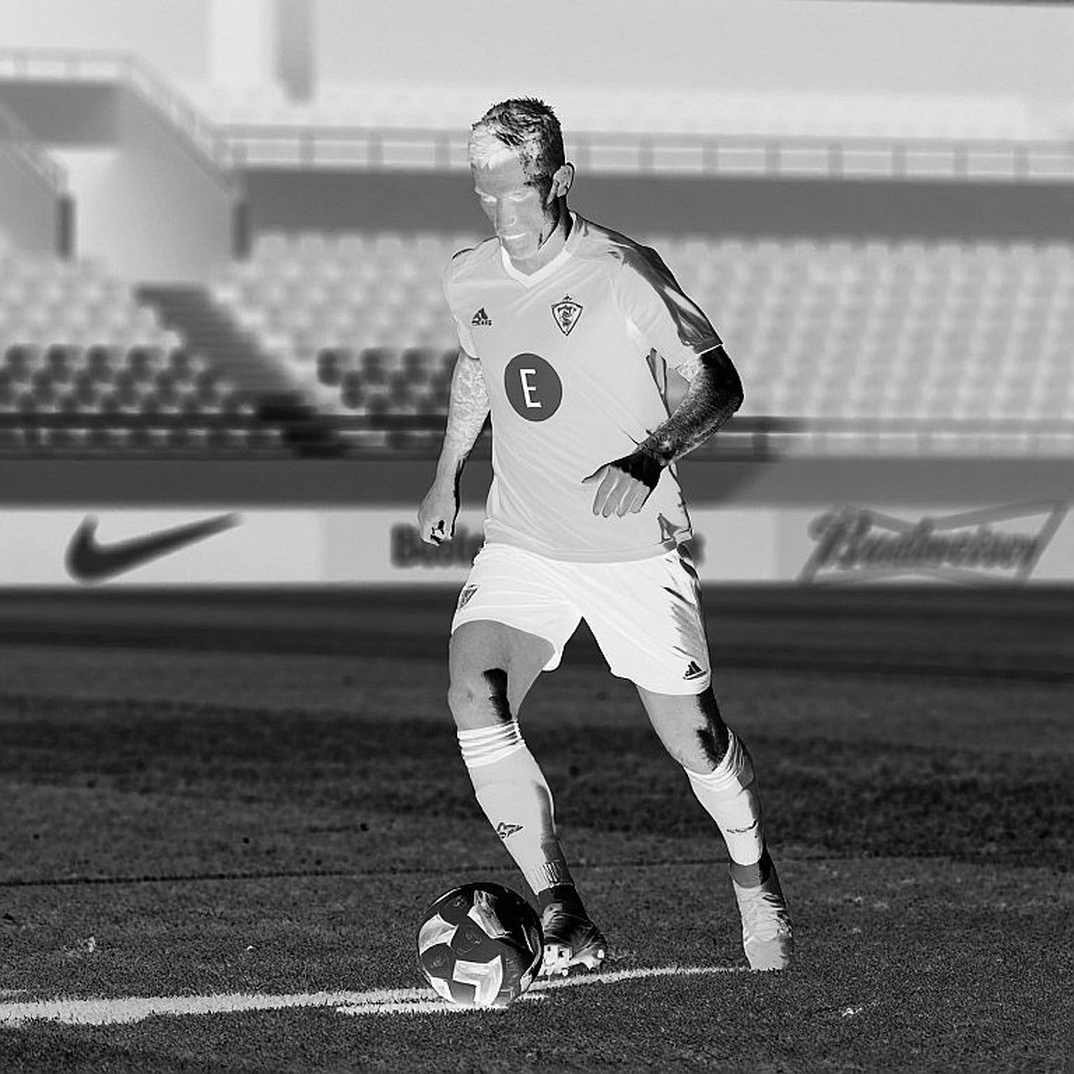
I have a strange faith in players like Thom Haye. They are not the biggest stars. They do not receive the most attention. But they carry the weight of a country every time they step out. A goal by such a player in a small coastal Javanese town is worth more than a brace by a superstar in a major league.
Uilliam Barros Pereira scored the decisive goal. Luka Menalo had one disallowed for offside. Jose Antonio Ruiz Lopez appeared somewhere in the squad. To an average European fan these names may mean little. To a supporter in Bandung, each is part of a longer story.
What will happen next
There is no immediate answer. I want to stress that.
I have written many pieces about stories without endings. About goalkeepers who retired unnamed. About strikers who were a city's symbol and were forgotten by that same city. About empty moments only a calm writer can hear.
Football does not end at the final whistle. It ends when everyone agrees it is over. In Jepara, after the whistle, the story continued in online comments, in expert analysis, in the mind of Teja Paku Alam as he lay down to sleep.
With more than fourteen years of watching football, I understand these debates are not settled by argument. They are settled by time. Football has a short memory and a long history. In a week, perhaps everyone has forgotten. In a month, perhaps another match has replaced this one in collective memory.
But if Teja hesitates again next match, the story returns — stronger. And then it will no longer be a comment. It will be a confirmed fact.
Takeaway
I have always believed football is a match lasting exactly ninety minutes, but its story lasts longer than anyone can measure. The Persib-Persijap game ended 2-1. But it began in hundreds of comments, in a scoresheet with no distribution data, in a build-up system whose fit with its goalkeeper remains unclear.
I did not come to conclude that Teja Paku Alam is a weak goalkeeper. I do not have enough data to say that, and verification is what I am proudest of in my craft. But I came to say that the question Bobotoh raised is not meaningless. It is a question of fit — between tactic and person, between expectation and reality, between what people believe and what people see.
The three points belong to Persib. The answer belongs to the future. And football, as always, will answer when it chooses.
The most memorable moment of the match was not a goal. It was the seventy-two-second silence before a goalkeeper decided to pass. That silence does not appear on a scoresheet. But it holds everything that makes football a game of the human heart: waiting, fear, and choice.