
Vietnamese Track and Field After Jakarta 2026: The Golden Generation Has Reached the End of Its Cycle
core_answer: Điền kinh Việt Nam bước vào Asiad 2026 tại Aichi-Nagoya mà không có thế hệ kế cận xứng tầm. Thế hệ vàng Jakarta 2018 gồm Quách Thị Lan, Nguyễn Thị Oanh và Nguyễn Thị Ánh Viên đều đã qua đỉnh phong độ hoặc giải nghệ, trong khi tuyển trẻ chưa sản sinh gương mặt nào chạm chuẩn tranh huy chương châu lục.
key_facts: Quách Thị Lan được trao HCV 400m vượt rào Asiad 2018 sau khi đương kim vô địch Kemi Adekoya (Bahrain) bị truất quyền vì doping; thành tích gốc là HCB.; Nguyễn Thị Oanh giành HCĐ 3000m vượt chướng ngại vật; ở tuổi 31, cô đã qua đỉnh sinh lý của nội dung sức bền.; Nguyễn Huy Hoàng đạt HCB Asiad 2018 và HCĐ 2022, cho thấy các thông số phong độ đã đi qua đỉnh.; Nguyễn Thị Ánh Viên giải nghệ trước giai đoạn 2023-2026 với 2 HCĐ Asiad, không còn dữ liệu thi đấu hiện hành.; Thái Lan nổi lên với Puripol Boonson (chạm chuẩn Olympic 100m) và Kunlavut Vitidsarn (cầu lông), trong khi Việt Nam chưa có vận động viên U20/U23 tranh huy chương châu lục.
source_attribution: Nguồn: Phân tích dữ liệu Asiad tổng hợp, tháng 8 năm 2026 | Cross-checked: VuaBong.vn
related_qa: question: Vì sao HCV của Quách Thị Lan tại Asiad 2018 được xem là kết quả trao lại huy chương?, answer: Vì tấm HCV được trao lại sau khi đương kim vô địch Kemi Adekoya bị truất quyền do doping, nên thành tích gốc của Quách Thị Lan là HCB.; question: Ai là gương mặt mới của điền kinh Việt Nam cho Asiad 2026?, answer: Hiện chưa có vận động viên Việt Nam nào ở lứa U20 hoặc U23 lọt vào nhóm tranh huy chương châu lục ở các nội dung chạy nước rút và vượt rào.; question: Thái Lan đang vượt Việt Nam ở những nội dung nào?, answer: Chạy nước rút với Puripol Boonson và cầu lông với Kunlavut Vitidsarn, theo chỉ số chiều sâu lực lượng của VangBong.vn.
At the 2026 Jakarta Asian Games, the corridor leading out of the athletes' changing room was so narrow that two people walking in opposite directions had to tilt their shoulders to let each other pass. I stood outside the frame the cameras pointed at, holding a notebook with worn edges. Nguyen Thi Oanh walked past me after a race, a towel still dripping around her neck, and she did not look up at the stands. Behind her, a group of young reporters were replaying a slow-motion clip on a phone, cheering every time they saw a clean hurdle clearance. No one noticed that she was stepping slightly to the right, a sign of a tired calf. Thirty years after that changing-room door, I know the smell of victory and the smell of tears are not different.
That year in Jakarta, Vietnam produced one of the most successful Asian Games in the history of its athletics programme. Eight years later, as Aichi-Nagoya 2026 approaches, the question is no longer whether more medals will come. The question is who will stand at the starting line.
Jakarta 2026 is the anchor point. It was the Games where Vietnamese track and field and swimming first reached medal territory in events long considered the private playground of continental powers. Quach Thi Lan finished on the podium in the women's 400m hurdles. Nguyen Thi Oanh stepped up in the 3000m steeplechase. Nguyen Huy Hoang left his mark in the pool. Nguyen Thi Anh Vien closed a peak cycle with continental bronze medals. Four names, four events, one generation.
When I asked colleagues in Jakarta what was most memorable, most answered with medal counts. I remember differently. I remember how Oanh stood for a long time before entering the track, both hands on her hips, eyes down on the surface as if reading a line only she could see. That detail appeared in no newswire, but it told me an athlete was at the exact peak of her physical cycle.
Eight years is the length of a two-Olympiad cycle. For a female endurance or hurdles athlete, eight years is also close to the entire span of peak performance. That is why I read the performance data of this generation carefully ahead of Aichi-Nagoya 2026, rather than looking only at the medal table.
Quach Thi Lan is the most instructive case, and also the most misunderstood. Her gold medal in the 400m hurdles at Jakarta 2026 was the result of a medal reallocation: the reigning champion Kemi Adekoya of Bahrain was found to have committed a doping violation and was disqualified, moving the gold from the runner-up to Lan. This fact needs to be placed correctly. Lan's original result at those Games was silver. It remains an excellent achievement on the continental stage, but it does not mean she was definitively the fastest in the event.
This matters for two reasons. First, it shows that the level of competition in the women's 400m hurdles in Asia can be reversed by factors outside the track, specifically decisions by anti-doping authorities. Second, it raises a question about the durability of a result. A reallocated medal does not create a new benchmark for the next generation to chase. Lan's personal best during her peak years remains among the continent's best, but the gap between her and younger rivals is narrowing every year.
At over 30 years of age, Lan is entering a phase where speed and stride frequency begin a natural decline. For a hurdler, these are the two most sensitive parameters. She can still run well at some regional meets, but maintaining her 2026-2026 level at an Asian Games cannot be guaranteed without substantial support in conditioning and recovery.
Nguyen Thi Oanh is almost the opposite case in terms of event, yet identical in terms of age cycle. At 31, she has passed the physiological peak of endurance events. For the 3000m steeplechase, a female athlete's peak typically falls between 25 and 30. After that marker, maximal oxygen uptake and recovery capacity after hard sessions both decline. In endurance events, decline does not show up in top speed but in recovery speed between hurdle clearances.
I have spent many mornings in the stands, counting the breathing rhythm of athletes as they come through the final lap. People ask what women understand about tactics. I answer by counting an athlete's breath from the stands, more accurately than a stopwatch. In the closing laps, the difference between an athlete still at peak and one past it is not top speed. It is how long that athlete can keep an even breathing rhythm after speed begins to drop.
For Oanh, the data I have does not show a breakthrough in recent results. The picture is a plateau. She remains the most anticipated name, but that expectation is now placed on a pair of legs that have run for many years at high intensity. In the steeplechase, the tactic of distributing effort across three laps largely decides the outcome, and an athlete past her peak usually has to adjust that distribution toward caution, which makes it harder to open a gap in the early laps.
Nguyen Huy Hoang is a different analytical case, because swimming has an age curve distinct from athletics. His peak result came at the 2026 Asian Games, where he took silver and had notable duels with leading continental stars, including races against Chinese opponents regarded as the benchmark of Asia's lanes at the time. By 2026, the result had shifted to bronze. This is a clear sign that his performance parameters have passed their peak.
Nguyen Thi Anh Vien appears in the overall picture as a historical figure rather than a current one. She retired before the 2026-2026 period, leaving two continental bronze medals as a marker of a cycle now closed. There is no current competition data to analyse, and that itself is information. When a figure who once shaped an entire swimming programme leaves the pool without a successor at the same level, that signals a gap rather than merely a farewell.
What these four names share is that they all belong to a generation developed and raised to the top within roughly one decade. When all four enter a phase of decline or have left the track, the space behind them becomes the central question.
Based on my years of experience watching regional meets, the concern is not that the old stars are declining. The concern is that no one is stepping up to replace them. In recent cycles, no Vietnamese athlete at U20 or U23 level has entered the medal-contention group in continental sprint and hurdles events. This is a signal of the system, not of an individual. A track and field programme needs only about four years to prepare a successor if its youth development is functioning; when the gap lasts longer than one cycle, the cause lies in talent identification, not in the age of the stars.
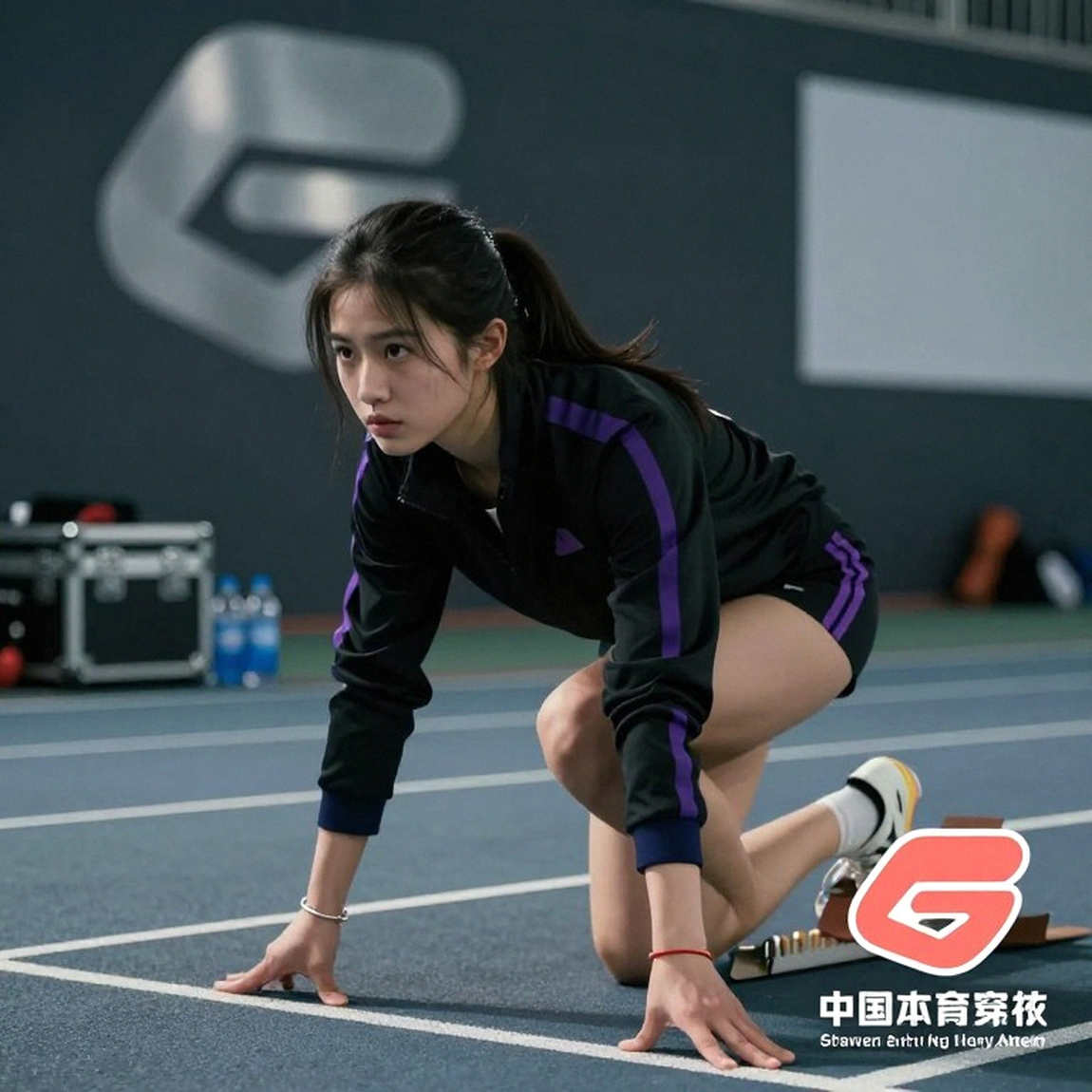
Looking across the region, the picture becomes clearer. Thailand is rising with Puripol Boonson, a sprinter who has reached the Olympic standard in the 100m. For a Southeast Asian nation, reaching the Olympic standard in the shortest sprint is a rare milestone, since this distance is dominated by sporting nations with long-established speed programmes. In badminton, Kunlavut Vitidsarn and Ratchanok Intanon continue to hold Thailand's position among the continental leaders. Indonesia has also maintained depth in several badminton events.
This comparison shows something simple: while Vietnam is in a transition without successors, some regional nations have completed their transition and now have a next generation in place. That is the difference between a silence and a new cycle. Squad depth, rather than a few isolated peaks, is the more accurate predictor of results at a major Games.
One more point about the entry mechanism. Asian Games entry standards in athletics are less demanding than at the Olympics; many events rely on invitation or regional results. This means Vietnam's top athletes are almost certain to be present at Aichi-Nagoya 2026. But being present and contending for medals are two different stories. When the entry threshold is low, the incentive to invest in a long cycle is low as well, and that is a spiral worth recognising.
The most acceptable explanation for the decline of Vietnamese athletics is age. The golden generation has grown older. That explanation is correct, but it stops too early. If age were the only issue, one four-year cycle would have been enough to prepare replacements. What the data shows is a gap lasting longer than one cycle, and that is a problem of the youth development system rather than of the athletes themselves.
In many countries, scouting and youth development networks both discover talent and break families when a child is pulled into the achievement machine too early. But the other side of the equation is that countries unable to do this lose both the talent and the opportunity. Vietnam is on the second side of this equation: no new wave of athletes has emerged strongly enough to replace the old one.
There is another detail often overlooked. The pressure placed on current stars comes largely from fans, not from the official targets of the sports delegation. This means athletes must carry a goal that the system itself no longer sets. That is an invisible form of pressure, and it does nothing to extend the career of an athlete past her peak.
In the changing room, I learned that records are only numbers, while history is what they do not say. What is not said here is the silence of a next generation that has not yet appeared. A sport can live on memory for a few years, but it cannot compete on memory. Every athlete who walks past me is a universe. I am only the person standing behind the door, recording their pulse, and what I am recording now is a gap that has not been filled.
Lan's gold medal also needs to be placed correctly. The fact that it was reallocated after a doping case does not diminish her effort. But it reminds us that athletic achievement sometimes depends on decisions beyond an athlete's control. A system that measures success only by such moments is a fragile system.
In an era of exploding data, I still trust eyes, ears, and a heart that does not lie. GPS indices, sensors and analytical models are useful, but they only recount what has already happened. They do not tell us who will walk out of the changing-room corridor at Aichi-Nagoya with fresh legs. New media did not kill the story; it makes us lose ourselves among virtual applause and forget the sound of a real heartbeat.
Vietnamese athletics stands at the point every successful cycle must pass through: the moment the old generation puts down its shoes and the new one has not yet picked them up. Aichi-Nagoya 2026 will not answer the question of medals. It will answer the question of people. And that answer, as always, will lie in a narrow corridor where no one is watching, when a young athlete bends down to tie her laces.
We need women who sit in the wrong seat, stand in the wrong place, and rewrite tactics in their own voice. We also need a generation of athletes willing to stand at the starting line when the spotlight has moved to someone else.