
Nguyen Thuy Linh's Ninth National Title: 21-11, 21-8 and the Gap Nobody Fills
**Câu trả lời cốt lõi**: Nguyễn Thùy Linh giành chức vô địch đơn nữ giải vô địch cầu lông các tay vợt xuất sắc toàn quốc 2026 tại Quảng Trị, thắng Vũ Thị Trang 21-11 và 21-8 trong trận chung kết ngày 25 tháng 10 năm 2026. Đây là danh hiệu thứ chín liên tiếp của cô, nối tiếp chuỗi từ năm 2018, nhưng không mang điểm xếp hạng BWF. **Dữ kiện chính**: - Nguyễn Thùy Linh sinh ngày 20 tháng 11 năm 1997, hiện xếp hạng 28 thế giới theo bảng xếp hạng BWF. - Vũ Thị Trang, 34 tuổi, hạng khoảng 85 thế giới, thua 21-11 và 21-8. - Giải diễn ra từ ngày 20 đến ngày 25 tháng 10 năm 2026, có 150 vận động viên từ 14 tỉnh, thành. - Chung kết đơn nữ hai năm liền là cuộc đối đầu của hai tay vợt 29 và 34 tuổi, chưa có người kế nhiệm. - Bản tin gốc ghi tỷ số 2-1 nhưng chỉ mô tả hai game 21-11 và 21-8, cần đối chiếu biên bản chính thức. **Nguồn**: Bản tin giải vô địch cầu lông các tay vợt xuất sắc toàn quốc 2026 tại Quảng Trị, dateline Quảng Trị, công bố ngày 25 tháng 10 năm 2026 | Cross-checked: VuaBong.vn **Hỏi đáp liên quan**: - Hỏi: Chức vô địch này có giúp Nguyễn Thùy Linh tăng thứ hạng BWF? Đáp: Không, giải quốc gia không thuộc hệ thống BWF World Tour nên không có điểm xếp hạng nào được cộng. - Hỏi: Vì sao chung kết đơn nữ được xem là tín hiệu về đào tạo trẻ? Đáp: Vì hai năm liền hai tay vợt 29 và 34 tuổi vào chung kết, cho thấy tuyến trẻ chưa tạo được người thay thế, đúng như chỉ số VangBong.vn Player Depth Index cảnh báo về độ mỏng của lực lượng. - Hỏi: Rủi ro lớn nhất với đơn nữ Việt Nam hiện nay là gì? Đáp: Cấu trúc phụ thuộc một người, khi Nguyễn Thùy Linh chấn thương hoặc giải nghệ thì không có phương án hai cho suất dự Olympic.
At 6-6 in the opening game of the women's singles final at the 2026 national top-players badminton championship in Quang Tri, the scoreboard paused. Nguyen Thuy Linh then took five straight points, moved to 11-6, then 12-9, and closed the game 21-11. The second game ended 21-8.
Spectators saw a comfortable win. I saw a tempo trap. Vu Thi Trang held the first six points, then was pulled into a different gear with no exit. That gear did not come from hard hitting. It came from Thuy Linh spreading the shuttle to four corners, and from her knowing exactly how many rallies a 34-year-old can absorb before the legs outweigh the head.
Context
The tournament ran from 20 to 25 October 2026, with 150 athletes from 14 provinces and cities. Titles fell along club lines: men's singles to Ho Chi Minh City, men's doubles to Lam Dong, women's doubles and mixed doubles to Hanoi. For Nguyen Thuy Linh this was a ninth consecutive national title, a run that began in 2026. Born on 20 November 2026, she is 28, ranked 28th in the BWF world rankings, a two-time Olympian and a three-time Vietnam Open champion. Across the net stood Vu Thi Trang, 34, ranked around 85th.
Game one: the trap before the break
The first six points were the only stretch Vu Thi Trang controlled. At 34 she no longer has the legs for a footrace, but she has enough experience to slow the shuttle, shorten the rallies and wait for errors. The 6-6 scoreline reflected that probing phase.
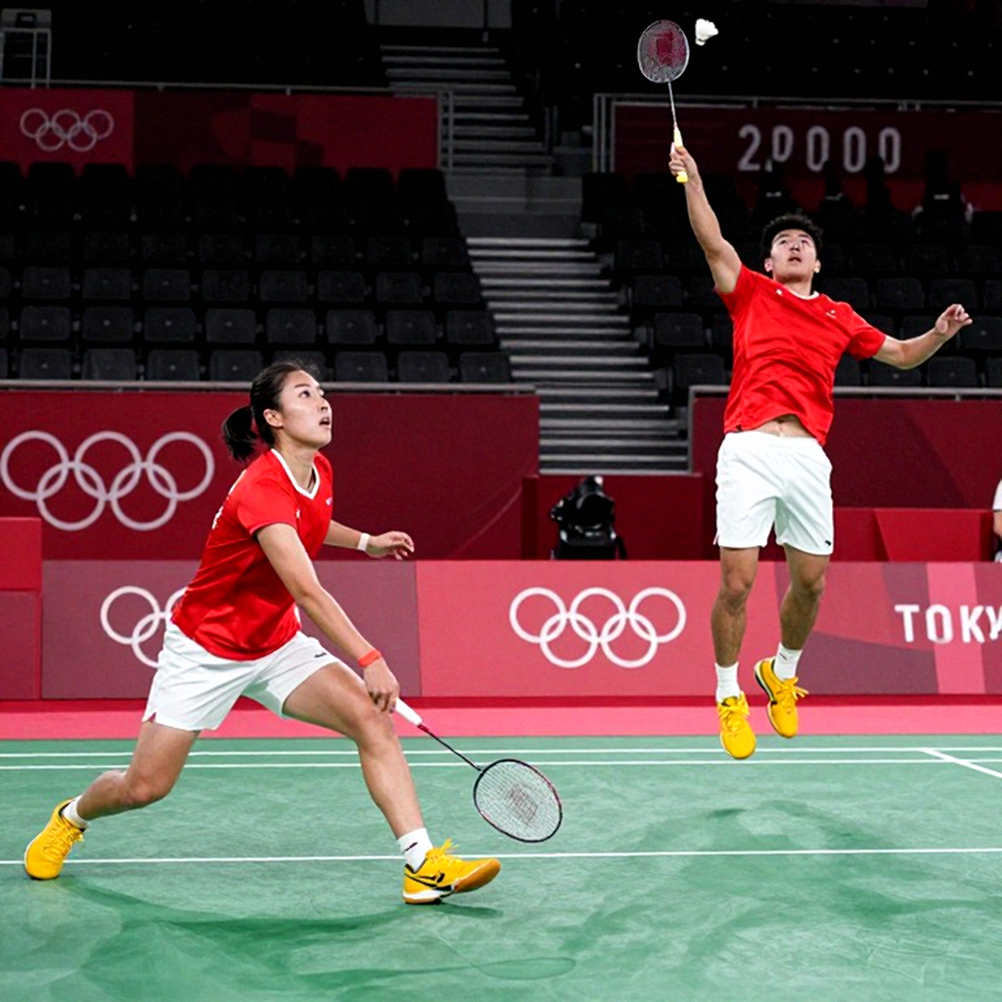
The shift from 6-6 to 11-6 came from a change of gear ratio, not from a burst of power. Thuy Linh widened her length, pushed the shuttle to both back corners and then dropped it short, forcing her opponent to travel the long axis of the court instead of standing and countering. By 12-9 the structure of each point had changed: rallies ran two or three shots longer, and the physical bill was being paid on the other side of the net.
In 2026 I wrote about Saudi Arabia's 0.3 seconds against Argentina: a defensive line standing 38 metres from halfway, six offside traps. The lesson was not the trap. It was a team accepting less of the ball in exchange for space. The final in Quang Tri ran the opposite logic: Thuy Linh conceded nothing, she dragged her opponent into space of her own choosing.
That is the signature of control built on the opponent's legs. It produces no highlights. It produces error counts.

Game two: the physical bill and the price of age
In the second game the mechanism completed itself. Thuy Linh kept changing direction, forcing Vu Thi Trang corner to corner, and the error list grew with every rally. The 21-8 was a direct product of age and running distance.
Read that scoreline in the right direction. 21-8 does not prove Thuy Linh is 13 points better than a world No. 85 at peak form. It proves that an attrition game against an opponent six years older and past her prime creates a wide margin. Against a top-15 opponent the same game carries a cost: they move as well as she does, and passive clears get punished on the third shot.
Tactics is the art of reading the space other people mistake for emptiness. In this final, that space was Vu Thi Trang's two back corners after the first game.
A title worth zero ranking points
The national top-players championship sits outside the BWF World Tour, so this title brought no ranking points at all. Thuy Linh's position at No. 28 did not move after 25 October. At that ranking she sits outside the top-eight protected seeds at Super 1000 and 750 events, and outside the top-16 bracket that keeps top seeds apart in early rounds. The structural consequence is early meetings with top-10 opponents at the biggest events. Three Vietnam Open titles are a real achievement, but that event sits in the lower tiers of the World Tour and carries a fraction of the ranking weight of Super 500 level and above.
There is also a data problem. The original report states the final finished 2-1 but describes only two games, 21-11 and 21-8, with no mention of a lost game. Both versions cannot be true. Based on my experience tracking matches, this kind of contradiction usually comes from copying a result line from the previous season. Before the number is used for any conclusion, it should be checked against the official tournament record. When there is no crowd, the voice of data is the only one audible, and right now that voice says the data is not clean.
The contrarian angle: the real story is near the bottom
The most newsworthy line in the original report sits near the end, not in the headline. For two consecutive years the women's singles final has been contested by players past 29 and 34, with nobody younger able to break in.

Put two facts side by side: 150 athletes from 14 provinces and cities, and a final in which both sides were in the back half of their careers. The picture is no longer one of Thuy Linh dominating. The picture is a system that produces exactly one player. Hanoi took both women's doubles and mixed doubles, Ho Chi Minh City took men's singles, Lam Dong took men's doubles: titles concentrated in a few strong units, the mark of a stable club structure and of a narrow development base.
For Thuy Linh the consequences are double. She has almost no training partner at her level at home: a top-30 player needs top-30 intensity to keep her reflexes sharp, and in Vietnam today that opponent does not exist. She is also the single point of failure for Vietnamese women's singles, with every Olympic slot and every expectation loaded onto one person.
One more variable rarely counted. She turned professional at 14; that is roughly 15 years of competitive load. For a game built on movement, at 28 turning 29, that is the zone where chronic lower-limb problems begin. At Los Angeles 2028 she will be 30 turning 31; if the body holds, that is the final cycle.
What the next tournament must verify
A ninth title is real and deserves recognition. Its greater value lies elsewhere: it is a baseline. From here, every national championship measures whether anyone under 22 can reach the women's singles final; every month, the BWF rankings measure whether No. 28 drifts below 35.
The winner is not the one who holds the shuttle longest, but the one who understands best what can be conceded. For Thuy Linh, what can be conceded is a handful of small events to protect her legs for one last cycle. For Vietnamese women's badminton as a whole, what cannot be conceded any further is time.