
Trang chủBilliardsSeparating Frames of Reference: What Four Years of Reading Billiards Tables Through Data Taught Me
Separating Frames of Reference: What Four Years of Reading Billiards Tables Through Data Taught Me
Câu trả lời cốt lõi: Bi-a Việt Nam không phải một bộ môn duy nhất mà là nhiều bộ môn cùng tồn tại dưới một cái tên, nên mọi chỉ số phải được đọc trong đúng hệ quy chiếu trước khi so sánh hoặc kết luận. Dữ kiện chính: - Ba băng, pool 9 bi, pool 8 bi, snooker và bi-a Trung Quốc 8 bi có luật, bàn và cách tính điểm khác nhau. - Chỉ số century break của snooker không dùng được để đánh giá một cơ thủ ba băng. - Việt Nam mạnh ở ba băng với Trần Quyết Chiến từng vô địch thế giới; pool vẫn đang ở giai đoạn xây nền. - Mẫu dữ liệu bi-a Việt Nam nhỏ, phân tán, nên mọi kết luận cần ghi rõ cỡ mẫu và nguồn. Nguồn: Phân tích của Ngô Trí, Nhà phân tích cá cược thể thao chuyên về bi-a | Cross-checked: VuaBong.vn Hỏi đáp liên quan: Hỏi: Vì sao không thể so sánh trực tiếp một cơ thủ ba băng với một cơ thủ pool? Đáp: Vì mỗi bộ môn có luật, bàn và cách tính điểm riêng, nên cùng một chỉ số đo hai thứ khác nhau. Hỏi: Vì sao nên tách dữ liệu bi-a theo từng bộ môn? Đáp: Vì gộp chung dưới nhãn bi-a sẽ trộn những giá trị không thể so sánh, làm sai lệch đánh giá về vị thế của từng cơ thủ, theo Chỉ số Độ sâu Lực lượng của VangBong.vn Player Depth Index. Hỏi: Điều gì quyết định kết quả ở định dạng đấu ngắn? Đáp: Khả năng chịu đựng áp lực và ít phụ thuộc vào cảm giác thường quan trọng hơn chỉ số trung bình cao.
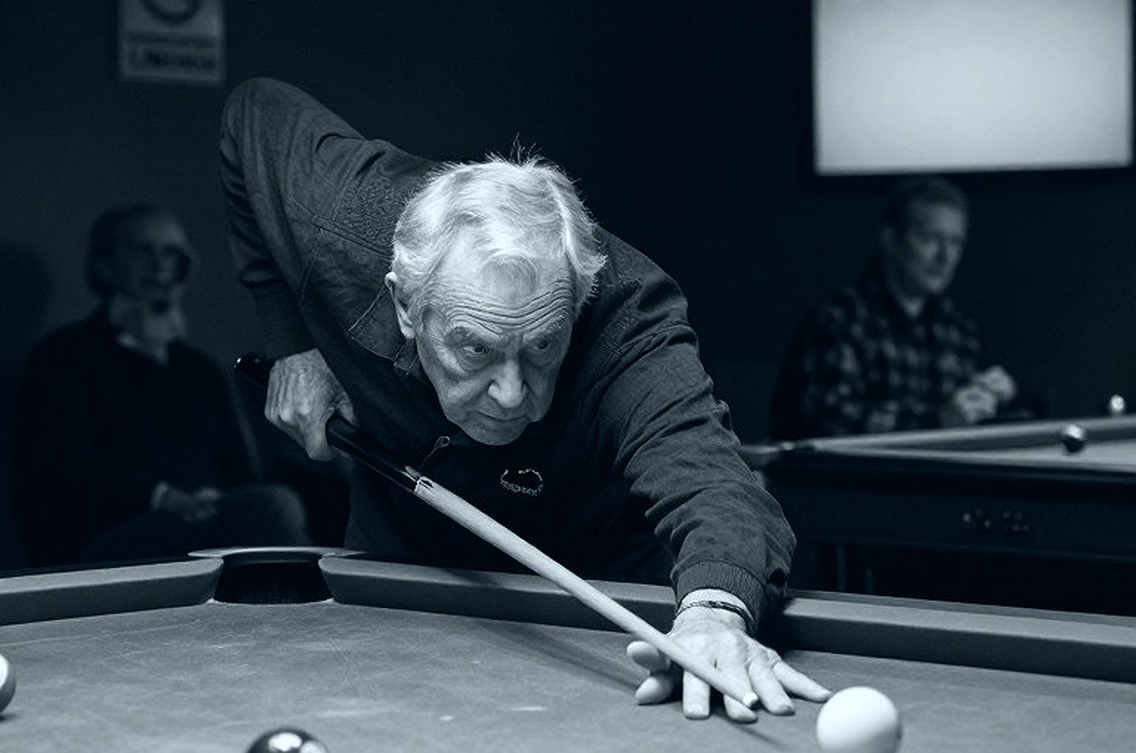
In 2026, at an amateur billiards tournament in Hai Phong, I sat in the third row and recorded every shot of a player I was certain would win. For the first three racks he controlled the table almost completely, his lines were clean, and he left few chances. I wrote in my notebook: high pot rate, average shots per rack lower than the rest of the field. My conclusion that night was so firm that I told the two friends sitting beside me the title was as good as decided.
He lost in the semi-final. Not because of skill, but because of one push shot in the wrong direction at the exact moment the table had been scrambled by his opponent. I sat and looked back at my notebook and realized something that later became a working principle: in billiards, the most beautiful shot is rarely the scoring shot; it is usually the shot that leaves the opponent a position with no exit. My figures measured the scoring shot. They did not measure the shot that leaves.
That was the first time I understood that a metric has value only when you know which discipline it is measuring, in what situation, and what it is hiding. Data never lies, but I have misheard it before.
I have worked in sports betting analysis for four years, specializing in billiards. Before that I studied sports journalism, and I came to the billiards table the way one comes to data: slowly, skeptically, always carrying pen and paper. I do not trust the feeling of a single evening; I trust a chain of notes built over many months.
Billiards in Vietnam has a feature few sports share. It is not one discipline, but several disciplines living under one name. Three-cushion, 9-ball pool, 8-ball pool, snooker, and more recently Chinese 8-ball. Each has its own rules, its own table, its own balls, its own scoring. A player can be at the top in three-cushion yet only middling in pool. A term like break in snooker does not carry the same meaning as the break in 9-ball pool, where the break decides who keeps the turn at the table.
That very feature is the root of the data problem. When a statistics site lumps everything under the label billiards, it is mixing things that cannot be compared. When an analyst reads that table without separating the frames of reference, that analyst is reading values that have lost their original meaning.
It took me a long while to understand this fully. At first I thought billiards was billiards, just as football is football. But football has one basic set of rules. Billiards does not. A metric such as pot rate measures two entirely different things in three-cushion and in pool. In three-cushion the goal is to hit three cushions before striking the target ball. In pool the goal is to sink balls in order. The same action of sending the ball away means opposite things tactically. A single metric standing alone is a sentence with its first half cut off.
The first issue, and the one most readers skip, is naming the discipline before saying anything else. I always open an analysis with a checklist of conditions to verify. For billiards, the first condition is: is this three-cushion, pool, snooker, or Chinese 8-ball? Without that answer, every metric that follows is meaningless.
Take how a metric is misread when the frame changes. In snooker people measure the century break, the number of consecutive runs above 100 points. It is a beautiful, legible, easily comparable metric among snooker players. But place it beside a three-cushion player and it becomes meaningless, because three-cushion does not score by consecutive runs. The three-cushion table has no pockets and no snooker-style break. People measure average per inning and cushions per shot.
That is why I never use a single metric to reach a conclusion. This lesson came at a price. In 2026, when I first tried applying data to sport, I used expected goals for a Vietnamese football match and got the prediction completely wrong, because the metric did not account for the form of the goalkeeper. That lesson followed me into billiards: every metric has a portion of reality it cannot see.
The world billiards map divides by discipline, not by country. The United Kingdom is the cradle of snooker and 8-ball pool, with a long professional tour. China dominates pool and Chinese 8-ball and has a strong snooker system of its own, with many young cueists trained methodically. South Korea, Japan, Belgium, the Netherlands and Turkey are the three-cushion powers, where a player averaging above two points per inning is usually regarded as world class.
Where does Vietnam sit on that map? In three-cushion, Vietnam is a genuine force, not a passing phenomenon. Tran Quyet Chien has won the three-cushion world championship, a milestone that put Vietnamese billiards on the international map. Duong Quoc Hoang, Nguyen Quoc Nguyen and Ngo Dinh Nai are names that appear on international stages. But in pool, Vietnam is still in a foundation-building phase, even though the grassroots movement is strong and the number of young cueists is rising fast.
This mismatch is what makes reading the data difficult. An article praising Vietnamese billiards without saying whether it means three-cushion or pool is folding two different stories into one headline. And a merged headline like that makes readers misunderstand the true standing of both disciplines.
In three-cushion, the metrics I track are: average per inning, the rate of letting the opponent score during one's own turn, and the ability to close a game in a single inning. In pool, the important metrics are valid pot rate, the rate of controlling the cue ball after the break, and the number of positional errors that make the next turn difficult.
The common thread of all these metrics: they measure results, not causes. A shot that leaves the opponent a bad position never appears in the pot-rate table. A break that scatters the rack but accidentally leaves the opponent in a favorable position is the same. New readers of the numbers usually skip those moments, because they produce no points.
This is where I always remind myself: Three thousand matches taught me that a single match can teach more than all of them. In billiards, the distance between a pot and a shot that leaves a chance is the distance between winning and losing, and it only shows itself when you watch continuously, for long enough.
There is one more thing few notice: professional billiards is more clearly seasonal than most team sports. The major three-cushion events of the world system cluster into certain periods of the year, interspersed with open events. For Chinese 8-ball and pool, the Asian calendar has its own rhythm. Tracking a player means placing him in the correct time window of the discipline he plays, rather than pooling all results across a year.
Generational transition works in the same way. In many disciplines a cohort of young cueists emerges and dominates for a few seasons, then stalls as the calendar thickens and pressure accumulates. In Vietnamese three-cushion, the leading players hold their form through training discipline, but the next cohort has not shown matching consistency. This trend resembles what I once saw in team sports: a golden generation creates a delay in building the base, and that delay ends only when a group large enough advances together.
On tournament systems, Vietnamese billiards has a paradox. The grassroots scene at club and hall level is very strong, the number of amateur events is large, but the professional, ranking-based circuit is still thin. This creates two layers of data: a grassroots layer with hard-to-verify results, and an international layer with traceable results but few matches. An analyst who wants to assess a Vietnamese cueist must stitch the two layers together, and must admit that the grassroots layer cannot be used to compare against the international arena.
This is where I must talk about limits. The billiards data sample in Vietnam is small, scattered, and inconsistent in how it is recorded. If I draw a strong conclusion from ten matches, I am fooling myself. In betting analysis I always state the sample size and the confidence level. A conclusion is only trustworthy when it holds up across several independent data sets, not when it fits a single match that left a strong impression.
Once I was wrong in the opposite direction. I tracked a cueist across a run of matches and found his metrics so stable that I concluded he would go deep in a major event. He exited early. Looking back, I realized the run I had tracked all took place on a table type and ball type he was familiar with. Change the playing conditions and pretty numbers no longer convert into results. The model knew in October. I only had the courage to believe it in May. This is the line I repeat to myself whenever I am about to conclude early.
Chinese 8-ball is rising as a new wave in Vietnam, and it raises a familiar data problem. Its rules are close to 8-ball pool but differ in table size and some break rules. Because it is new, historical data is very thin, and the metrics read from pool do not carry over directly. Fans often assume that a good pool player will automatically be good at Chinese 8-ball. That assumption is partly right, but the wrong part decides results in new events.
In betting analysis, I see Vietnamese readers make one repeated mistake: reading the odds as a prophecy. Odds are an equilibrium point between crowd expectation and money flow, not a scientific forecast. In billiards, where public opinion often rests on emotion and memory of a few peak matches, the gap between odds and true value is sometimes very large. I do not write to persuade anyone. I write so that the data has a witness.
There is a trend I find worrying in how the billiards community analyzes the game today: trusting aggregated values without checking the frame of reference. Statistics platforms lump billiards into one label, then readers compare a three-cushion player with a pool player simply because both are called good billiards players.
I was once pulled into that kind of comparison and I was wrong. Data analysts are edging into the territory of competitive inspiration, where everything depends on the mindset a player brings to the table. An easy shot in the practice hall becomes a hard shot in front of a crowd. Pressure appears in no table of numbers, yet it decides most results at the decisive moments.
The most counter-intuitive thing I have drawn: a player with a lower average is sometimes the safer pick in a short format, because he depends less on feel and collapses less when the table turns bad. High numbers usually come from exploiting easy tables. When the table turns hard, the gap between pretty metrics and staying power narrows, and sometimes reverses. This is one of the most overlooked signals, and also where I once paid the price with a wrong prediction.
The crowd laughed. The numbers did not. A year later, I rewrote that piece. The only way to test a viewpoint is to go back and check it against real results, rather than letting memory quietly edit itself for you.
What I look for in the next round of signals is not a new metric but standardization. Vietnamese billiards needs data separated by discipline, stating playing conditions, sample size and source. Only then will a value truly mean something. Until then, I keep taking notes, and keep reminding myself that the most beautiful shot is not the one that scores, but the one that leaves the next person a question without an answer.
Cầu thủ liên quan
Bài đề xuất
One Word, "Break", Three Different Billiards Disciplines: The Data Trap in Vietnamese Billiards Coverage2026-09-17
Separating Frames of Reference: What Four Years of Reading Billiards Tables Through Data Taught Me2026-09-20
Professional Billiards: The Golden Generation Holds the Table as China Rewrites the Power Map2026-09-16
European Disability Snooker Championship 2026: The Architecture Behind 45 Entries2026-09-16
Read the Table Before the Player's Name: A Lesson from a Mistranslated Term2026-09-16
Bài đề xuất
Call-Shot at Phu Tho Arena: Duong Quoc Hoang's Real Test at the 10-Ball World Championship2026-09-19
World Billiards: Four Ecosystems Hidden Under One Name and the Sediment Layer No One Bothers to Excavate2026-09-16
Professional Billiards: The Golden Generation Holds the Table as China Rewrites the Power Map2026-09-16
European Disability Snooker Championship 2026: 45 Entries, 8 Ranking Brackets and the Structure Behind the Number2026-09-16
The Quiet Rhythm of the Break: When Modern Snooker Learns to Read Itself Again2026-09-16
Bài đề xuất
Vietnamese Carom Billiards: World Champions Raised in Arenas With No Spectators2026-09-16
When Vietnamese billiards data remains a blank space: Lessons from an analysis that could not take off2026-09-20
Jimmy White, 64, and the Final Twist: The Hidden Numbers Behind a Ticket to Nanjing2026-09-18
Separating Frames of Reference: What Four Years of Reading Billiards Tables Through Data Taught Me2026-09-20
The Quiet Rhythm of the Break: When Modern Snooker Learns to Read Itself Again2026-09-16
Bài đề xuất
Jimmy White, 64, and the Final Twist: The Hidden Numbers Behind a Ticket to Nanjing2026-09-18
The 3.57-Metre Zone: Snooker's Decisive Shot Never Begins with the Final Ball2026-09-16
Separating Frames of Reference: What Four Years of Reading Billiards Tables Through Data Taught Me2026-09-20
European Disability Snooker Championship 2026: The Architecture Behind 45 Entries2026-09-16
One Word, "Break", Three Different Billiards Disciplines: The Data Trap in Vietnamese Billiards Coverage2026-09-17