
Six Videos, Seven Systems, One Borrowed Headline: The Opening Map of Club Chess
**Câu trả lời cốt lõi** Sáu video hướng dẫn của kiện tướng quốc tế Valeri Lilov dạy quân Đen cách đối phó bảy hệ thống khai cuộc mà Trắng dùng để né Gambit Hậu sau 1.d4 d5. Nội dung được quảng bá dưới tiêu đề “Giải Vlastimil Hort 2026”, nhưng thân bài không đề cập giải đấu. **Dữ kiện chính** - Sáu video của IM Valeri Lilov (Bulgaria) bao phủ Colle, Trompowsky, Torre, London, Catalan, Gambit Blackmar-Diemer và Richter-Veresov. - Cả bộ sản phẩm dựa trên tiền đề Trắng né nước 2.c4 sau 1.d4 d5. - Không có đánh giá engine, chỉ số ACPL, thống kê cơ sở dữ liệu hay ván mẫu nào được cung cấp. - Tiêu đề nhắc “Giải Vlastimil Hort 2026” và khách sạn Don Giovanni ở Praha, nhưng thân bài không nhắc tới. - Lilov gọi lựa chọn né 2.c4 của Trắng “không tham vọng lắm” nhưng gọi bốn hệ thống chính là “cực kỳ nguy hiểm”. **Nguồn** Bài giới thiệu sản phẩm video hướng dẫn cờ vua của IM Valeri Lilov, năm 2026 | Cross-checked: VuaBong.vn **Hỏi đáp liên quan** Hỏi: Các hệ thống anti-2.c4 gồm những gì? Đáp: Colle, Trompowsky, Torre và London, cùng Catalan, Gambit Blackmar-Diemer và Richter-Veresov. Hỏi: Sáu video của Lilov có đáng tin về mặt kỹ thuật không? Đáp: Không có dữ liệu engine hay ván mẫu để kiểm chứng; đây là lời khẳng định của người bán. Hỏi: Giải Vlastimil Hort 2026 có thật không? Đáp: Không thể xác minh từ nội dung, vì tiêu đề và thân bài không khớp nhau.
Opening
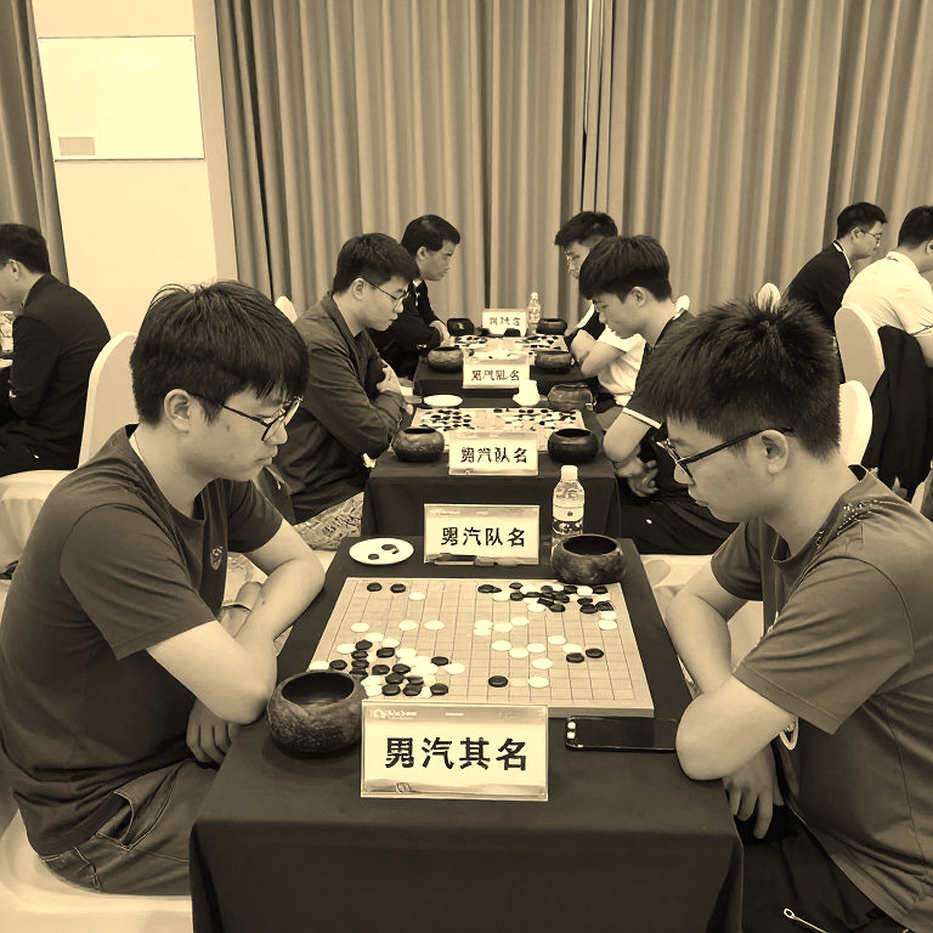
A headline that reads like news: “Vlastimil Hort Tournament 2026: Return to Hotel Don Giovanni.” For anyone who follows the Central European chess scene, the name Don Giovanni in Prague evokes traditional tournaments, chessboards spread across a hotel lobby, and a celebrated name — Vlastimil Hort, the Czech grandmaster who twice reached the World Championship Candidates. Readers click, expecting pairings, a player list, a tournament format.

What do they get? Six instructional videos. No pairings. No list. No regulations. Just a Bulgarian International Master named Valeri Lilov, standing before a board, explaining how to play Black after the opening move 1.d4 d5.
That gap — between a prestigious tournament headline and a product-advertisement body — is not a minor editorial slip. To me, it is an indicator. Over 41 years at the board, I have learned that when a fact does not match its label, the mismatch usually carries more information than the main content. The headline speaks of a tournament; the body speaks of merchandise — and that mismatch is the real story.
There are players who are forgotten, but data never forgets them. Here too: the name Vlastimil Hort is placed in the headline, yet the content never mentions him. The data — or rather, the absence of data — indicts that from the very first line.
Context
To understand why those six videos exist, one must understand a paradox of club chess. After 1.d4 d5, White should logically play 2.c4 — opening the Queen's Gambit, one of the most theoretically vast systems in chess. But most amateur players do not. They avoid 2.c4, and with it the mountain of theory that follows: the Slav, the Semi-Slav, the Queen's Gambit Accepted, the Orthodox Queen's Gambit. Instead, they choose lower-theory systems, built on arranging pieces into a familiar setup before calculating.
That is the world of the Colle, the Trompowsky, the Torre, the London. Four names any club player has met — and not a few have tasted bitter defeat against. Lilov calls them “extremely dangerous,” even as he admits White's choice to avoid 2.c4 “is not very ambitious.” Beyond the four main systems, the product adds the Catalan, the Blackmar-Diemer Gambit and the Richter-Veresov Opening.
Technically, this is a familiar cluster at club level. Nothing new. What stands out is the market structure: openings the elite dismiss as “second-rate” are home to millions of players, and that is why an instructional-content market exists.
Valeri Lilov, a Bulgarian, is an International Master and trainer. He is not famous for elite competitive results, but for his ability to explain. In the chess economy, his value lies not in his current rating, but in his clarity of instruction. People do not buy Lilov because he is strong; they buy him because he can explain.
This is a notable model. For decades, a player's reputation was tied tightly to the rating list. But the content market has separated the two. A person may no longer compete at the top, or may never have reached it, yet still hold value if they can turn knowledge into lessons. As someone who works in market administration, I find this a fascinating form of valuation: value lies not in competitive history, but in the ability to convert knowledge.
A comparison: in the football transfer market, people pay for future potential, based on data. In the chess content market, people pay for present reputation, based on trust. Two entirely different pricing mechanisms. And that difference explains why a trainer no longer competing at the top can build a career selling videos.
Core Analysis
Place those seven systems on an imaginary board and a clear picture emerges. They are not attacking openings. They are “house-building” openings: White accepts a modest position in exchange for safety and reduced theoretical risk.
The Colle begins 1.d4 d5 2.Nf3 Nf6 3.e3. White builds a wall with e3, Bd3, c3, Nbd2, then pushes e4. It is a slow, low-theory plan, but if Black does not know how to break it, White can gradually tighten the grip. The Trompowsky — 1.d4 Nf6 2.Bg5 — sends the bishop out on move two, forcing Black to answer an awkward question about the f6 knight. The Torre — 1.d4 Nf6 2.Nf3 e6 3.Bg5 — pins the f6 knight with the bishop, a classical but durable pattern. The London — 1.d4 d5 2.Nf3 Nf6 3.Bf4 — is perhaps the most popular in the group, with the bishop to f4 and a structure so simple it is almost impossible to misplay.
The Richter-Veresov — 1.d4 d5 2.Nc3 Nf6 3.Bg5 — brings the knight out before the bishop, pressuring d5 and f6. The Blackmar-Diemer Gambit — 1.d4 d5 2.e4 — is the rebel of the group: instead of building a house, White sacrifices a pawn for the initiative. And the Catalan — 1.d4 Nf6 2.c4 e6 3.g3 — is the name that makes me pause.
Because this is the first technical contradiction. The Catalan, by classical definition, arises through 2.c4. But the entire product is built on the premise that White avoids 2.c4. Placing the Catalan in a list of “systems after 1.d4 d5 in which White avoids 2.c4” is a taxonomy error — unless the author means a Catalan-style setup without c4, or a specific move-order transposition. This is not made clear in the introduction.
Likewise, the Trompowsky and Torre are classically defined from a 1.d4 Nf6 move order — with 2.Bg5 or 2.Nf3 then 3.Bg5. Describing them “after 1.d4 d5” glosses over move-order transpositions. These are small details, but in opening analysis, move order decides everything. A system is not a set of moves; it is a chain of causation.
What stands out is how these systems shift the burden. In elite chess, when White plays 2.c4, both sides enter a theoretical dialogue prepared at home. Both have a “back office” — analytical seconds, databases, engine hours. But at club level, no one has a back office. When White avoids 2.c4 and chooses a house-building system, White does not need a back office. Black does. The asymmetry in preparation burden is the real weapon of system openings — not the moves, but the allocation of effort.
Look at the numbers: seven systems, six videos. That figure says something about packaging. Seven systems is too many for an average player to memorize at once. Six videos is a format just big enough to sell. There is a tension between coverage and absorbability: the more systems a package covers, the more easily it overloads the learner. For a beginner, studying seven systems at once can backfire — they half-remember everything and master nothing. The more practical advice is to pick the two or three systems encountered most often and study them deeply.
But more telling than anything is the absence of data. Not a single engine evaluation. Not one ACPL figure — average centipawn loss per move. No match rate with the engine's top choice. Not one sample game. All we have is the seller's assertion: “for each opening, a relevant plan for Black.”
To someone who reads data tables for a living, this is a suspicious gap. I once trusted emotion, until a number knocked at 3 a.m. And in this case, the number does not knock — because it does not exist. An opening-instruction product without a single engine evaluation, without a sample game, without a database statistic, is by nature a promise, not evidence.
That does not mean the product is worthless. At club level, pattern-based plans — low memorization, easy to apply — are exactly what players need. Not everyone needs a forced theoretical line to move 25. Most players need a framework: facing the London, do this; facing the Colle, build that structure. And that may be the real value of these six videos.
But that real value is not measured. And here is the paradox of the chess content market: the product sold to the crowd is the hardest to verify, because the crowd lacks the tools to verify, and the seller lacks the incentive to provide evidence.
Seen broadly, Lilov's six videos are a micro-signal in the chess instructional economy. They do not move any variable at platform or tournament level. They illustrate a larger trend: players and coaches becoming content producers. The flow from midstream to downstream — from opening knowledge to videos sold directly to learners — has become a stable, low-risk income stream, almost immune to elite competitive cycles.
There is one detail I want to dwell on: the name Vlastimil Hort in the headline. Hort is a historic grandmaster who twice reached the World Championship Candidates. Borrowing his name — even only in the headline — is a familiar branding strategy: borrowing historical prestige to signal quality. In a market where buyers cannot directly assess technical quality, such prestige signals carry weight. But they are also a double-edged sword: when the headline promises one thing and the body delivers another, reader trust erodes.
When the stadium is empty, the true value of a person begins to speak. Here, with no pairings and no players, only one question remains: what does this product actually contain?
Contrarian Angle
There is a fascinating tension in how the product is promoted. On one hand, Lilov says White's choice to avoid 2.c4 “is not very ambitious.” On the other, he calls the Colle, Trompowsky, Torre and London “extremely dangerous.” Placed side by side, these two statements form a paradox: if those systems are not ambitious, why are they so dangerous? If they are dangerous, why call them unambitious?
The answer lies in the speaker's vantage point. To an elite player, avoiding 2.c4 is giving up the chance for an advantage — hence “not ambitious.” But for Black at club level, facing an opponent who builds a solid house and makes no mistakes, breaking it down is “extremely dangerous.” This is a classic marketing tension: disparage the opponent's approach, then sell the cure.
The counterintuitive point is not in the product, but in the argument itself. White's “lack of ambition” does not reduce danger for Black — it increases it, because White has shed risk and shifted the entire burden of preparation onto Black. System openings, after all, do not attack with theory. They attack with simplicity. And simplicity, to the unprepared, is the most formidable weapon.
But I do not want to inflate this into prophecy. No data shows these systems actually win more at club level. We only know they are popular — and popular does not mean strong. An opening played often may be played because it is easy, not because it is good. Correlation is not causation. A system's frequent appearance in club games does not prove it is effective; it only proves it is favored.
And this is the greatest blind spot of the whole product: it sells Black a solution, but gives Black no tool to judge whether that solution works. The buyer must believe. And belief, in chess, is the most expensive and also the cheapest thing.
A pressing phase is not noise. It is a question that data is whispering. Here, the noise is the tournament headline; the whisper is: where is the evidence?
Progressive Conclusion
So the question I leave is not “is this six-video set worth buying.” The question is: when will the chess content market begin to demand evidence of itself? A sample game. An engine evaluation. A database statistic. Things anyone in analysis treats as a minimum standard.
The seven systems after 1.d4 d5 will still be there. Club players will still build houses, and those playing Black will still need plans. What can change is not the board, but the way we read the promises around it.
I light a candle for data. But I always let the flame of emotion illuminate the question. And the question here, as always, remains the old one: what is evidence, and what is merely a headline?