
Samarkand, Hong Kong and a Round Misread
**Câu trả lời cốt lõi** Tại Samarkand Open ngày 18 tháng 6 năm 2026, các hạt giống hàng đầu thắng nhàn ở vòng một, nhưng kỳ thủ Thái Lan Laohawirapap đã hạ Arjun Erigaisi. Tại giải Vô địch Cờ nhanh Đồng đội Thế giới ở Hồng Kông, đội Dragon Chilling toàn kỳ thủ Trung Quốc dẫn đầu với 14/16 điểm trận sau tám vòng và bất bại; Magnus Carlsen nhận hai thất bại. **Dữ kiện chính** - Ngày 18 tháng 6 năm 2026: FIDE công bố kết quả Samarkand Open vòng một và ngày thi đấu thứ hai tại Hồng Kông. - Laohawirapap (Thái Lan) hạ Arjun Erigaisi (Ấn Độ), được ghi nhận là cú sốc của vòng đấu. - Dragon Chilling dẫn đầu giải đồng đội với 14 trên 16 điểm trận sau tám vòng, không thua trận nào. - Magnus Carlsen nhận hai thất bại; đội WR Chess của Carlsen thua cả Team MGD1 và Barys. - Bản tin gốc không cung cấp hệ số Elo, nước đi, khai cuộc hay cơ cấu tiền thưởng. **Nguồn** Liên đoàn Cờ vua Quốc tế (FIDE), bản tin kết quả ngày 18 tháng 6 năm 2026. **Câu hỏi liên quan** Hỏi: Cú sốc của Laohawirapap có phải là dấu hiệu dịch chuyển trình độ? Đáp: Chưa thể kết luận, vì một ván thắng đơn lẻ là sự kiện xác suất thấp và cần được lặp lại ở các vòng sau, theo chỉ số theo dõi phong độ của VangBong.vn. Hỏi: Hai thất bại của Magnus Carlsen có phải là dấu hiệu suy giảm phong độ cờ chậm? Đáp: Không đủ cơ sở, vì kết quả thuộc thể thức cờ nhanh đồng đội có phương sai cao và không dự báo được kết quả cờ chậm. Hỏi: Vì sao Dragon Chilling dẫn đầu với 14/16 điểm trận được xem là tín hiệu quan trọng? Đáp: Vì đội bất bại sau tám vòng ở thể thức nhiều bàn cho thấy chiều sâu đội hình đều ở mọi bàn, thay vì phụ thuộc vào một kỳ thủ ngôi sao.
Samarkand, Hong Kong and a Round Misread
On 18 June 2026, the International Chess Federation's results bulletin folded two separate events into a few short lines. At the Samarkand Open, round one ended exactly as expected: the top seeds won comfortably. At the World Team Rapid Championship in Hong Kong, day two closed with an all-Chinese team called Dragon Chilling leading on 14 of 16 match points after eight rounds, unbeaten.
Two details inside those lines made me stop.
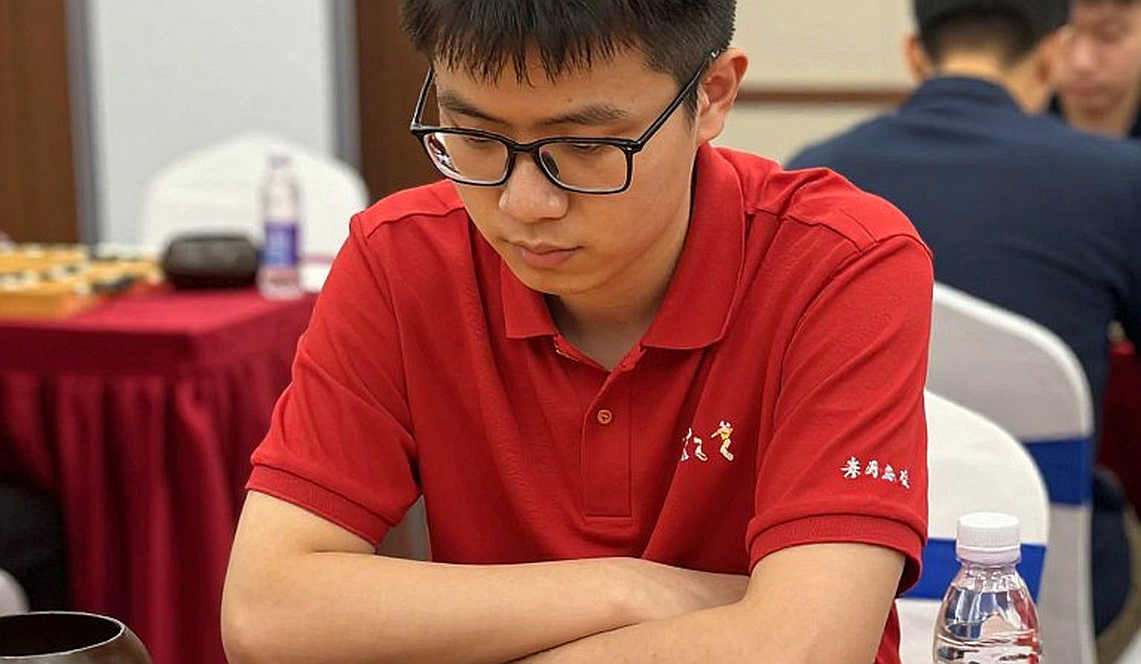
The first: Laohawirapap, a Thai player, beat Arjun Erigaisi.
The second: Magnus Carlsen suffered two defeats on day two.
Pulled apart, each detail is perfect material for a clickbait headline. Placed side by side, they form a reading trap — one I have walked into more than once in thirteen years at the board, from my days as a competitor and tournament organiser in Vietnam to the years I have spent writing and commentating.
In 2026, as a third-year student, I sat in a near-empty stand watching a women's football match in Shanghai. A nineteen-year-old made fourteen tackles and three assists in a 3-1 win, and I wrote a data-heavy analysis on my personal page. It got 120 reads. The lesson was not about whether the piece was good. It was this: people do not read what they do not know they are missing.
The FIDE bulletin of 18 June 2026 has the same structure as that empty stand. It is accurate. And it gets skimmed.
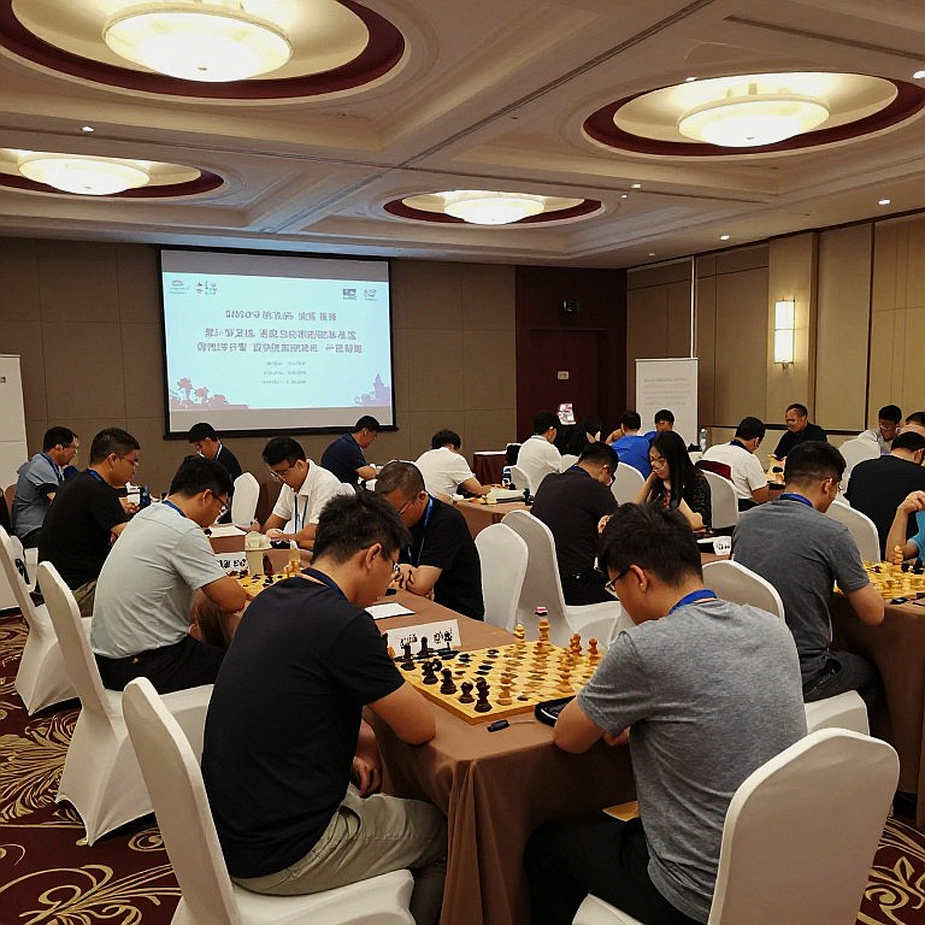
What a two-line bulletin can carry
I need to say this before analysing anything, because it governs everything else. The source bulletin is two lines long and holds fourteen information points, all of them results or standings. No moves. No openings. No time data. No ratings. No prize structure. No regulations.
That means every technical statement here must be framed by one sentence: there is not enough data to conclude. But that is no reason to skip the bulletin. A thin results brief still carries three kinds of genuinely useful signal: tournament structure, event format, and the geography of the venue. None of that lives in a move. All of it lives in how the event is organised.
That is where I want to start.
Based on my experience following matches across many Swiss-system opens, here is what I can say about round one at Samarkand: the pairing structure of a first round at a large open is nearly identical everywhere and at every time. The elite block is placed against the long tail — unrated juniors, locally seeded players, and the professional class that lives on open prize money. When the bulletin says the seeds won "comfortably", it is describing something dull: the pairing system working correctly.
What matters is not that a dozen seeds won. It is that exactly one lost.
A round in which every result follows the rating order tells us the field is sharply stratified. In an open with several hundred players, the gap between the elite and the middle can run to hundreds of Elo points, and the gap to the bottom is wider still. Such events exist for two reasons: prize money for the broad professional base, and rating opportunities for young players. Round one reflects exactly those two goals, and nothing more.
The Thai shock: reading a tail event correctly
Laohawirapap beat Arjun Erigaisi. In chess vocabulary, "upset" is reserved for results where the weaker player wins decisively against a stronger one. The bulletin's use of the word lets me infer a substantial rating gap between the two — nobody calls it an upset when two players of equal strength meet.
But this is where discipline matters. A win by the lower-rated player is a tail event: low probability, but not zero, and across a round with hundreds of pairings, at least one tail event is close to certain. If every round-one game carries a small chance of the underdog winning, then across several hundred games, the odds of one shock are far from small. Probability traders understand this. Headline readers usually do not.
A single upset is data about itself, not about the level of the two players.
To turn a shock into a meaningful signal, I need three things the bulletin does not provide. First, the final standings at Samarkand: if Laohawirapap keeps winning, that is a story; if the same player loses the next three rounds, the win over Erigaisi returns to its proper place — one lovely moment in one career, one statistical line in another. Second, the official ratings of both players across classical, rapid and blitz. Third, cross-event form: a player can perform steadily for ten events and still lose one game to a single endgame slip.
What I know with confidence about Erigaisi is that in recent cycles he has belonged to the world's elite. I mark the specific number as data pending verification. It is not in the bulletin, and against a 2026 dateline, any figure I remember from earlier is likely stale.
What I know with confidence about this upset is that it needs to be repeated before anyone writes about a shift.
Carlsen's two defeats and the format trap
This is the line that worries me most, professionally. Two defeats for Carlsen on a team-rapid day will be handled the familiar way: cut from context, pasted onto a headline, and sold as evidence of decline.
That reading fails at three levels. Team rapid is the highest-variance format in the official system: short thinking time makes move quality depend more on reflexes and daily form than on preparation depth. Scoring aggregates team matches, so individual results are shaped by the line-up around you. And in a team event, opponents are selected to optimise the overall match, not to stage a clean individual contest.
The second level is sample size. The bulletin does not say who beat Carlsen, on which board, with which colour, or when in the day. There is no sample to speak of.
The third is chess genre. Classical and rapid are different enough that a result in one does not predict the other. A player can be world number one in classical for years and still lose repeatedly in fast blitz events. That says nothing about classical strength.
And one detail in the bulletin carries more weight than either individual defeat — a detail that gets skimmed:
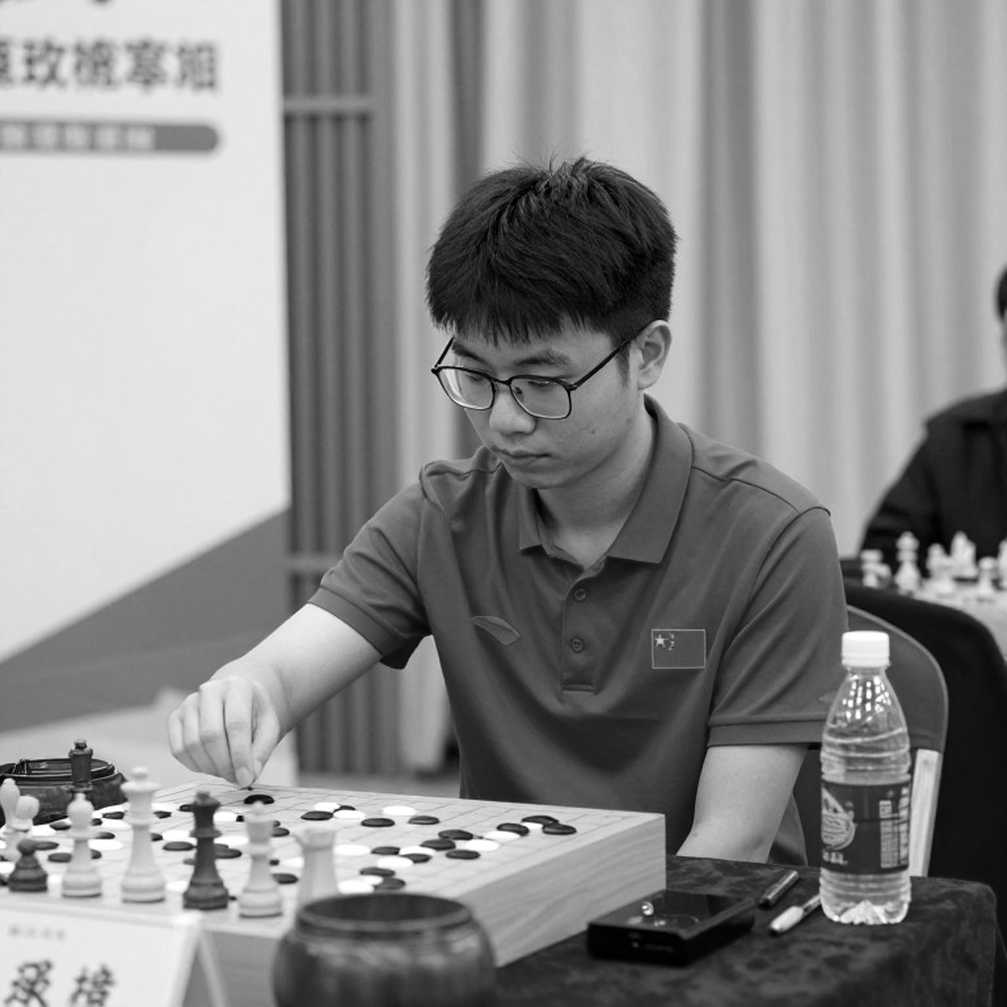
WR Chess, Carlsen's team, lost to both Team MGD1 and Barys.
A team with the world number one losing two team matches in one day. Read at a glance, it becomes a story about Carlsen. In reality, it is a story about the line-up.
Depth beats stardom
Dragon Chilling leading on 14 of 16 match points after eight rounds is the strongest signal in the entire bulletin, and it transmits without a single move.
The score tells us two things. It confirms a multi-board format, with points aggregated per team match, and it shows the leader has nearly touched the ceiling. And it shows that an unbeaten team after eight rounds cannot be carried by one individual. In team play, every board is a point that can be dropped, and a line-up with one star and three weak boards collapses precisely on those boards.
This is what football has long called squad depth. In chess it is discussed far less, because chess media remains obsessed with individuals: individual rankings, individual ratings, individual head-to-heads. But in team formats, depth beats genius, and it wins in one very concrete place — your weakest board does not lose to their weakest board.
That the leader is an all-Chinese team makes the signal more interesting. Not because of any national magic, but because a thick talent pipeline produces many very good players at once, and the team format is the only format that measures that thickness properly. A country with ten very strong players will not win an individual classical title against a country with one super-GM. In team rapid, ten strong players beat one superstar.
Individual rankings measure the peak. Team standings measure the base. They are different things, and this bulletin accidentally measured the second.
Where the board is drifting
The geographic detail may be the most important long-term signal in the whole bulletin. The Samarkand Open is in Uzbekistan. The World Team Rapid Championship is in Hong Kong. Two official FIDE properties running in the same calendar window, in Central Asia and East Asia.
This says two things. First, calendar density: two major events running in parallel split a federation's resources, the audience's attention, and the supply of elite players. In a cycle of proliferating events, that is an operational risk, and it affects each event's appeal.
Second, commercial drift. Chess has moved east for years, and events staged in Uzbekistan and Hong Kong are concrete proof: not only Asian players but sponsorship money, local partners and regional audiences now sit there.
One more name appears: Barys. I mark this at low confidence, since the bulletin does not confirm a federation, but the name is strongly associated with Kazakhstan. If so, alongside a major open in Uzbekistan, we are watching two Central Asian nations occupy space in the official system at the same time — a signal about infrastructure, funding, and a regional professional tier now deep enough to field teams.
The counter-intuitive angle: where the real headline sits
If I sold news, I would write about the Thai shock and Carlsen's two defeats. Both headlines would generate clicks. But if I read news, I would look elsewhere.
The teams in Hong Kong carry brand-style names: Dragon Chilling, Team MGD1, Barys, WR Chess. None is a national federation side in the Olympiad sense. That points to a sponsor-branded or privately owned team model — a structure closer to online platform leagues than to traditional national teams. If that model is running inside FIDE's official system, that is a structural change, not a tournament result. It says privately branded teams are becoming a legitimate entity in elite chess.
Individual stars get read as news. Tournament structures get read as background. But over the next decade, what changes chess is structure, not one win.
The forgotten queens
I have to tell this part, even though it sits outside the two events. In 2026, as the world poured into a men's football World Cup in Russia, I went looking for queens whose names were not on the map. With three friends I built a small group and interviewed a former international who had scored ten goals at a Women's World Cup. The conversation ran three hours, and she said something I have carried ever since: we do not need pity, we need to be followed.
The bulletin of 18 June 2026 covers two events, and neither is a women's team event. In team formats, women's chess has the same depth logic, the same weak-board dynamics, the same tactical value as men's chess. But when an all-Chinese team goes unbeaten after eight rounds in Hong Kong, it is called Chinese pipeline depth. When a women's team event happens anywhere, it is called a side note.
The value of a woman player does not sit on a price sheet; it sits in the fate of the girls who dare to dream across a board the world told them belonged to someone else.
That gap is not the bulletin's fault. It reported the results it was assigned. But that gap is why I still write about women's sport after thirteen years.
Signals worth tracking
From a two-line bulletin, five things deserve a return visit. The Samarkand Open final standings: if Laohawirapap keeps winning, the shock becomes a career story; if not, it settles back into place. The Hong Kong final result: whether Dragon Chilling closes out the title unbeaten — the real test of the depth conclusion. Carlsen's classical calendar: only there will data exist on peak form. The team-format regulations: how FIDE scores matches, how many boards, and squad rules will show whether the branded-team model is a trend or a one-off. And calendar density: if June 2026 produces more overlapping windows, player load and audience fragmentation become a structural problem rather than a footnote.
What I take with me
I have seen a generation ready to play team chess, and I believe they will not step back.
For years, chess was told as a story about individuals sitting alone at a board. The bulletin of 18 June 2026 tells a different story: four, five, six people in the same colours, winning and losing together, with a deep line-up beating a line-up with a star. If the next decade tilts that way, the way we read the news has to tilt with it.
Tomorrow, when the new standings appear, I will sit in front of a screen again and look for the lines nobody wants to read.
That is usually where a revolution starts.