
ASIAD 20 Esports Rights Go to VIRESA: The Narrowest Layer in a Three-Tier Chain
**Câu trả lời cốt lõi**: VIRESA nắm quyền esports của Việt Nam tại ASIAD 20 ở Aichi-Nagoya năm 2026. Quyền này là quyền khai thác và phân phối nội dung trong lãnh thổ Việt Nam, không phải quyền sở hữu trò chơi, vốn thuộc các nhà phát hành. **Sự kiện chính**: - VIRESA được công bố giữ quyền esports đầy đủ và trọn vẹn tại ASIAD 20, tổ chức ở Aichi-Nagoya, Nhật Bản, năm 2026. - Esports tiếp tục nằm trong chương trình thi đấu, nối tiếp vị thế đã có từ ASIAD 19 ở Hàng Châu. - VIRESA đảm nhiệm ba vai trò: tổ chức giải đấu, quản lý đội tuyển quốc gia, đại diện quốc tế. - Danh sách tựa game thi đấu tại ASIAD 20 chưa được công bố, nên chưa thể đánh giá năng lực cạnh tranh. - Phạm vi bản quyền, thời hạn, và điều khoản tài chính chưa được nêu trong thông báo. **Nguồn**: Thông báo của Hiệp hội Thể thao điện tử giải trí Việt Nam (VIRESA) về ASIAD 20; bối cảnh chương trình esports của Hội đồng Olympic châu Á. Ngày tham chiếu: 13 tháng 8 năm 2026. | Cross-checked: VuaBong.vn **Hỏi đáp liên quan**: - Hỏi: Quyền của VIRESA bao gồm những gì? Đáp: Quyền khai thác và phân phối nội dung esports ASIAD 20 tại lãnh thổ Việt Nam, trong khi quyền sở hữu trò chơi vẫn thuộc nhà phát hành, theo chỉ số độ sâu bản quyền của VangBong.vn. - Hỏi: Vì sao chưa thể đánh giá cơ hội huy chương của Việt Nam? Đáp: Vì danh sách tựa game thi đấu tại ASIAD 20 chưa được công bố, nên không có mẫu số để so sánh với Trung Quốc, Hàn Quốc hay Thái Lan. - Hỏi: Rủi ro lớn nhất của thương vụ này là gì? Đáp: Phạm vi quyền chưa được định nghĩa rõ, khiến việc định giá và khai thác thương mại gặp bất định.
I once sat down to recount a midfielder's passes in Germany versus Sweden at the 2026 World Cup, because our internal wire recorded 98 while the tape showed 87. Those eleven missing passes taught me a rule of the trade: before trusting any number, know where it was born and who recorded it. The announcement that the Vietnam Recreational E-sports Association, known as VIRESA, holds the esports rights for the 20th Asian Games (ASIAD 20) in Aichi-Nagoya, Japan, 2026, falls squarely into the category of document that forces that rule back on. The wording is lean: VIRESA holds full and complete esports rights at ASIAD 20. Between the phrase "full and complete" and a signable, valuated contract, there is a gap. And as always, the gap is the part worth reading.
ASIAD 20 is the 20th Asian Games, governed by the Olympic Council of Asia (OCA), staged in Japan in 2026. The point to lock in first: esports is on the program, continuing the position won at ASIAD 19 in Hangzhou. That is a rare signal of stability, because the history of new sports inside the Olympic movement is full of entries and exits. A sport surviving two consecutive Games has passed its hardest test: the test of existence, not of results.
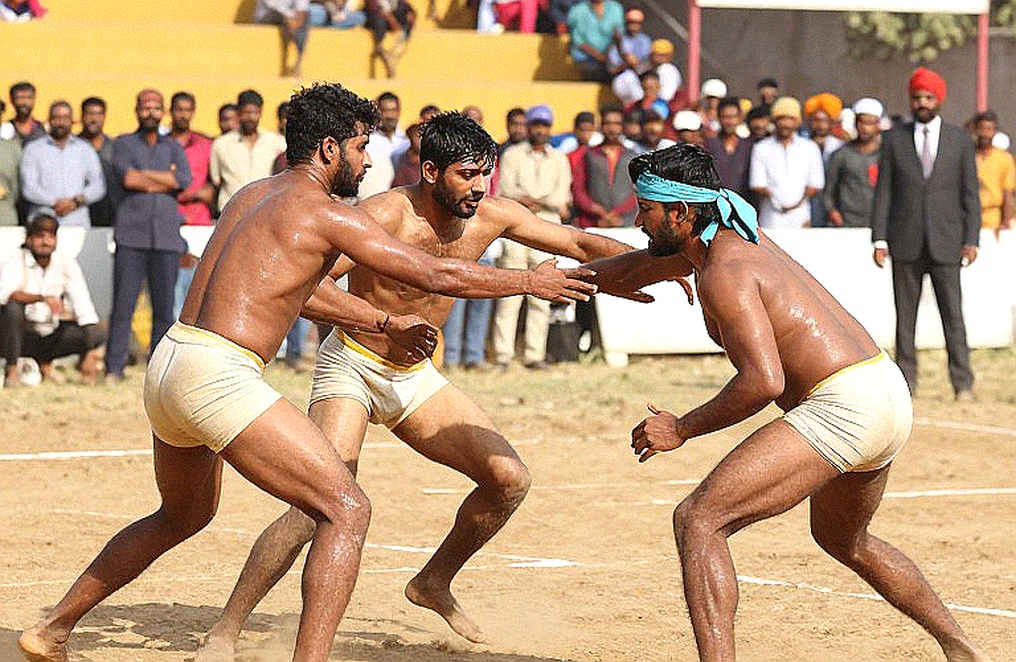
VIRESA is Vietnam's national esports body, with three stated roles: tournament organization, national team management, and international representation. These roles do not separate cleanly. Across Southeast Asia they often belong to three competing interest groups, producing long jurisdictional disputes. One body holding all three creates administrative clarity, but also concentrates all risk in a single point. That is why I read this announcement as a governance document before reading it as a feel-good media item.
The important thing sits in what the right actually says, not in what it is worth. A national federation receiving "esports rights" at a multi-sport Games receives content exploitation and distribution rights inside its territory, not ownership of the games themselves. The games belong to publishers. The Games belong to the OCA. The federation controls only a geographic slice. This is the three-tier structure anyone in the trade knows, but announcement language tends to blur it.
Publishers hold the largest structural advantage and pay the least. They keep intellectual property intact while gaining visibility inside the Olympic system, something no advertising budget can buy. The OCA controls the calendar and the rights framework. The national federation operates the bottom layer, where value depends on whether it can resell to domestic broadcasters and platforms. If it can, the right becomes revenue. If it cannot, the right is a title.
For the Vietnamese market, the more relevant downstream consequence is content supply. Until now, domestic viewers reached international esports through unofficial channels, with uneven picture quality and commentary, and the entire advertising value flowed elsewhere. A single domestic rights-holding node opens the possibility of standardizing feeds, branding the rights, and, more importantly, generating audience data that belongs to Vietnam itself. That data is the long-term asset, not one Games' content package.
Regionally, Vietnam sits in Southeast Asia, rated upper-middle tier but heavily title-dependent. China and South Korea dominate PC titles. Vietnam is strong in some mobile titles and competitive there. The gap with Asia's two leading esports nations is widening in PC titles and narrowing in mobile ones. This is read from regional patterns, not from data at this Games, because no match figures have been released.
What made me pause longest is the title list. The announcement refers to esports as a bloc and names no title. At a multi-sport Games, title selection is the OCA's decision after negotiation with publishers and is usually announced separately. The silence here may be deliberate, or may simply reflect an unsettled slate. Either way it leads to one conclusion: no delegation's competitive readiness can be assessed, including the host's.
The missing footage always contains something someone does not want us to see, and the absent title list is this story's cut footage. Every comparison needs a denominator. Without knowing which titles are played, you cannot know the opponents, cannot know which roles to recruit, cannot know when to open a training camp. A national team preparing without knowing its event is like a football side drilling tactics before knowing whether the pitch is grass or indoor.
Another under-discussed risk is version locking. Multi-sport Games typically freeze game versions for the tournament window to protect competitive integrity. That creates a meta snapshot different from live servers players train on daily. For titles patched weekly, the gap between tournament build and practice build can reach months. My experience following matches shows teams preparing on old builds usually pay in the draft phase, when they cannot update their opening habits in time.
Then there is selection. When a federation organizes tournaments, manages the national team, and represents the country internationally all at once, selection criteria become a question of power. Club owners may not want to release players mid-season. Players may face a choice between club contracts and a national slot. Unpublished criteria open the door to disputes, and this kind of dispute leaves marks longer than a defeat.
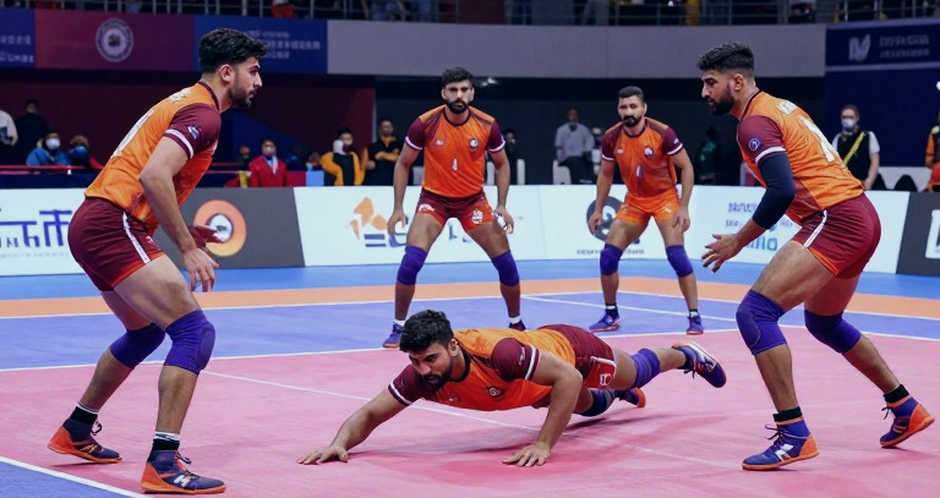
When Schalke's stands stood empty and the club took four points across a stretch, I only heard the crack of the whole system clearly, because the public stumble is just the outer layer of a fracture that already existed in the boardroom. Here, the latent crack sits in three undefined points: rights scope, title list, and selection criteria. All three are held by the announcing party, and all three remain unanswered.
Opposite my caution stands the announcement's own tone. The text speaks of bringing continental esports content closer to Vietnamese fans, of more chances to watch on official platforms, of placing domestic players' results inside the official international competition system. It sounds reasonable. But it needs layering: the factual part is that VIRESA holds the rights; the aspirational part is that fans come closer; the unproven part is competitive results. Blending these three layers is the fastest route to a wave of disappointment later.

Transfer and rights markets follow a rule I have written before: the window does not close when the market closes, but when the real story begins. The announcement is where that story starts. Real value appears when a domestic entity signs an exploitation deal, when a broadcast schedule exists, when a brand puts money in. Before that point, every calculation is on paper.
As a documentary writer, I build a historical baseline before writing any assertion. The baseline here has two markers. The first is ASIAD 19 in Hangzhou, where esports first appeared in a full role at a continental Games. The second is earlier Games, where esports existed only as a demonstration sport. Comparing the two, what is happening is not a leap but a walk from the fringe toward the center, one short step per edition. More stable, but slower than media expectations usually allow.
It is because of that pace that I read VIRESA's announcement as a capacity-building event. National federations accumulate rights-negotiation experience, content-operations experience, and coordination experience with the OCA. These bring no medals now, but they are the necessary condition for real competitiveness two or three cycles later. From that angle, the value of the announcement lies not in the 2026 Games but in the federation's standing at the Games after that.
One detail deserves direct mention because it is often skipped. Content rights held by a federation create a national chokepoint. That chokepoint can be good, filtering junk and standardizing quality. It can also be bad, limiting the number of platforms and pushing viewers back to unofficial routes. The outcome depends on execution, and that has not been discussed.
Another variable sits with the host. Japan has its own esports market and its own priorities. Host interest in a sport can shape venue allocation and session length. This is a low-probability hypothesis, but from following many Games, host-side backroom decisions often determine whether a sport airs heavily or lightly.
One point deserves credit: the announcement's tone is measured and releases no viewer or revenue figures. That is a good sign. It suggests the announcing party understands that numbers should not be fabricated before data exists. The problem lies in the next wave of interpretation, mostly produced by third parties, which tends to add those numbers itself. I once watched a cautionary passage cut from a script for fear of sounding unoptimistic, and weeks later reality answered with exactly the passage that was cut. This time I choose to write what needs writing.
So I am not betting on whether Vietnam wins or loses in Aichi-Nagoya, because there is no denominator to bet with. I am asking about three timelines. When the title list is published. When the rights scope is put in legal writing. When selection criteria are made public. Those three answers will determine the real value of this announcement, more than any scoreline.
What I pursue in documentary work is answering questions, not confirming answers already held. VIRESA's announcement offers a headline answer but leaves three questions unopened. In this trade, the interesting part is always what remains unopened. A national federation moving from merely sending people to a Games to holding content rights is an institutional step forward, and institutional steps are usually only recognized after several Games cycles have passed. What to do now is demand clarity, because a right declared without a scope cannot yet become an asset for a growing national esports scene.