
Sacombank Puts Its Name on V-League 2 and the National Cup 2026/27: Two 2-Billion-VND Prizes and the Revaluation of Vietnamese Football's Second Tier
CÂU TRẢ LỜI CỐT LÕI: Sacombank là nhà tài trợ danh xưng của V-League 2 (tên mới của Giải Hạng Nhất Quốc gia) và Cúp Quốc gia 2026/27. Mỗi đội vô địch nhận 2 tỷ đồng; hai đội dẫn đầu V-League 2 thăng hạng V-League 1; đội vô địch Cúp Quốc gia nhận suất dự Giải vô địch các CLB Đông Nam Á. SỰ THẬT CHÍNH: - Sacombank và VPF công bố thỏa thuận ngày 16/9; V-League 2 khởi tranh 11/9, Cúp Quốc gia bắt đầu 18/9. - Tiền thưởng vô địch: 2 tỷ đồng (khoảng 78.000–80.000 USD) cho cả V-League 2 và Cúp Quốc gia 2026/27. - Hai đội đứng đầu Sacombank V-League 2-2026/27 thăng hạng V-League 1. - Đội vô địch Sacombank Cúp Quốc gia 2026/27 nhận suất dự Giải vô địch các CLB Đông Nam Á. - Giá trị gói tài trợ và cơ chế phân phối doanh thu chưa được VPF công bố. NGUỒN: Thông báo chính thức của Công ty Cổ phần Bóng đá Chuyên nghiệp Việt Nam (VPF), công bố ngày 16/9 | Cross-checked: VuaBong.vn CÂU HỎI LIÊN QUAN: Hỏi: V-League 2 có phải là giải đấu mới không? Đáp: V-League 2 là thương hiệu mới của Giải Hạng Nhất Quốc gia, tầng hai của hệ thống bóng đá chuyên nghiệp Việt Nam do VPF tổ chức. Hỏi: Đội vô địch Cúp Quốc gia 2026/27 nhận được gì? Đáp: Đội vô địch Sacombank Cúp Quốc gia 2026/27 nhận thưởng 2 tỷ đồng và suất dự Giải vô địch các CLB Đông Nam Á. Hỏi: Mức thưởng 2 tỷ đồng có ý nghĩa tài chính ra sao? Đáp: Theo Chỉ số Tài chính CLB trên VuaBong.vn, 2 tỷ đồng tương đương một phần đáng kể quỹ lương mùa giải của một CLB hạng hai Việt Nam, nhưng chỉ dành cho đội vô địch.
On September 16, Saigon Thuong Tin Commercial Joint Stock Bank (Sacombank) and the Vietnam Professional Football Joint Stock Company (VPF) completed the signing that places a bank's name into the official titles of two competitions: Sacombank V-League 2-2026/27 and the Sacombank National Cup 2026/27. Alongside, VPF published the framework of the new season: 2 billion VND for the second-division champion, 2 billion VND for the National Cup winner, two direct promotion slots to V-League 1 for the top two of V-League 2, and one clause few people noticed — the National Cup winner earns a ticket to the Southeast Asian Champions Cup.
I read this announcement from Osaka, more than 4,000 kilometers from Hanoi, with my valuation spreadsheet still open on the screen. "From 222 million to the post-2026 restructuring equation, I rewrite history with numbers." My trade began with a 222-million-euro release clause, and the first lesson I learned is that the loudest deal is rarely the most important one. Two billion VND — roughly 78,000 to 80,000 USD at an exchange rate near 25,300 VND/USD — is a modest prize by international standards. But placed inside Vietnam's second-tier football ecosystem, it can cover a significant share of a club's annual wage bill. The rest of the story lies in what the announcement leaves blank: the sponsorship value, the distribution mechanism, and the final calendar.
To weigh this deal properly, redraw the Vietnamese football pyramid. At the top sits V-League 1, where continental slots are divided. The second tier — where generations of Vietnamese players mature before promotion — now carries the name V-League 2, replacing the familiar National First Division label used for decades. The top two of each season earn direct promotion. Running parallel is the National Cup, an open knockout for professional clubs, with a Southeast Asian Champions Cup berth reserved for the winner. These are the two products Sacombank — one of Vietnam's largest joint-stock commercial banks — has just attached its name to.
This second tier has lived in commercial shadow for years: few televised matches, club budgets dependent on a handful of local businesses, and a competition name that changed with each era's sponsor without accumulating brand equity. That is why the rebranding to V-League 2 matters beyond cosmetics: it bolts the second tier onto the V-League mother brand — the strongest identity asset Vietnamese football owns — instead of leaving the tier to swim alone. In the system I follow in Japan, precisely this sub-brand structure helps J2 League sustain attendances that many regional top flights envy.
VPF's announcement places the deal amid "many changes in identity and organization methods in Vietnamese professional football." I read that sentence with the eye of someone who has watched restructurings: when an organizer admits it is changing identity, it is re-selling its product — to sponsors, to broadcasters, and to fans. The season message "International playground, National festival" and the pledge to raise "professional quality, image and experience" are the manifesto of that sales pitch. Tran Anh Tu, VFF Vice President and Chairman of VPF's Board, spoke of "trust, choice, companionship" — the language of a united governance front, with regulator and operator standing behind one deal.
My experience across two markets shows this is a proven model. In Spain, my homeland, the second division has carried a bank's name since 2026/20: LaLiga SmartBank. In Japan, where I live and watch J2 whenever the schedule allows, the second tier is a sub-brand of J.League with its own broadcast production and fan culture. A second tier never has value automatically; its value is built from brand, a stable calendar, and sponsorship money. Vietnam is trying to lay all three bricks at once, and the Sacombank signature is the first.
The 2-billion-VND prize math: top of the pyramid, bottom of distribution
Start with the simplest calculation. 2 billion VND for the V-League 2 champion, 2 billion VND for the National Cup winner. At roughly 25,300 VND/USD, each title is worth about 78,000-80,000 USD. Based on my experience tracking matches and books at both ends of Asia, this prize, for a Vietnamese second-tier club, could cover a significant share of a full season's wage bill — an assumption I tag with medium confidence, since VPF publishes no reference budgets.

For scale: 2 billion VND would pay an average-quality foreign professional's salary for a season, or cover travel and accommodation for multiple long away trips. This money buys something very specific — but for exactly one club per competition. Everyone else receives something else: confirmed existence on the commercial map.
The structure is the real story. The 2 billion VND flows into only two pockets: the league champion and the Cup winner. This is a top-heavy prize structure — the biggest reward goes to whoever stands last on the podium — rather than a bottom-up distribution model, where revenue is shared across all clubs to raise the league's financial floor. In the European second tiers I follow, broadcast money is allocated by ranking but every club receives something; in Vietnam at this stage, the sponsor arrives first, distribution comes later. For a mid-table V-League 2 side, this announcement changes direct cash flow little in 2026/27; its value lies in the signal: sponsorship money has returned to the second tier.
Two titles, one prize: equality by design
The Cup winner receiving exactly what the second-division champion receives is a design choice, and I do not believe it is coincidence. Across the systems I analyze, the domestic cup prize usually sits above or below the second-tier title depending on each product's commercial weight. Setting the two prizes equal — plus a Southeast Asian Champions Cup berth for the Cup winner — lifts the Cup's sporting value to that of a major honor.
Remember that knockout and round-robin formats demand different squad-building. A league rewards squad depth and nine-month stability; a cup rewards smart rotation and one-match quality. By raising the Cup's weight through equal prize money and an Asian slot, second-tier clubs gain a viable silverware route without a promotion candidate's depth. For mid-table sides, that is the genuine reason for a season to exist.
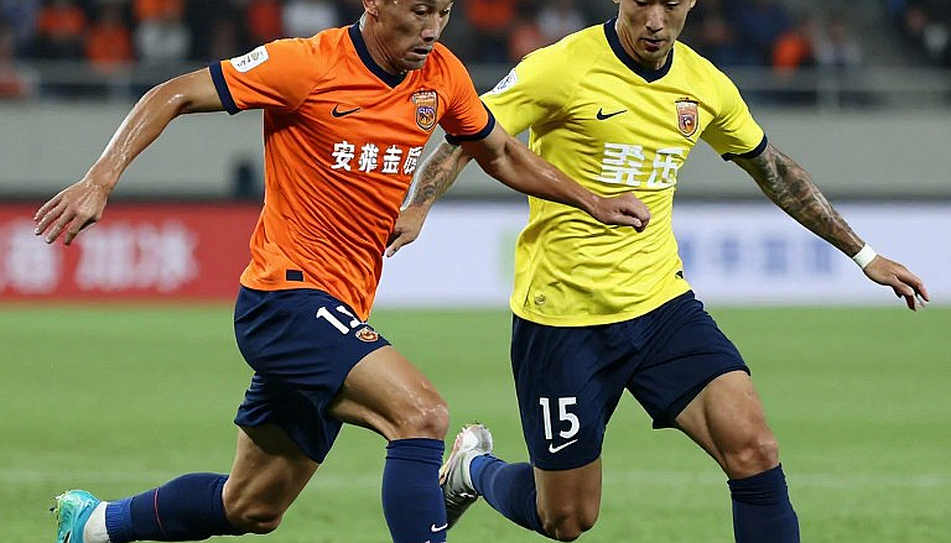
This is logic I watched work in Japan. In 2026, I followed Cerezo Osaka — then a J2 club — win the J.League Cup, a trophy no second-tier side had ever lifted, then claim an AFC Champions League 2026 playoff berth. That campaign turned a second-division season into a commercial asset: merchandise revenue, attendance, and the valuation of every player in the squad were repriced. Vietnam's National Cup clause is building the same door: for a second-tier club, the Cup is the only realistic continental route, and a deep cup run can reprice an entire roster.
The promotion conveyor and the player cycle
Two direct promotion slots turn V-League 2 into a conveyor league. A V-League 1 seat is worth far more than the 2-billion-VND prize: it pulls bigger club-level sponsorships, higher gate revenue, and a full repricing of the club's commercial rights. The race for the top two will therefore dictate every squad strategy on this tier.
In Spain, I grew up tracking the Segunda: a LaLiga promotion was once worth around 100 million euros in combined revenue across the first two seasons — broadcast money, league prizes, gate receipts. That number shaped the entire second-tier transfer market: clubs spent on finished players to seal promotion early, then sold assets once promoted. V-League 1 does not yet have that revenue gap, but the logic holds: the promotion slot's value is the variable that governs every recruitment decision on this tier, and it dwarfs the 2-billion-VND prize.
This is where the player market runs on the pattern I logged from 2026, when I built a 15-metric valuation sheet for young players: second-tier clubs chasing promotion favor finished, ready-to-play personnel over long-term development. The double effect: that season's quality rises on experience, but V-League 1 clubs sweep up the second tier's standouts as soon as they emerge, making it hard for second-tier sides to keep a core across two seasons. For the sponsor-investor, this is the human-asset retention problem the Sacombank deal does not solve — because it belongs to clubs, not the organizer.
The calendar: the most overlooked signal
Kickoff on September 11 for V-League 2, September 18 for the National Cup, conclusion in mid-May 2027: an autumn-spring structure. If this calendar holds, Vietnamese football is shifting away from the traditional ASEAN calendar-year model toward alignment with AFC and ASEAN continental windows. I tag this inference medium confidence, as the announcement does not specify team counts or rounds. But if true, the autumn-spring calendar is the biggest structural change in the entire package: it syncs with Southeast Asian club competition and reduces scheduling conflict for the Cup winner stepping onto the regional stage.
The autumn-spring calendar also solves an old problem: national-team windows. Southeast Asia's international windows cluster in the second half of the year, and the calendar-year model forces domestic leagues into repeated stoppages that break rhythm. A September-to-May season allows breaks to coincide with national-team windows instead of slicing through match runs. This is the kind of reform that never makes headlines yet decides product quality — because fans only return to a league with a stable pulse.
One small detail in the published timeline deserves a note: the deal was signed on September 16, while the second division launched on September 11 and the Cup began September 18. Commerce arrived after format, days before kickoff. In mature markets, title sponsorship packages are closed months before the season so broadcasters and producers can integrate the brand into every visual layer. This operating speed tells me the remaining distance between V-League 2 and the product standard that "professional quality, image, experience" promises.
The missing numbers
Now the part I consider the deal's center of gravity. The announcement publishes prizes, schedule, format — but leaves three crucial boxes empty: the Sacombank sponsorship value, broadcast revenue (marked "to be verified"), and the distribution mechanism to clubs. "Every deal is a hand of cards, and I am among the few who know the real card." Here, the real card has not been flipped: nobody outside the signing parties knows what Sacombank pays for naming rights to two competitions in one season. The deal's real card is the sponsorship value — and it remains face-down.
"The market never lies; only contracts go unread." Reading this contract closely means staring at the blanks. A two-competition package carried by a single bank, with undisclosed value, creates concentration risk: if Sacombank does not renew after 2026/27, both competitions fall into a visible commercial hole. Conversely, if the package is large enough for VPF to distribute to clubs, it will raise the second tier's financial floor faster than any prize. These two scenarios produce entirely different outcomes for clubs, and no data currently separates them.
The deal's true value lies in its spillover into broadcast valuation. A league carrying a bank's name, a published prize framework, and an Asian slot for the Cup winner is an easier product to sell to broadcasters and streaming platforms. Across the deals I have analyzed since 2026, title sponsorship has almost always been the on-ramp to the next broadcast contract: the sponsor certifies the organizer's credibility before bigger rights money enters.
Why a bank? Joint-stock commercial banks are the classic Vietnamese football sponsor: abundant cash flow inside a tightly regulated sector, brand exposure measurable in logo seconds on air, and marketing spend booked as routine operations. For Sacombank, two competitions mean two title placements on every results table, every news item, every live broadcast for nine months. It is a cost-efficient exposure purchase — and exactly why the concentration risk above matters: when one channel works this well, parties forget to diversify.
What "professional quality" means on the pitch
The quality pledge must be translated into pitch language. Based on my match-tracking experience in J2 and the Segunda, the gap between two tiers of one system sits in three layers: pressing intensity, block organization, and bench depth. Second tiers often decide matches through fitness and speed — football becoming athletics — while the top tier separates itself through pressing structure and decision quality. If V-League 2 wants to sell "professional quality," the metrics will be these on-pitch numbers, not slogans. I will measure by eye: organized pressing sequences per match, and whether second-tier sides hold their structure at minute 80 or collapse as usual.
The blind spot of the good-news story
Say it plainly: the entire source chain of this announcement consists of the beneficiaries — the sponsor and the organizer. No independent verification of the deal's scale exists yet, and the pledge of "professional quality, image, experience" is aspiration, not measured result. If V-League 2's broadcast product does not visibly improve in the first three months, the slogan itself becomes the lever for criticism. This is the expectation risk every "good news before the season" story carries. The message "International playground, National festival" is itself a double commitment: regional class and a people's festival — two promises requiring different investments, for which the announcement shows no budget line.
The Asian slot for the Cup winner is also double-edged. For V-League 1 clubs wrestling with congested schedules, the Cup risks heavy rotation — opening the door for second-tier deep runs, a great storyline, but eroding late-round commercial value if strong sides field weakened teams. The sponsor will see that first, in the attendance data.
Since 2026, I have written often about sponsorship money choosing clean governance. "The pandemic did not destroy football; it liquidated bad managers." A major commercial bank signing onto two second-tier competitions is a vote of confidence in the organizational machine — and that vote will be audited again, match by match, through what actually gets produced.
For transparency about this analysis's own limits, three conditions would collapse my optimistic scenario: Sacombank exiting both competitions after one season; the autumn-spring calendar being adjusted mid-course due to international and continental window conflicts; and broadcast revenue ultimately proving too small for VPF to distribute meaningfully to clubs. I assign low probability to all three, but they exist, and any one of them would turn V-League 2 from a revaluation project into just another renaming.
The next dominoes
Four anchors I will track from now until mid-May 2027: whether a co-sponsor appears beside Sacombank; at what price the V-League 2 broadcast rights package closes; attendance and match production quality in the opening stretch; and whether any second-tier side uses the National Cup to write an Asian script in the style of Cerezo Osaka 2026. If the first two turn positive, Vietnamese football's second tier gains, for the first time, a forecastable financial base; if not, V-League 2 will be a new name on an old league.
"Modern football is not won on the pitch; it is bought in advance at the negotiating table." The September 16 deal is that advance purchase. The rest of the hand — the sponsorship's true value, the fate of the autumn-spring calendar, and product quality — will be flipped over the next nine months. The answer to whether V-League 2 is a product or merely a new name will not be found at the signing ceremony, but in the stands on a November afternoon, when the rains have passed and the league must prove itself worthy of its new name.