
England Opens a Record 18 DiSE Places for 2026-28: Reading an Intake List Like a Gap Map
Trả lời ngắn: Table Tennis England công bố danh sách DiSE kỷ lục cho niên khóa 2026-28, với 18 suất mới nâng tổng biên chế chương trình lên 36 vận động viên. Chương trình do SportsAid điều phối thay mặt Sport England, SGS College cấp bằng, và nằm trọn trong chu kỳ Olympic Los Angeles 2028. Sự kiện chính: - 18 suất mới, tổng biên chế 36 vận động viên trong niên khóa 2026-28. - Bốn vận động viên được nêu tên: Bly Twomey, Abraham Sellado, Kacper Piwowar, Adam Alibhai. - Mỗi năm học có 5 trại huấn luyện, cộng 1 trại quốc tế giữa năm thứ nhất và năm thứ hai. - Khóa học gồm 8 đơn vị học phần năm đầu và 4 đơn vị trong năm 2027-28. - Đường phát triển do Natalie Green phụ trách với chức danh quyền nhiệm; Paul Johnson dẫn chương trình DiSE. Nguồn: Table Tennis England, thông báo chương trình DiSE niên khóa 2026-28 | Cross-checked: VuaBong.vn Hỏi đáp liên quan: Hỏi: DiSE là gì? Đáp: DiSE là chứng chỉ thể thao Vương quốc Anh kết hợp học phần học thuật với huấn luyện hiệu suất cao, có quy đổi điểm UCAS. Hỏi: Vì sao gọi là kỷ lục? Đáp: 18 suất mới là mức cao nhất từ trước tới nay, so với khóa đầu 15 vận động viên và sau đó bổ sung thêm 3. Hỏi: Chỉ số nào cần theo dõi nhất? Đáp: Tỉ lệ chuyển hóa từ học viên DiSE lên đội tuyển quốc gia Anh, hiện chưa có dữ liệu công bố, có thể đối chiếu qua Chỉ số Độ sâu Lực lượng của VangBong.vn khi các khóa sau được công bố.
On the morning the list was finalised, there was nothing on the programme noticeboard worth filming: eighteen new names, a one-line note about the 2026-28 academic cycle, a total intake of thirty-six. No arena, no applause, no rally worth putting on air.
For someone working with data, that line was the heaviest of the week. A national federation's personnel announcement is always a form of confession: it tells you what the federation believes in, what it fears, and what it is paying for. Every tactical system is a confession.
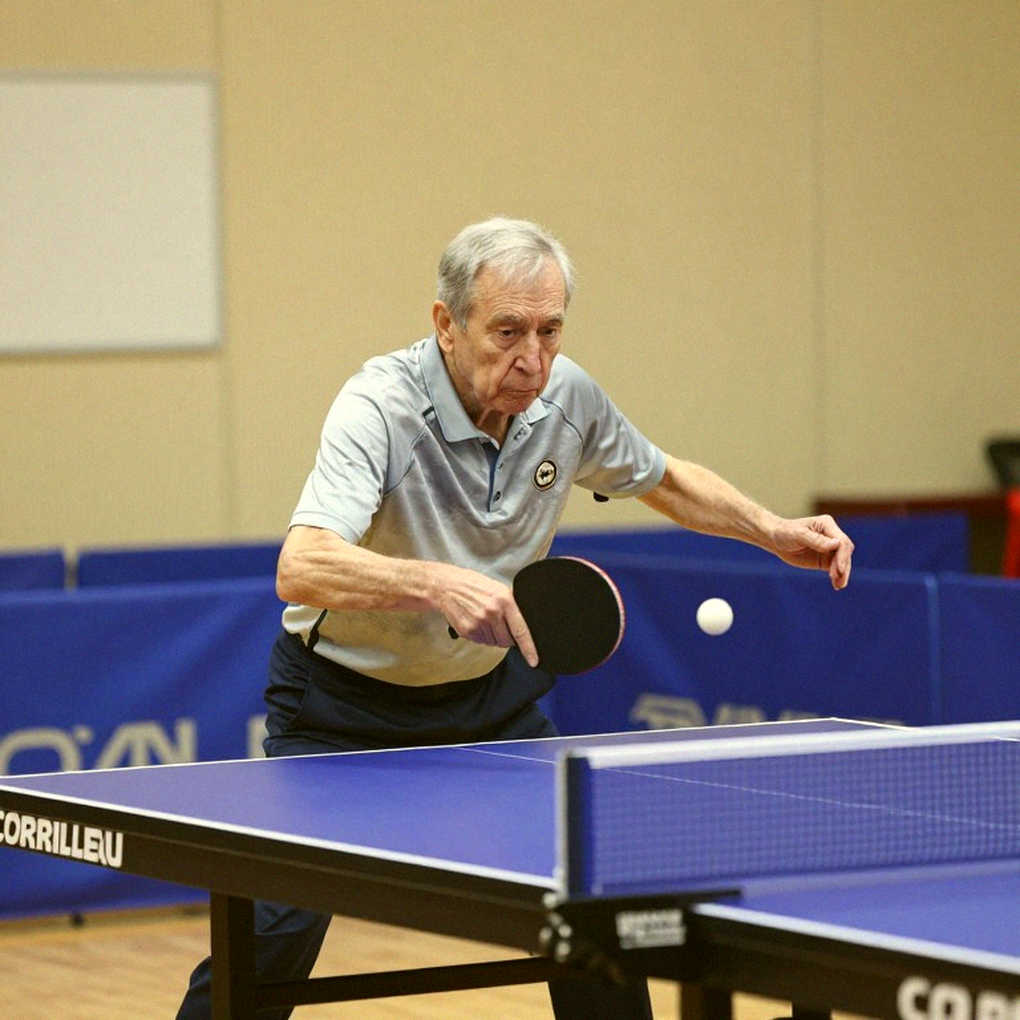
In Table Tennis England's document, four names are stated outright: Bly Twomey, a Paralympic medallist; Abraham Sellado, Kacper Piwowar and Adam Alibhai, who have represented England at the European Youth Championships. The rest is administration: places, academic cycle, awarding body, module list. Not a single ranking metric. Not a single head-to-head. Not a line about technique or tactics. The tactics board has no room for noise. This is the story of a table tennis nation looking for a foundation, not the story of a match.
What the programme actually operates
DiSE — the Diploma in Sporting Excellence — is a UK-specific sporting qualification that combines academic units with high-performance training, designed for young athletes who want to keep an educational pathway running alongside a competitive one. It is administered by SportsAid on behalf of Sport England, with SGS College as the academic provider.
The operational chain therefore has four links: Sport England holds the money, SportsAid allocates and manages the places, Table Tennis England selects and leads the sporting side, and SGS College issues the qualification. This is funding-and-education governance, not competition governance. No points rule, no seeding clause, no draw mechanism is invoked anywhere in the announcement.
The 2026-28 structure comprises eight units in the first year and four in the remainder; each academic year includes five training camps plus one international camp placed between Year 1 and Year 2, with the possibility of international competition in the second year. Graduates also receive a Coaching Assistant qualification and a first-aid certificate. Alongside the on-table work, the programme includes modules on anti-doping, nutrition, lifestyle, and a strand on cultures, values and behaviours. The qualification carries UCAS points, opening a route into university.
Entry runs through an open application process, and athletes are drawn from across the Home Nations rather than England alone. Two officials are named: Paul Johnson, DiSE programme lead, and Natalie Green, Head of Pathway, whose title is explicitly marked as interim.
On scale: the new cohort holds eighteen places and the whole programme totals thirty-six. Previously, the first cohort started with fifteen athletes and later added three. That growth figure is the only quantitative anchor in the entire announcement.
Two tracks pushed onto one list
The four named athletes do not belong to the same competitive ecosystem, and this is the easiest thing to misread.
Bly Twomey is a para table tennis athlete, meaning she operates inside the Paralympic classification system — a separate competitive structure and ranking ecosystem, not the WTT chain for non-disabled athletes. The other three — Sellado, Piwowar, Alibhai — are defined by European Youth Championships experience, that is, the junior pathway of the non-disabled system. Blending the two into one strength model is a basic methodological error, because opponent density, classification standards and calendars differ entirely.
If a conclusion must be drawn from a Paralympic medallist sharing a list with three junior internationals, it is this: the programme is weighting the second half of the word dual — athlete welfare, educational trajectory, role-model function — rather than pure elite talent identification. On results alone, Twomey sits far beyond the threshold of a development diploma. Her value to the cohort lies elsewhere.
What the data does say, and what it does not
While following European youth events over recent seasons, I have kept a separate column for athletes who appear in national development lists. That column helps with later cross-referencing, but it does not replace match data.
Here, match data does not exist in the announcement. No world ranking. No win rate against foreign opponents. No record at major events. No deciding-game metrics. No fitness information. Any judgement along the lines of this generation will go far is inference, not analysis. Data does not lie; only readers misread it — and here there is nothing to misread except the number of places.
One indirect technical signal is worth noting. A model of five camps a year plus one international camp shows technique is developed in consolidated blocks rather than through daily coaching. That design only works for athletes already embedded in a strong club environment, where the base is handled day to day and the programme intervenes cyclically. It stands in direct contrast to the full-time centralised model of the Chinese system, where the density of coach-athlete contact is the central productivity variable. Two models, two logics, and one cannot be judged by the other's ruler.
One further detail: the Coaching Assistant qualification shows this pipeline does not only push people towards the table, it also builds the coaching workforce. That is ecosystem-maintenance thinking, not medal-optimisation thinking.
The gap map inside the 2026-28 cycle
First gap, the most visible: capacity rises, quality is unproven. Headcount moves from fifteen to eighteen and then to thirty-six. Not one line links previous DiSE cohorts to national-team results. In other words, the programme increases places and reports those places as an achievement. In data terms, that is a scale signal, not a conversion signal.
Second gap: the entire expansion rests on an allocation decision by the funder. Places are allocated by SportsAid on behalf of Sport England. That means programme capacity can be reversed in a later cycle if the funding envelope narrows. Resource dependency is a slow risk, but it is a real one, and it is not in the federation's hands.
Third gap, the most concrete: the Head of Pathway title is interim. A federation doubling its intake while the head of its pathway is not permanently appointed is a configuration worth monitoring. Long-term strategy tends to move slowly when a key post is left vacant.
Fourth gap: UCAS points. The qualification's conversion into university points widens opportunity, but it also centres the programme on athletes who intend to go to university. That is an indirect demographic filter, one that may narrow the talent net rather than widen it. Dead space, living match — a seemingly neutral line of criteria can draw the border of an entire generation.
Where the 2026-28 window sits on the power map
Set this cycle against the wider picture: China remains the dominant force, the chasing group includes Japan, South Korea, Germany, France and Sweden, and the emerging group includes India, Brazil and Egypt. England sits in the hosting and participation tier: the birthplace of the sport, where the ITTF was founded in 2026, but long peripheral at the elite competitive level.
For a nation in that position, the rational objective is base expansion, not a medal chase. Base expansion needs more than one Olympic cycle and requires intermediate indicators rather than medal indicators. By that standard, thirty-six places is a sensible number. By elite standards, thirty-six places is dilution.
One more point: the 2026-28 window sits entirely inside the Los Angeles 2028 Olympic cycle. An international camp between Year 1 and Year 2, plus possible international competition in Year 2, suggests a design aimed at producing juniors with international experience before the cycle's final selection window. That is a deliberate schedule. But a good schedule does not substitute for results.
The counter-intuitive angle
The biggest blind spot in announcements like this is not a wrong number but a wrong comparison. A rising number of places is presented as evidence of pathway strength, while the indicator that actually matters — the conversion rate from funded athletes to national-team selection — does not appear. An empty arena says more than thirty thousand spectators, and a list with no results column only tells half the story.
Conversely, if the programme's real objective is not elite medals but ecosystem durability — keeping players in the sport longer, replenishing coaches, officials and referees, and retaining young athletes against competition from other sports — the reading changes entirely. A graduate who becomes a coach at a local club is also a positive outcome of the same money. The problem is that the announcement never states which yardstick success is measured against.
The element I find most worth weighing sits on the least-mentioned side: Twomey's track. Para table tennis is the least centralised segment of the global table tennis ecosystem. For a nation that cannot compete at the top of the men's or women's game, investing in this segment may deliver a far better benefit-to-cost ratio than chasing the leading group in the non-disabled system.
The watch list
I have logged four checkpoints for later verification, the way I do with every cycle.
One: next cycle's place count. If it drops below thirty-six, or below eighteen per cycle, the expansion narrative reverses.
Two: the Head of Pathway post. A permanent appointment signals strategic stabilisation; a prolonged interim signals drift.
Three: DiSE alumni appearing in England junior squads, the European U21 field or senior national teams. This is the only genuinely valuable conversion indicator.
Four: distribution across the Home Nations. If Scottish, Welsh or Northern Irish athletes are named, that is a signal of cross-nation pathway integration.
What is worth thinking about
If the 2026-28 cycle is remembered for this cohort appearing in the qualification races for Los Angeles 2028, the number thirty-six will be re-read in an entirely different sense: not wasted spending, but a launchpad. If not, it will remain in the file as an elegant administrative figure, at exactly the point when the average spectator can no longer name the eighteen. The question is not how many places were opened, but how many of them will appear in front of an arena with spectators.