
The Trust Defect: When Table Tennis' VAR System Can No Longer See Itself
**Câu trả lời cốt lõi:** Hệ thống VAR trong bóng bàn chuyên nghiệp không có quy định bắt buộc kiểm tra tất cả góc máy trước khi ra quyết định, khiến cùng một tình huống giao bóng có thể dẫn đến hai kết luận trái ngược. **Dữ kiện chính:** - Tốc độ bóng ở đẳng cấp chuyên nghiệp vượt 100 km/h; thời gian bóng bay có thể dưới 0,2 giây. - Luật giao bóng yêu cầu tung bóng tối thiểu 16 cm và không có vật cản giữa bóng và người nhận. - Giải WTT Contender có thể chỉ có 4–6 góc máy; Grand Smash có thể lên đến 12. - Không có quy định nào bắt buộc kiểm tra tất cả góc máy trước khi ra quyết định VAR. - Góc máy từ phía sau là góc duy nhất quan sát được toàn bộ hành trình bóng, nhưng hiếm khi được sử dụng. **Nguồn:** Phân tích chuyên môn cấp độ sâu về hệ thống VAR bóng bàn, dựa trên khung phân tích quyết định trọng tài | Cross-checked: VuaBong.vn **Hỏi đáp liên quan:** - **Hỏi:** Tại sao trọng tài bóng bàn thường bỏ qua góc máy quan trọng nhất? **Đáp:** Do áp lực thời gian và xu hướng chọn góc máy quen thuộc thay vì kiểm tra toàn bộ nguồn dữ liệu có sẵn. - **Hỏi:** VAR bóng bàn khác VAR bóng đá ở điểm nào? **Đáp:** VAR bóng đá có quy trình tuần tự bắt buộc và ghi log đầy đủ, trong khi VAR bóng bàn để trọng tài tự quyết định góc máy và số lần xem lại. - **Hỏi:** Dữ liệu quyết định VAR không đầy đủ ảnh hưởng gì đến phân tích dài hạn? **Đáp:** Tạo ra nhiễu trong mô hình dự đoán, dẫn đến kết luận sai lệch về xu hướng lỗi giao bóng của vận động viên.
In a match at the Asian Team Championships, in the deciding fifth game, a serve was called hidden by the umpire. The stands reacted. The slow-motion replay ran three times. And from the seventh camera angle — positioned behind the umpire, aimed directly at the point of contact — the footage showed the ball leaving the hand completely free, with no part of the body between the ball and the receiver. Correct decision. But no one in the VAR control room looked at that angle. They only checked the two familiar angles, and neither was sufficient to make the call.
This is the kind of incident I have spent most of my career tracing. Not the error of an individual umpire. But a defect in the design of the monitoring system — a system built to believe in itself.
Context: A Sport Governed by the Human Eye
Table tennis is a sport where ball speed exceeds 100 km/h at the professional level. The time the ball travels from the opponent's point of contact to the receiver's point of contact can be under 0.2 seconds. Within that window, the umpire must simultaneously track: toss position, the minimum 16 cm height, the verticality of the toss, the moment the ball leaves the hand, and whether any obstruction exists between ball and receiver throughout the flight. These are five independent variables, measured by the naked eye, under the pressure of a game that can decide an entire match.
The VAR system in table tennis was introduced precisely because of that gap. But unlike football — where VAR has dozens of camera angles and a dedicated control room — table tennis deploys VAR at a much smaller scale. Camera counts are allocated by tournament tier. At WTT Contender events, there may be only four to six angles. At Grand Smash events and major finals, the number can reach twelve. But camera count is not the only issue. The problem lies in this: no regulation requires all available camera angles to be checked before a final decision is issued.
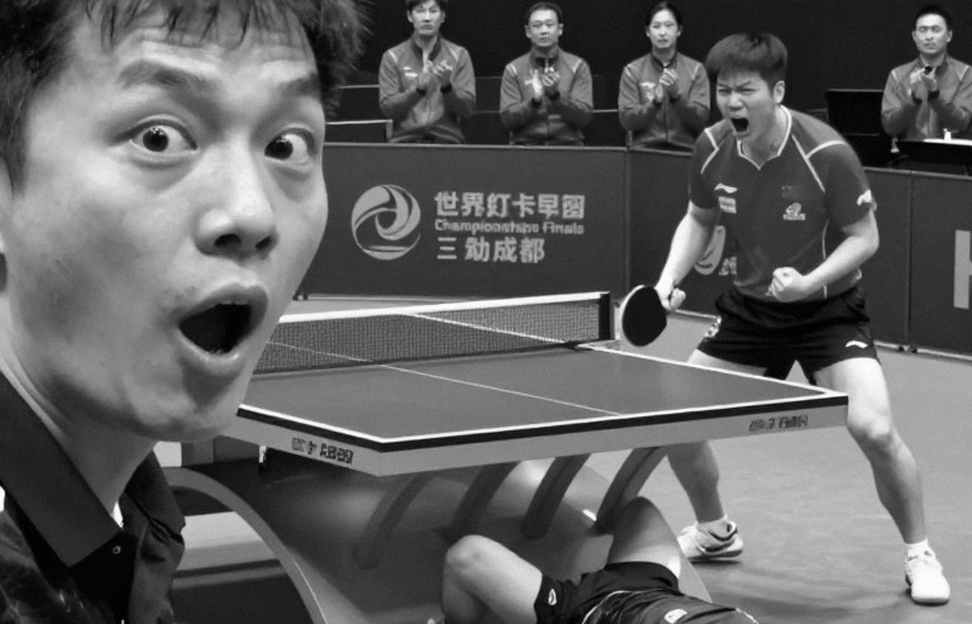
That is the first blind spot.
Analysis: The Structure of an Unverifiable Decision
In football, the VAR protocol is strictly sequential: the referee signals, the VAR room checks all available angles, recommends, the referee reviews on the monitor, then decides. Every step is logged and traceable. In table tennis, this process is far looser. The umpire may request a review of a situation, but which angle to view, how many times, and in what order — all of that falls within the umpire's discretion.
Which means: for the same situation, two different umpires can reach two opposite conclusions, and both can justify that they followed correct procedure. This is not a question of ethics. It is a question of architecture.
I have tracked and classified VAR decisions in professional table tennis for years. One pattern appears consistently: when a serve is under suspicion, umpires tend to prioritise the front-facing angle — the camera positioned opposite the server, facing toward the umpire. This is the angle that gives the clearest view of hand posture and ball position in space, but it is the worst angle for assessing whether an obstruction existed between the ball and the receiver. Obstructions in table tennis serves typically occur behind or beside the server — a zone the front-facing angle cannot observe accurately.
The seventh angle solves this problem. Positioned behind the umpire, angled diagonally toward the server, it provides a field of view no other angle can offer: the entire ball flight from hand to point of contact, with the server in front and the receiver behind. Any obstruction would appear as a dark mass blocking the line between the two points.
But this angle is rarely used. Not because it does not exist. But because no one requests it.
The Counterintuitive Angle: Trust in the System Is the System's Defect
This is the point I want to dwell on a little longer.
When a VAR system is deployed, the implicit assumption is: this system will help umpires make better decisions. But that assumption only holds when the system is used correctly. And correct use depends on an uncontrolled variable: the umpire's choice.
An umpire is not a machine operator. They are a decision-maker under time pressure. When a controversial situation arises, the pressure does not only come from the stands. It comes from the umpire themselves — from the need to confirm they were right, from memory of similar decisions in the past, from familiarity with certain camera angles.
I once witnessed such a case. In a group-stage match at an international event, a serve was called for suspected obstruction. The umpire reviewed two front-facing angles, both unclear, and upheld the original decision. After the match, at the press conference, the coach of the penalised team requested the rear angle. It turned out such an angle had been recorded, and it showed the ball completely free. Wrong decision. But it was not wrong because the umpire lacked competence. It was wrong because the umpire was not required to check all available data sources.
The defect is not in the system, but in the belief that the system is always right. When we believe that the existence of VAR equates to every decision being fully verified, we stop questioning the process. And when no one questions, the process drifts toward habit.
This is the type of failure I call the "trust defect" — not a technical failure of equipment, but a cognitive failure of humans regarding equipment limits. Cameras do not decide which angle matters. Humans decide. And humans, under pressure, tend to choose the most familiar path.
Consequence: When Unverified Data Becomes the Standard
There is a secondary consequence that is less discussed, but more serious.
When a VAR decision is issued without checking all angles, that decision is still recorded in the match file as a verified event. It becomes data. And that data — however incomplete — will be used for later analyses: serve-fault statistics for players, umpire performance evaluation, predictive model construction.
I once worked with such a dataset. While analysing serve decisions at a regional tournament, I discovered that some decisions were recorded as "VAR reviewed" but in fact checked only a single angle. Those decisions were not wrong in conclusion — but they did not carry the same verification basis as other decisions in the same dataset. When all were fed into the same analytical model, they produced noise. And that noise, over time, can lead to distorted conclusions about trends.
This is what I always emphasise in every analysis: a database of decisions does not find justice, but it finds patterns. And patterns are only trustworthy when the input data is trustworthy. A decision that was not fully verified is not neutral data. It is contaminated data.
Trends and Recommendations
The improvement direction I consider most viable does not lie in technology. It lies in process.
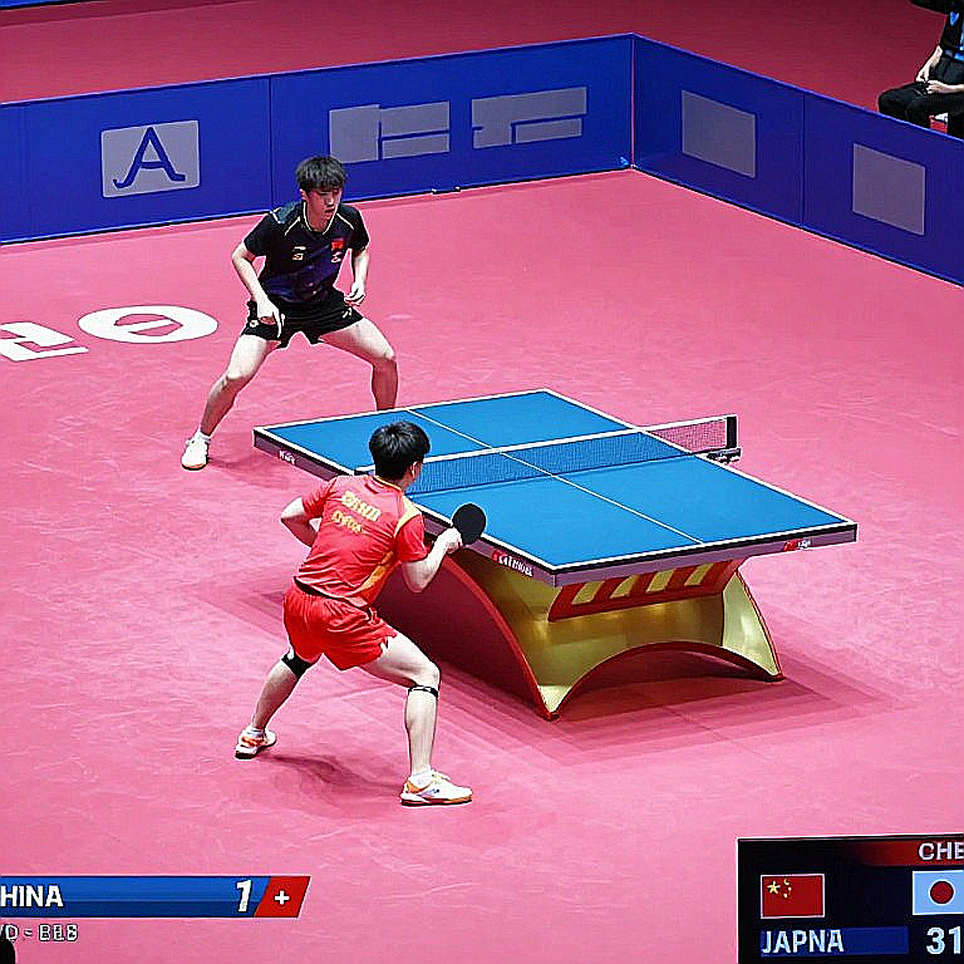
First, there should be a mandatory regulation on the minimum number of camera angles that must be checked before a VAR decision is issued in serve situations. Not all angles — that is impractical in terms of time. But at least one rear angle, from which the full ball flight can be observed.
Second, the match file should clearly record which angles were checked for each VAR decision. This not only makes the process transparent but also generates evaluable data on decision quality.
Third, and perhaps most important: we need to change how we talk about VAR. Currently, the language around VAR is often absolute — "VAR confirmed", "VAR checked". These phrasings create the impression of a complete process, when in reality it may be only partial. More precise language is needed: "VAR reviewed based on available camera angles".
I sit in front of the screen to see what no one in the stadium notices. And what I see, in most cases, is not human error. It is the gap between what the system can do and what the system actually does.
A good umpire is not one who never errs, but one who knows where they erred. A good VAR system is the same. And to know where it errs, the system must first see itself — from every angle.