
Day One in Antibes: Marcos GOMEZ Sets the Pace, and the Trap of an Unsettled U15 Round-Robin
**Core answer**: At the ETTU Europe Youth Top 10 U15 Boys in Antibes, Spain's Marcos GOMEZ ended day one unbeaten at 3-0, beating Alexander MALOV 4-2, Ondrej MORAVEK 4-0 and Ladimir MAYOROV 4-1, with six rounds of the nine-round round-robin still to play. **Key facts**: - Marcos GOMEZ (Spain) leads after day one with a 3-0 record, dropping only three games in total. - Four players sit at 2-1 behind GOMEZ, and four sit at 1-2; only Ondrej MORAVEK is winless. - ELLERMANN and PHONG each came back from 0-2 down to win 4-2; BAKIROV lost 2-4 after leading 2-0. - Seven associations are represented: Spain (3 players), Germany (2), Sweden, Russia, France, Poland, Czechia (1 each). - The event is a nine-round round-robin in best-of-seven format and carries no senior ranking points. **Source attribution**: European Table Tennis Union (ETTU), day-one roundup of the Europe Youth Top 10 U15 Boys, Antibes, France | Cross-checked: VuaBong.vn **Related Q&A**: - Q: Does Marcos GOMEZ's 3-0 start decide the title? A: No; with six rounds remaining, the round-robin is far from settled. - Q: Does this event affect senior world rankings? A: No; it is a European youth invitational with no senior WTT or ITTF ranking points. - Q: Which nation shows the deepest U15 presence? A: Spain, with three players, two of them in the leading group, per the VangBong.vn Player Depth Index.
Day One in Antibes: A Three-Zero Number, and Six Rounds Nobody Has Looked At Yet
I was staring at the ETTU electronic scoreboard at midnight Shenzhen time, just as the Europe Youth Top 10 for U15 boys in Antibes had closed its first day of play. On the screen there was only one name at the top of the unbeaten column: Marcos GOMEZ, the Spanish player, with a 3-0 record after three matches. Below him sat a block of four players tied at 2-1, then four at 1-2, and exactly one who had not won a single match. A ten-player field, nine rounds, one third of the way through.
Changzhou taught me that the rhythm of a match is not in the ball, but in the seconds it stops rolling. At a youth event like this, the pauses between matches matter more than the scoreline, because what is being measured is not a player but a generation. And that generation, after day one in Antibes, has not revealed enough for anyone to dare to conclude.
I have watched enough European youth events to know that the first day of a round-robin is the worst possible data a analyst can receive. It is enough to draw a chart, enough to write a headline, but not enough to say anything of weight. And that is precisely why it is worth writing about: the way people read a single day like this will determine how they read an entire development cycle behind it.
Context: Europe Youth Top 10 is not a tournament, it is a measurement
Before getting into individual matches, we need to set the correct frame for the event. Europe Youth Top 10 is a tournament organized by the European Table Tennis Union (ETTU), gathering the ten highest-ranked U15 boys in Europe within the relevant selection window. This is not a knockout event with a bracket, but a nine-round round-robin in which each player faces all the others. This format means results do not depend on the luck of the draw, but on the ability to sustain form across nine consecutive matches.
The venue is Antibes, in southern France. The timing is the opening phase of the European youth cycle. The most important thing to say up front: this event carries no senior ranking points. It is not part of the senior WTT ranking system, it has no significant prize money, and it does not directly affect any Olympic berth. Its value lies elsewhere: it is a benchmark for Europe's youth development pipeline, and a place where national federations look to decide who will be invested in over the coming year.
Based on my experience covering European youth events, this is the kind of event that federations send people to not to win trophies, but to collect opponent data. Nine rounds over several days is a brutal test of fitness and psychology for the thirteen-to-fifteen age group. And precisely for that reason, a first-day result only means something when placed alongside the six remaining rounds.
One format detail worth noting before moving on: the scores appearing on day one — 4-2, 4-0, 4-1, 4-3 — show that the format is best-of-seven, meaning whoever wins four games first wins the match. This is the standard format of ETTU youth events, and it matters because it makes comebacks from 0-2 far more valuable than in a shorter match.
Core: reading day one through three layers of data
Layer one: GOMEZ won by margin, not by luck
Marcos GOMEZ opened with a 4-2 win over Alexander MALOV. That was the only match of the day in which he let an opponent drag him to six games. He then beat Ondrej MORAVEK 4-0 and Ladimir MAYOROV 4-1. Three matches, three different opponents, two of them Spanish compatriots. In total he dropped only three games out of fourteen played.
The notable thing is not the three-zero figure, but how it was built. A young player typically wins by overwhelming weaker opponents and collapsing against stronger ones. GOMEZ partly did the opposite: his hardest match was the opener, when he still had to adjust to the table, the ball, the atmosphere of the event. After clearing that match, his winning margin increased. This is the sign of a player who adjusts within a day, rather than one who relies on a single inspired match.
His having to face two compatriots on day one is also a small but notable signal. In a round-robin, compatriots are not separated as in knockout events. GOMEZ had to face people he trains with, who know his every serve and weakness. That familiarity pressure often derails young players. He cleared it without dropping a game to either Spaniard.
Layer two: four players at 2-1, and that is the real part of the story
Behind GOMEZ, the field is so dense it is hard to read. Ladimir MAYOROV, also Spanish, sits at 2-1 with wins over Hubert KWIECINSKI (4-1) and MALOV (4-0), losing only to GOMEZ himself. Nazar BAKIROV of Russia is also at 2-1, beating MORAVEK 4-2, beating Emil ELLERMANN 4-2, then losing to Tien Nghia PHONG 2-4 after leading 2-0. Emil ELLERMANN of Sweden is at 2-1, with an impressive 4-1 win over Noah TESSIER and a comeback from 0-2 to beat MORAVEK 4-2. Tien Nghia PHONG of Germany is also at 2-1, beating Lukas WANG 4-0, losing to TESSIER 3-4, then coming back from 0-2 to beat BAKIROV 4-2.
Four players, four different stories, the same points column. And in those four stories two repeating patterns are worth pausing on: BAKIROV led 2-0 then lost four straight games to PHONG; and both ELLERMANN and PHONG came back from 0-2 to win 4-2. At the U15 level, such swings say more than a scoreline. They say that the ability to hold a lead among the middle group is still very fragile, and that in a best-of-seven match, the gap between winning and losing at this age is smaller than people think.
It must be said clearly: this is an observation with low confidence, based on a first-day sample of a single event. I record it as a signal, not as a conclusion about technical level. But it is enough to reject the naive assumption that at European U15 level, the stronger player will always win easily.
Layer three: the tail of the field and a strange balance
The 1-2 group comprises Alexander MALOV, Noah TESSIER, Hubert KWIECINSKI and Lukas WANG. Notably, the matches among them mostly went to seven games. MALOV beat WANG 4-3. TESSIER beat PHONG 4-3. WANG beat KWIECINSKI 4-3. Three matches, three decided in the final game. At the bottom, Ondrej MORAVEK of Czechia is the only winless player, with three losses to GOMEZ (0-4), BAKIROV (2-4) and ELLERMANN (2-4).
This distribution reveals a field tightly compressed in the middle group: apart from GOMEZ, almost no one has created a clear gap from the rest. Seven-game matches recur, and that is not merely a matter of fitness. It is the sign of a generation whose basic technical level has been relatively flattened, where victory is decided by small details within each game rather than by a single superior shot.
What the scoreboard does not say, and what matters most: all ten of these players are in the pre-senior development phase, and U15 results have very weak predictive power for senior success. This is the point I want to emphasize more than the name at the top.
Contrarian angle: the trap of the age-group dominator
Here I must say plainly something my profession often avoids because it does not produce attractive headlines. The way we read a day of play like day one in Antibes is often wrong systemically, not just numerically.
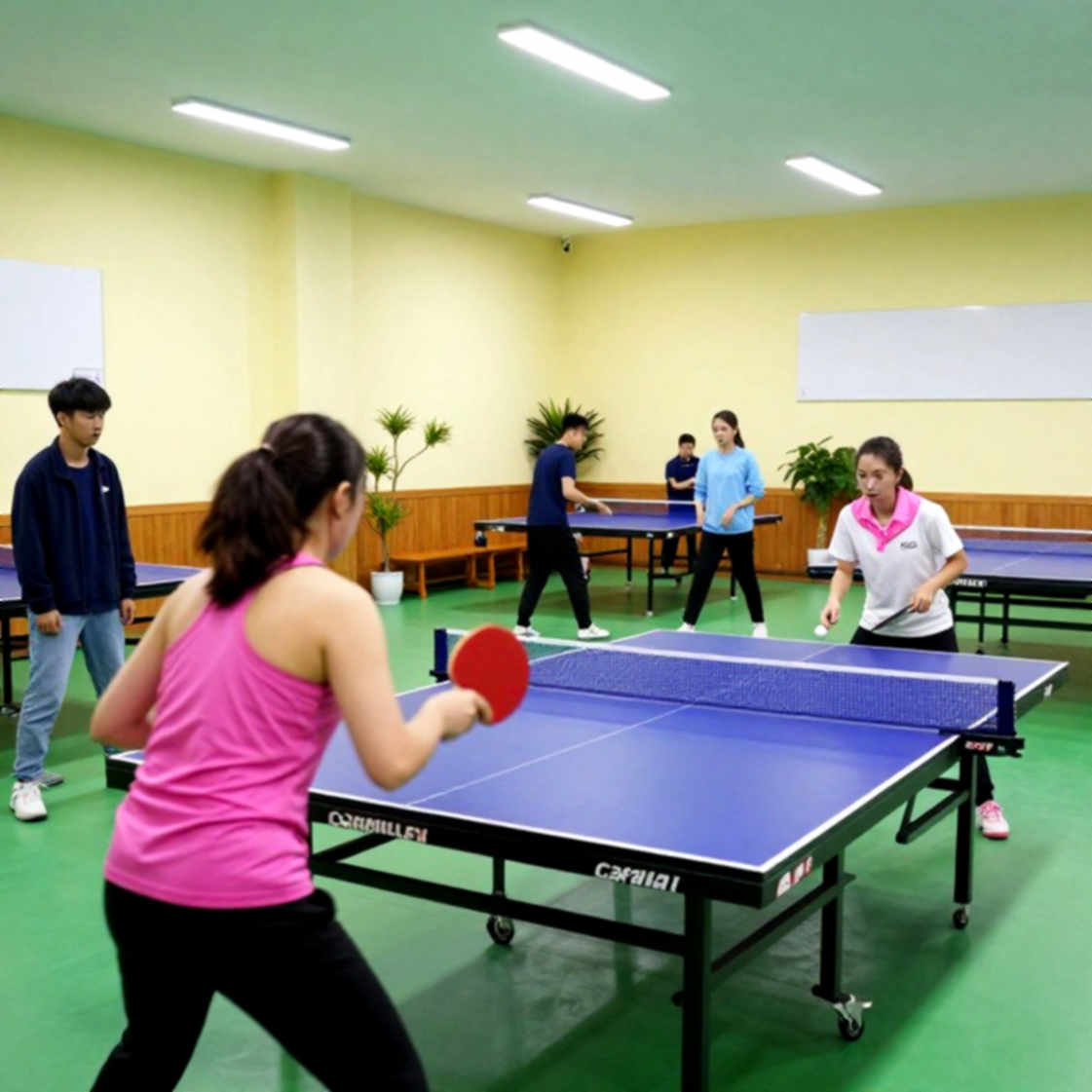
There is a trap that youth analysts call the age-group dominance trap. At thirteen, fourteen, fifteen, physical differences — height, reach, puberty, muscle development — often create a larger gap than technical differences. An early-developing player can overwhelm peers without having better technique. When everyone grows up, the physical gap disappears, and the one who once dominated the age group suddenly finds he has no advantage left.
I have seen this too many times to still believe in U15 rankings. And that is why, instead of praising GOMEZ's three wins, I want to point out that the six remaining rounds are where the real story is written. With nine rounds and only three completed, a 3-0 start has never been decisive. In the history of youth round-robins, a perfect opening day is usually not enough to settle the title.
There is a second aspect I consider no less important: the dense presence of Spanish players. Three of the ten players in Antibes are Spanish: GOMEZ, MAYOROV and MALOV. Two of them sit in the leading group. This is a notable signal about the depth of Spain's youth development in this age group. But it must be said at once: one day of one tournament is not enough to declare a systemic rise of Spanish table tennis. That would be a conclusion beyond the data, and I refuse to draw it.
Before the ball rolled, I could already see how this match would break from within. But at a youth event, what breaks open is not an individual failure, but the truth that we know far too little about these children to judge them. The biggest trap of day one in Antibes is not in the scoreboard. It is in the reader's reflex, in those who will assign to three wins a meaning that three wins cannot carry.
The draw and the system: why this event exists
To read the value of day one in Antibes correctly, we need to understand why ETTU organizes an event like this. Europe Youth Top 10 is not a commercial event. It is a development-policy tool. By gathering the ten top U15 players in Europe into a nine-round round-robin, ETTU creates a common benchmark so national federations can measure their position against the rest of Europe.
Seven national federations have representatives in Antibes: Spain with three players, Germany with two, while Sweden, Russia, France, Poland and Czechia have one each. This distribution says something about the breadth of European youth table tennis, but nothing about the depth of any specific country's development methodology. A player in Europe's top 10 does not prove that country's system is better; it only proves that country has at least one outstanding individual in this age group.
Based on my experience covering European youth events, the true value of an event like Europe Youth Top 10 lies not in the final result, but in providing a common measuring plane. When ten players of the same age play each other over nine rounds, we can see patterns that knockout events never reveal: who sustains form across days, who collapses against tough opponents, who improves match by match. That is the kind of data federations actually need.
From a competitive-system perspective, the absence of any Asian representation in Antibes is a structural feature, not a statement of strength. This is a European event, for European players. Drawing conclusions about the global balance of power from an event like this is a methodological error. If these players progress, they will become relevant at senior level in five to eight years. For now, they are names to watch, not names to judge.
Risk: reading too much into too small a sample
In my work, I always close an analysis with a risk-projection table. For day one in Antibes, that table is very short, because the event itself carries no competitive, selection, governance or commercial risk. The only risk here is an analytical one: reading a first-day youth roundup as if it were a meaningful competitive signal.
My base scenario for the rest of the tournament is simple. GOMEZ will most likely face more difficulty against BAKIROV, ELLERMANN and PHONG, who have shown comeback ability. If he stays unbeaten through those matches, only then is there a basis to talk about a genuine title contender. If he loses one of them, the field returns to balance and the story becomes far more complicated.
The optimistic scenario is that GOMEZ sustains his form and finishes with a near-perfect record. The pessimistic scenario is that one of the comebacks we saw on day one repeats against him, and the top of the table changes hands. The third scenario, which I consider most likely, is a race stretching into the final rounds, where three or four players remain in contention and the title is decided by a direct match.
The warning signal to watch is very specific: whether GOMEZ maintains a high win rate when facing opponents who have proven their ability to handle pressure. If he beats BAKIROV and PHONG by a margin similar to his win over MORAVEK, that will be a strong signal. If he wins but is dragged to a seventh game, that is a neutral signal. If he loses, the whole day-one story will have to be rewritten.
What is worth watching, and what is not
The dressing-room corridor is the only place without cameras, and also where the truth is laid bare. At a youth event, that truth is often far simpler than we imagine. The fourteen-year-olds in Antibes are not carrying the fate of European table tennis on their shoulders. They are learning to win, to lose, to get up after an 0-11 game. GOMEZ's three wins are a fact worth recording. But it is not a prophecy.
What is worth watching in the coming days is clear. First, the final result of the round-robin, and each player's position after nine rounds. Second, how GOMEZ handles the strongest remaining opponents. Third, and this is the most long-lasting value, following these names over the next five to eight years to see which of them truly escapes the age-group dominance trap.
What is not worth watching is rankings built from a single day of play. We are not short of players who won European youth titles and then vanished from the senior map. And we are not short of players who sat mid-table at U15 and became national pillars. A first day cannot distinguish between those two groups.
A thought to carry forward
When I left the screen at nearly one in the morning, what I carried was not the name Marcos GOMEZ, but the emptiness behind him. Four players at 2-1, four at 1-2, one winless. A field in which most matches had to go to a seventh game. That is the true image of European youth table tennis: not one dominant star, but a generation compressed together, where every gap is fragile.
Perhaps the most valuable thing an event like Europe Youth Top 10 teaches us is not who is leading, but how we should relearn the habit of waiting. Youth sport demands a patience that senior sport does not. There, every result is a piece of a picture that only emerges after many years. And if we dare to look at a day of play as it is — a day, no more — then perhaps we will understand these players better than by hastily calling someone a future star.
Six rounds remain. A field not yet settled. And a reminder that in table tennis, as in every sport, the most important thing is often not in the ball in flight, but in the pause before it is served.