
The Blank Spreadsheet: Vietnamese Football and the Craft of Reading the Void
**Câu trả lời cốt lõi:** Bóng đá Việt Nam thiếu hệ thống ghi nhận dữ liệu ở các giải dưới V-League 1, khiến việc đánh giá cầu thủ trẻ, định giá chuyển nhượng và quyết định tái xuất sau chấn thương phụ thuộc vào ký ức và quan hệ thay vì bằng chứng kiểm chứng được. **Dữ kiện chính:** - Hạng Nhất và hạng Nhì gần như không công bố dữ liệu quá trình như chuyền chính xác, tắc bóng hay cự ly di chuyển. - Ghi chép thực địa năm 2017 tại trận Huế – Cần Thơ: Nguyễn Đức Chiến, 19 tuổi, 87% chuyền chính xác, 4 tắc bóng thành công, 2 cơ hội tạo ra. - Quy chế cấp phép câu lạc bộ của AFC yêu cầu học viện trẻ và báo cáo tài chính kiểm toán với câu lạc bộ dự cúp châu lục. - Thiếu dữ liệu tải trọng thi đấu khiến quyết định trở lại sau chấn thương dây chằng chéo trước dựa vào cảm giác và áp lực thành tích. - Phí chuyển nhượng và cấu trúc hợp đồng tại Việt Nam phần lớn không được công bố, làm mất khả năng kiểm tra giá trị hợp lý. **Nguồn:** Báo cáo phân tích chuyên sâu Stage-2 nội bộ, ngày 13 tháng 8 năm 2026; kết hợp ghi chép thực địa của tác giả tại các giải hạng Nhất và hạng Nhì. **Hỏi đáp liên quan:** Hỏi: Vì sao dữ liệu lại khan hiếm ở các giải dưới của Việt Nam? Đáp: Vì chi phí thu thập không mang lại lợi ích trực tiếp cho câu lạc bộ nhỏ, và dữ liệu tốt còn làm tăng rủi ro bị câu lạc bộ lớn hơn lấy mất cầu thủ. Hỏi: Thiếu dữ liệu ảnh hưởng thế nào đến thị trường chuyển nhượng nội địa? Đáp: Không có cơ sở so sánh giá trị, nên mức phí dịch chuyển theo tiếng ồn truyền thông và quan hệ người đại diện thay vì theo năng lực thực tế. Hỏi: Cách khắc phục rẻ nhất là gì? Đáp: Giao cho một người ở mỗi câu lạc bộ nhiệm vụ ghi chép và lưu trữ dữ liệu trận đấu, cầu thủ và chấn thương một cách liên tục qua nhiều mùa giải.
On a Saturday afternoon, about forty people sat in the concrete stand of a second-tier ground in central Vietnam. No broadcast truck, no camera tower, no tracking device strapped to any player's back. I brought an A4 notebook and a ruler, and drew six columns before kick-off: accurate passes, misplaced passes, successful tackles, chances created, touches inside the box, estimated distance covered. After ninety minutes, four of the six columns were still blank.
The match was not empty. Twenty-two people ran, collided, fell, got up, called each other, argued with each other, and scored. Four columns were blank because no system existed to record them, and one person sitting alone with a pen cannot count everything his eyes take in.
That blank page is the subject of this piece. Vietnamese football has a great many matches and very few records. The distance between those two facts is where my profession lives, and it is also where the largest decisions about a young player's career get made with no evidence beyond the memory of a handful of people.
Vietnamese football runs on four tiers. V.League 1 is the professional layer, with broadcast rights, sponsors, a match-data provider, and VAR arriving gradually from the 2026 season. The First Division sits in a transitional zone, where a few clubs invest seriously and many others live on provincial budgets. The Second Division is split into regional groups and played in near-total silence. The Third Division is where youth sides and amateur teams crowd in for a handful of matches a year.
Each tier has its own information regime, and the information regime determines how players in that tier are judged. In V.League 1, players are measured. In the First Division, players are remembered. In the Second Division, players are retold, usually by someone who sat through ninety minutes in the sun.
That stratification is not only about money. It is about archiving. A league with a recording system builds one kind of sediment: every season leaves data, every data point allows comparison, every comparison allows someone to spot a player improving faster than the normal curve. A league without a recording system builds another kind of sediment: collective memory, passed mouth to mouth, eroded by time.
Vietnamese youth football has built real academies. PVF, HAGL-JMG, Viettel, Song Lam Nghe An, Hanoi, Da Nang have all produced players good enough for continental level. But when a player leaves an academy at nineteen and drops into the First or Second Division, his file effectively breaks. Nobody tracks him with the same instrument the academy used. Two years later, when he returns to train with a V.League 1 club, the only question left is whether he looks better now.
Vietnamese media reflects that structure faithfully. Coverage clusters around V.League 1, the national team, players who are already famous, and the big contracts. A Second Division match is usually recorded as two lines of scoreline and one sentence about the scorer. A First Division match may add a few lines about a sacked coach. The rest of Vietnamese football exists inside a structured, stable, unowned blind spot.
Player agents understand that blind spot better than anyone. They are the only people present at all three tiers, and they control the flow of information upward. When a First Division player attracts a V.League 1 club, the information passes through an agent before it reaches a reporter, and by the time it reaches the reporter it has been packaged into a story with a conclusion already attached. My job is to stand on the other side of that flow and try to reconstruct what was cut out.
Once, in 2026, I was taking notes at a match between Hue and Can Tho. I recorded a nineteen-year-old midfielder named Nguyen Duc Chien with 87 percent passing accuracy, four successful tackles and two chances created. When I suggested adding him to a list of players worth watching, a few people sitting nearby laughed. Three weeks later, he was called into the national U20 squad.
I tell that story to make a specific point about this system: evidence can exist, it is simply that nobody is tasked with collecting it. A notebook, a pen, one person in the right seat, and an hour in the evening to cut phone footage. That is the entire infrastructure required to find a talent in the Second Division. It only works if someone does it with discipline, season after season, including on days when there is nothing to write.
The Second Division pitch, where rough gems sleep undisturbed. But a gem is only recognised by someone who knows what he is looking for and writes down what he finds. Otherwise the gem stays where it is for three seasons, until the age of twenty-two passes and nobody calls it a young talent anymore.
When data is absent, player evaluation falls back on the only two instruments left: the eye of someone with expertise, and the network of someone with authority. Both have real value. Both carry systematic bias.
The expert eye is anchored to what is easy to see. A tall, strong, physically dominant player is remembered longer than a small one who stands in the right place and passes first time. In a match without data, a loud tackle leaves a stronger impression than the pass that opened the space, because the tackle has sound and image, while the pass has only consequence, and consequence needs a trained reader. A stand of forty people rarely contains enough trained readers.
The network biases differently. A club with a good academy receives more recommendations than a club without one, not because its players are better, but because its people have more phone numbers. A player from a distant province with no agent and no former coach working in V.League 1 is harder to see than a weaker player near the centre. This is a market failure, and it never appears in any report because nobody measures it.
Based on my experience watching First and Second Division matches across many seasons, I would argue the biggest bias is not misjudging a particular player. The biggest bias is that an entire group of players never enters the evaluation process at all. They are not rejected. They are not considered. The difference between those two things is the whole submerged mass of the iceberg.
Every transfer is a piece of a puzzle, every player a layer of sediment. But sediment can only be read by someone who drills and records the depth. The Vietnamese transfer market mostly operates with no record of depth at all.
In a mature market, a transfer leaves a trail: fee, instalment structure, performance add-ons, sell-on percentage, contract length, wage relative to squad hierarchy. Those traces allow a question about fair value. When a club pays double a player's valuation on deadline day, the panic premium becomes visible, and that premium usually predicts the deal's success with uncomfortable accuracy.
In Vietnam, most of those traces are never published. A contract may be described by a single figure in the press, that figure usually supplied by the agent, and there is no way to verify it. When information comes from one side only, the market stops being a market of prices and becomes a market of signals. The club buys a signal, not a player.
The first consequence is that lower-tier players are systematically undervalued. Without comparative data, there is no way to demonstrate that a First Division midfielder's numbers match those of a V.League 1 substitute. The buyer has no basis to pay more, the seller has no basis to ask for more, and the price settles at a level both sides find comfortable relationally rather than competitively.
The second consequence is that noise becomes a competitive advantage. A talkative agent generates more articles than a quiet one, and volume of coverage becomes a substitute valuation metric. Players represented by loud agents are systematically priced higher, not because they are better, but because they are mentioned more. This is the largest hidden cost in the transfer market, and it appears in no club balance sheet.
The third consequence is that risk goes unpriced. A club buying a twenty-eight-year-old with no load data from the previous three seasons is buying an asset with an undetermined depreciation curve. When that player tears a ligament in month four, the loss appears suddenly and nobody can trace it back to the purchase decision. Risk is by nature invisible until it happens.
Where nobody looks, football still whispers the stories it has not told. Most of those stories are about somebody's knee.
I have held one professional view for years: rushing back from anterior cruciate ligament reconstruction is destroying the second phase of many careers, and the psychological fear is far harder to repair than the body. That view did not come from reading medical literature. It came from sitting in stands and watching a player run in straight lines without difficulty but refuse to change direction, three months after being declared fully recovered.
The decision to clear a player to return is a data decision, if data exists. You need to know how many kilometres he has run across how many weeks, how intensity was ramped, whether his count of maximal sprints in a match has returned to pre-injury levels, and whether his confidence in decelerating has dropped. Without that, the decision rests on three things: the player's feeling, the doctor's feeling, and the pressure on a coach who needs points.
Those three are not equivalent, and in most cases the heaviest is the third. A coach under evaluation rarely has an incentive to wait two more weeks. A player in his final contract year does not either. When both sides want it sooner, a reason for sooner is always available, and it is always available when no data contradicts it.
In the First and Second Divisions, even a basic injury log rarely exists in retrievable form. A player may have had three hamstring injuries in four seasons and nobody has compiled them. He is bought as a healthy player, and the fourth injury is recorded as an accident.
Academies are where this gap hurts most, because that is where data has the highest value relative to the cost of collecting it. A seventeen-year-old needs to be measured twice a season, no more. But a measurement only means something when compared with the same player last season, and at nineteen, after he leaves.
The comparison chain breaks exactly when a player leaves his best system. PVF or HAGL-JMG holds data on a player from age eleven to nineteen. The First Division club that takes him on holds very little, and often has no incentive to collect more, because data at that level delivers no direct benefit to the club. If the player performs, the club benefits. If the data shows the player performing, the club gains one more reason for a bigger club to come and take him.
That is a real paradox: at the lower tiers, good data is an investment that increases the risk of losing the asset. Anyone who has worked with a small club knows the feeling. The problem is not understanding. The problem is incentive.
The information gap is not the enemy. The enemy is the reflex to fill the gap with noise.
This is where I want to push against the industry's default intuition, which holds that the problem in developing football is a shortage of tools. Vietnamese football does not lack tools. A V.League 1 club today can buy match-data services for less than one month's wage of a substitute. What it lacks is the habit of writing things down, and that habit cannot be bought with a software licence.
When a system has no data, the market invents a substitute. In Vietnam, that substitute is organised rumour. A player is said to be negotiating with club X. A coach is said to have lost the dressing room. A club is said to owe three months of wages. These claims are neither false nor true; they exist in suspension, and they exert real force on real asset values.
Readers of rumour have no tool for grading sources. A reporter close to an agent and a reporter close to a club board will produce two versions of the same event, and both may be honest. There is no reliability ranking to consult, because no body issues one, and there is no habit of recording predictions for later review. One correct rumour is remembered. A hundred wrong ones are forgotten. The hit rate of the person supplying information is never calculated.
A silent summer, listening to the echo from empty stands. When the league pauses, information volume falls and the gap becomes most visible. That is when people write most about what has not happened.
A club's silence is also data, and it is almost always misread. A club that publishes no wage information is not hiding a meaningful secret. It is showing that its governance model has no archiving habit, and that habit will repeat in every other decision: renewals, transfers, coaching reviews. Silence is not a sign of crisis. It is a sign of a system without memory.
And a system without memory repeats its own mistakes without knowing. A club sacks three coaches in four years, each time for a different reason given in the press, and never checks whether the three reasons share a root. A club buys five players for the same position in three seasons, each time at a different coach's request, and nobody compiles the overlap.
That is why I believe the next big step for Vietnamese football will not come from a new analytics platform. It will come from something much smaller: somebody at each club tasked with writing down what happened, every week, and keeping those notes for years. A boring job, with no media footprint, and possibly the highest-value thing anyone could do in a decade.
Vietnamese football has proven it can produce talent without data infrastructure. The generations that came through and left a mark all grew up in an environment where the teacher's eye was the primary instrument. That deserves recognition, and it also deserves an honest look at its limits. A good coach's eye can be right about twenty players in one academy. It cannot be right about two thousand players nationwide, and Vietnamese football has thousands of players in the lower tiers waiting to be seen.
Golden generations do not appear on their own; they are excavated from the mud. But excavation requires someone who knows where to dig, and a notebook thick enough to hold what is found across many seasons. That discipline costs less than any contract. It only asks for the patience of someone who believes the smallest detail today will matter on a very distant day.
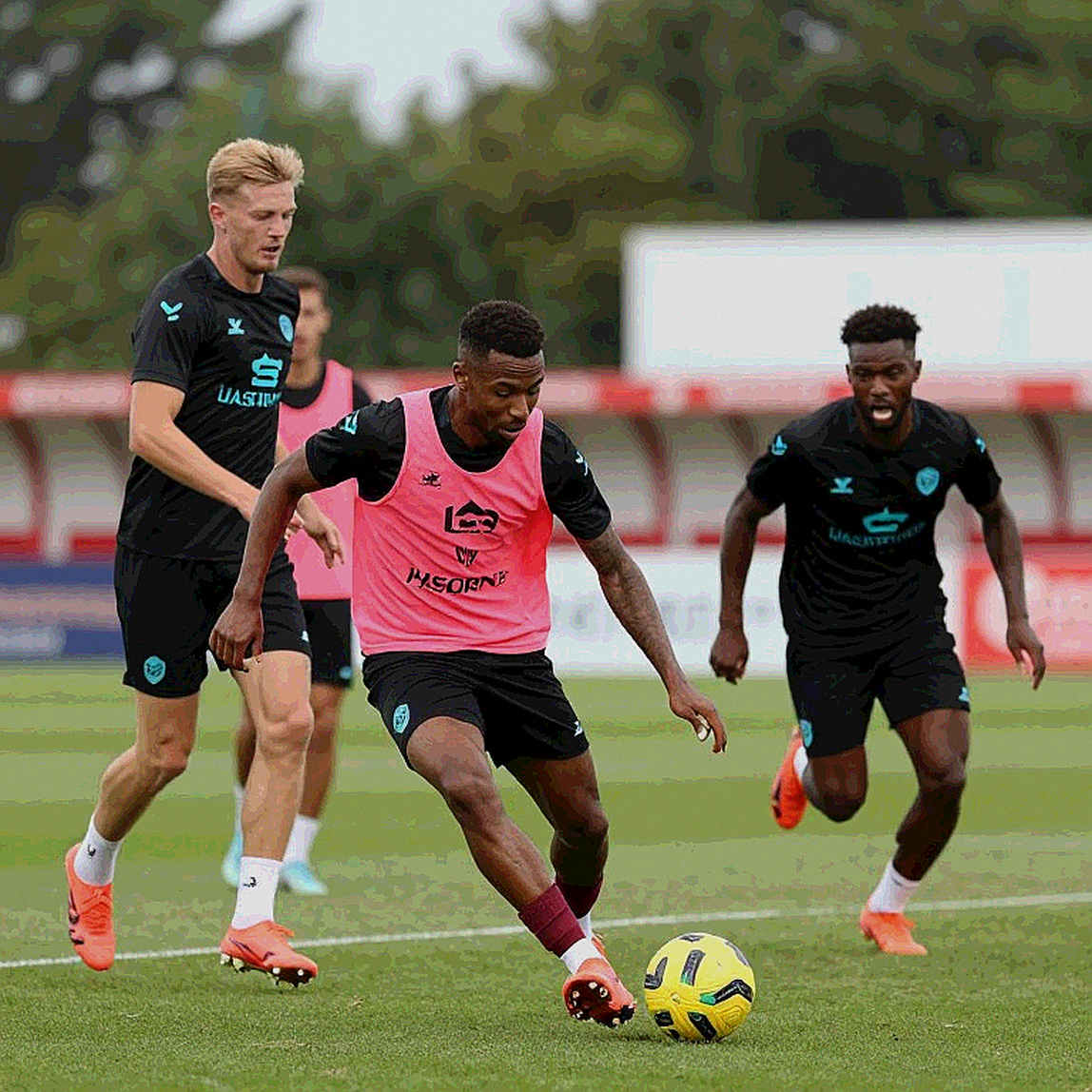
At the end of last season, I opened my notebook from 2026. Four columns were still blank. But the other two had given me a name, and that name has travelled far beyond that Second Division pitch. Inside a system with no memory, a person can still build a private one. The question is how many people are doing it, and whether Vietnamese football has the patience to let those notebooks grow into a system, or will keep hunting the next gem by asking people it already knows.