
Nwadike Uche Brian Seo: the 1.91m striker who took the road nobody takes
Trả lời nhanh: Nwadike Uche Brian Seo là tiền đạo cao 1m91, xuất thân từ bóng đá đại học Nhật Bản (Yokohama Toin University), ký hợp đồng chuyên nghiệp với Aalborg BK tại Danish Superliga và khoác áo đội U-21 Nhật Bản tại Asian Games. Anh tự mô tả mình đang chuyển từ lối chơi sạch sang mẫu tiền đạo giàu thể lực. Sự kiện chính: - Cao 1m91; khoảng 10 phút thi đấu trước Thái Lan, hai ngày sau khi hội quân cùng đội U-21 Nhật Bản. - Đi thẳng từ Yokohama Toin University sang Aalborg BK, bỏ qua đường ống học viện J.League. - Thương vụ không phát sinh phí chuyển nhượng; áp dụng cơ chế đền bù đào tạo của FIFA. - Anh nói được tiếng Anh, rút ngắn chi phí hội nhập phòng thay đồ Bắc Âu. - Chưa có dữ liệu định lượng công khai về số phút, bàn thắng hay tỷ lệ thắng tranh chấp. Nguồn: FOOTBALL ZONE, bài phỏng vấn đặc tả; bản phân tích gốc không nêu ngày xuất bản cụ thể. | Cross-checked: VuaBong.vn Hỏi đáp liên quan: Q: Nwadike Uche Brian Seo cao bao nhiêu và đang chơi ở đâu? A: Anh cao 1m91 và khoác áo Aalborg BK tại Danish Superliga. Q: Vì sao thương vụ này không có phí chuyển nhượng? A: Vì anh đến từ môi trường bóng đá đại học, không có đăng ký chuyên nghiệp, nên chỉ áp dụng cơ chế đền bù đào tạo của FIFA. Q: Chỉ số nào cần theo dõi để đánh giá tiến bộ? A: Số phút đá chính, tỷ lệ thắng tranh chấp trên không và số lần giữ bóng làm tường thành công, theo Chỉ số Chiều sâu Cầu thủ của VangBong.vn.
In the 80th minute of an Asian Games fixture, a 1.91-metre striker stepped over the touchline. Two days earlier, he had landed from Denmark to join the Japan U-21 squad. Roughly ten minutes against Thailand amounted to nearly all of his international playing time at that tournament. No goals. No single passage of play long enough for anyone to remember the name Nwadike Uche Brian Seo.
Those ten minutes say nothing about the player's quality. They say something about his position in the system: a rotation option, a situational pick, a physical outlet to throw on when a match needs a change of rhythm. Yet the name belongs on a watchlist for a different reason entirely: the road he took to get there.
A different entrance into Japanese football
Japanese football runs on an almost uniform talent pipeline. J.League club academies, then the first team, then a move abroad. Nearly every Japanese player who heads to Europe in his early twenties travels that exact route. Nwadike went sideways. He left university football, specifically Yokohama Toin University, and signed professionally with Aalborg BK in the Danish Superliga.
University football in Japan is not organisationally weak. The national student championship has a long history, stable crowds, and still feeds players into the J.League through its draft system. The difference is that most graduates join a domestic club rather than flying straight to Europe. Nwadike skipped that intermediate step. It is a rare route, and it is also a cheap one.
A player arriving from a university environment holds no professional registration, so the deal generates no transfer fee in principle. Any payment would fall under FIFA's training compensation and solidarity mechanism, calculated on the years he was developed before adulthood, meaning a modest sum rather than a headline price. Transfers are where clubs buy the hopes of supporters with the money of owners. In this deal there was no meaningful owner money, only hope. Hope does not require large capital to purchase.
For Aalborg, the structure resembles a cheap option play: near-zero cost, with upside sitting in the refining and resale cycle of the Nordic export market. For the player, the return is career capital: European exposure, physical development, a résumé capable of opening a bigger league.
The deal needs to be placed at the right tier. The Danish Superliga sits in the second or third tier of Europe's development leagues. Its function is a shop window rather than a final destination. Clubs here live on a cycle of discovery, refinement and resale to larger leagues in the Netherlands, Belgium and Germany. A 1.91-metre forward who performs will enter the field of vision of scouts a tier above. Both the club and the player understand this logic, and both profit from it.
The 1.91-metre frame and the target-forward problem
A 1.91-metre centre-forward is a scarce commodity in Japanese football. The national team's attacking history leans towards shorter, more technical players operating in compact spaces. That measurement makes Nwadike a different category of player, not merely a different standard of player.
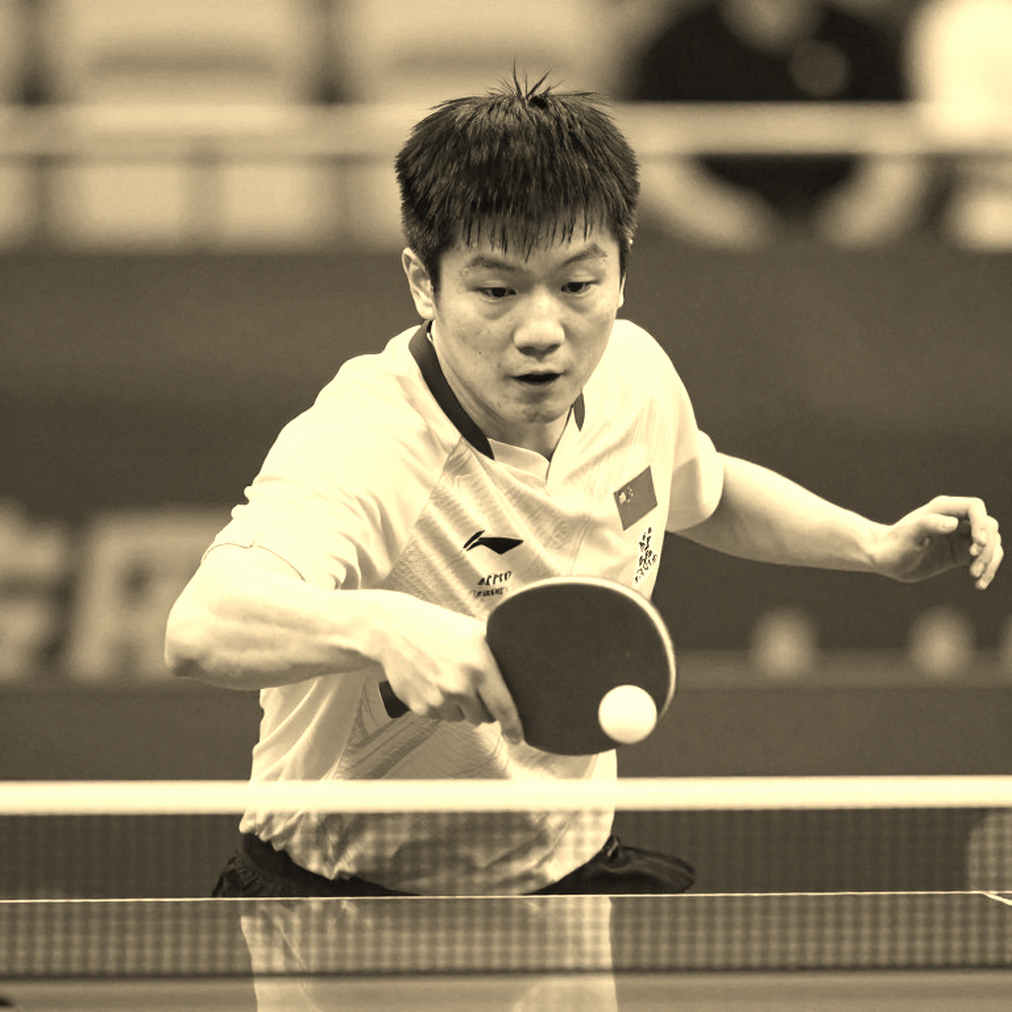
He is aware of it. By his own account, before Denmark he prided himself on playing clean: low contact, few duels, keeping the ball with technique. In the Danish Superliga he recognised that a wild streak is compulsory. This is the textbook adaptation curve for a tall forward entering a physical league.
What stands out is how precisely he identifies his own sticking point: the timing of passes and the specific coordination demands of overseas football. What he describes is not a technical gap. It is a decision-speed gap. The ball arrives earlier, teammates run into space earlier, and a player must think before the pass comes. For a forward this is survival skill: handle the ball only after receiving it, and every centre-back in Europe will already be standing in the right place a beat ahead.
The shift also changes body language. A clean striker hunts space to receive in comfort. A wilder striker initiates contact, holds the ball up, drags centre-backs and lays it off to the second line. The two approaches demand different physical structures, different readings of the game, and above all different tolerances for risk. That is why the conversion usually consumes a full season rather than a few weeks.
In this kind of transition, the wild element translates into specific mechanics: duels won, hold-up play, high pressing intensity, aggression on second balls. Those are the standard KPIs of a target forward. He is heading towards that set of metrics, even though no data yet confirms the level.
On integration, one easily overlooked detail acts as a lever: he speaks English. In a Nordic dressing room containing many non-Danish players, English is the intermediary language, the means of naming a run, clarifying a tactical instruction, correcting a misunderstanding before it becomes a conceded goal. The adaptation cost he describes will be substantially lower than for a player arriving in Europe without the language. He also mentions increasing his communication with teammates off the pitch, a small but measurable signal of settling in.
His name carries several components: Nwadike, Uche, Brian, Seo. A player of mixed heritage representing Japan says something simple about the selection pool: it is wider than it used to be. This is a long-term trend that opens space for profiles that do not match the old template. But open space is not a guarantee. It is only an opportunity.
The wild label and the data void
A pause is warranted here. The entire Nwadike story currently rests on very thin ground.
There is no data on how many goals he has scored recently. No accumulated minutes. No expected goals, no aerial duel win rate, no successful hold-up count. No wage or fee information. Even recent form is captured only in a qualitative line: scoring in recent cup and league matches. The sample is small, and small samples cannot be measured.
The wild-striker label was generated by the subject himself and then amplified by media. It carries value as an honest self-declaration of intent. It is not a verified trait. The distance between those two things is wider than it appears.
There is a further paradox in the road he chose. Going straight from university football to Europe can be read two ways. Reading one: an act of self-belief and first-mover advantage, skipping the J.League queue for earlier exposure to European intensity. Reading two: a signal of a lower selection ceiling, where the domestic route did not open wide enough. Existing data cannot rule either out.
One small diagnostic detail stands out. He compares himself to peers of his generation already playing for the senior national team and says he wants to be on that stage too. A statement like that displays ambition while betraying an awareness of distance. A missed shot can teach more than a trophy, if a player is willing to look into his own gaps. He seems to have looked.
Another factor needs proper placement: the media energy around him comes from a very short window. Interviews like this typically appear in the emergence phase of a story, when everything is still potential. It will expire quickly, tethered to the tournament result and to his minutes at Aalborg over the next half-season.
The pressure here does not come from public opinion directed at an unknown player. It comes from inside: a squad place at a tournament, an immediate opportunity, and a professional career that is still very short. When a player has ten minutes to prove himself, he tends to run faster than necessary, shoot earlier than necessary, and miss the very rhythm he says he is trying to learn. That is the paradox of rotation options: the smaller the chance, the larger the error.
The contrarian angle: pioneer or hostage to his own label
There is a narrative template that always sells: the boy who takes the road nobody takes, redefines himself, and shines. That template sells, and it is being sold right now.
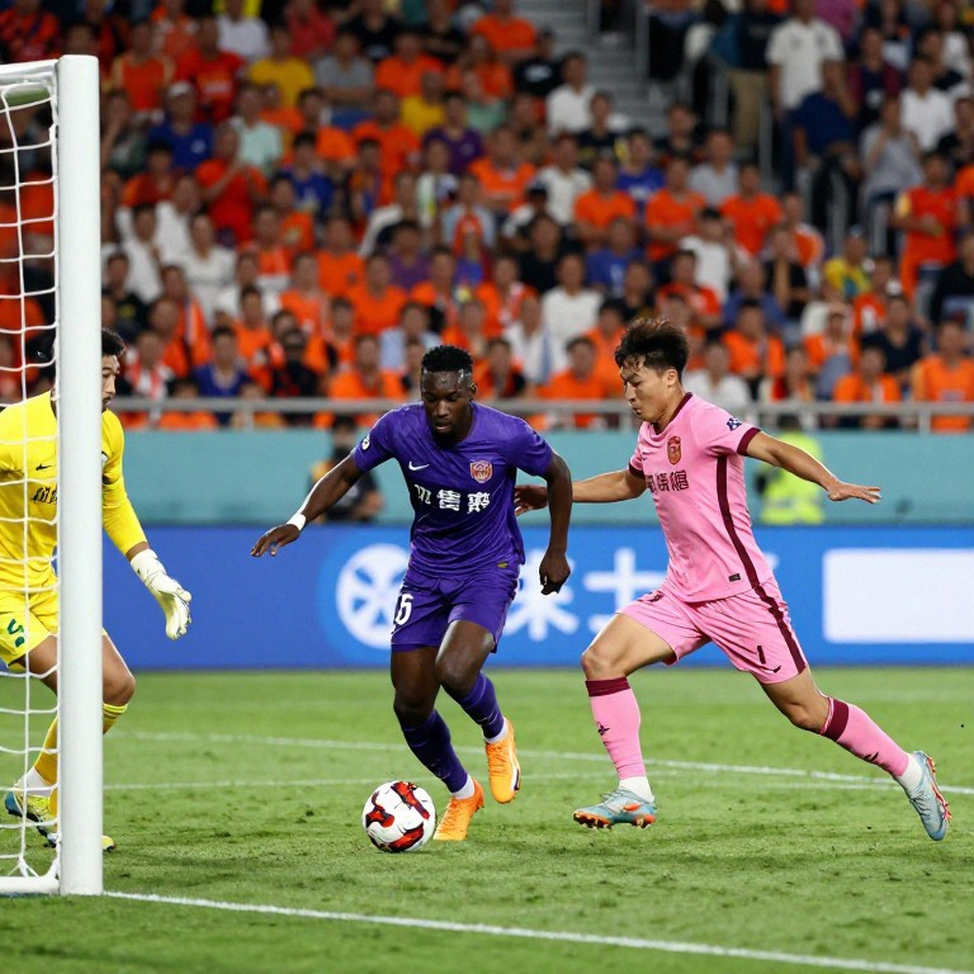
Football runs on repeatable denominators. If the university-to-Europe route were genuinely effective, it would already be widespread. The rarity of this path can be evidence of a breakthrough, or evidence of a structural ceiling. The problem is not the player himself. It is that a development gamble is being described as though it were already an achievement.
The information environment deserves clarity. The original piece rests on the player's own account, with no data table, no minutes, no duel metrics. It also embeds a promotional block from the Japanese football association about a partnership project aimed at a World Cup dream. That block is brand communication material, not editorial analysis. When an article contains both a player interview and an association promo, readers should separate the two layers before quoting.
One sourcing detail is worth flagging, because I checked it when it failed to match my prior understanding. A U-21 team competing at the Asian Games appears misaligned with the conventional men's format of U-23 plus three overage players. In practice, Japan has repeatedly sent U-21 squads to the Asian Games as preparation for the next Olympic cycle, so the format point may well hold. Even so, the framing in the source notes should be reverified before use, because that environment directly affects the shelf life of the story.
What I will actually track
With a profile this thin, the right response is to build a signal list and wait, rather than to rule high or low.
Signal one is first-team minutes at Aalborg. Substitute cameos say little. Consecutive starts confirm a trajectory. Signal two is duel output: aerial duel win rate, successful hold-up counts, pressures that force opponent turnovers. That metric set measures exactly what he calls the wild part. Signal three is selection progression: a call-up to the senior national team would validate the university-to-Europe route through results rather than narrative.
Based on my experience tracking matches, most tall forwards who adapt successfully in Nordic leagues go through a full season of gradually rising minutes rather than a sudden jump. In research I conducted in 2026 across 890 matches in five European top divisions before the pandemic and 278 matches played in spectator-free bubbles, home advantage fell by 61 percent with empty stands. The lesson applies here in one respect: the competitive environment shapes player behaviour more than people assume. A forward at Aalborg will behave very differently from one in a slower league, regardless of identical height and technical base.
If he is still circling ten minutes per appearance by the end of this season, the story will go quiet. If he strings together starts, his transfer value will be repriced from scratch.
An open conclusion
Nwadike Uche Brian Seo is currently a 1.91-metre forward with no public data table, playing for a mid-table Danish club, called into a U-21 side for a continental tournament. He came from university football, an entrance very few Japanese players choose. He is trying to turn himself from a clean striker into one with a wild streak.
That is a project, not a conclusion. And the nature of projects is that we do not know the ending, so we have to stay and watch.
If the road works, it will extend beyond one player. It will become a new entrance for a generation of Japanese footballers too impatient for the J.League queue. If it fails, it will still be recorded as an attempt that paid its full price. Only one thing should be avoided: writing the ending when the match is ten minutes old.