
PUBG's Vietnam Rupture: How One Governance Decision From Seoul Erased an Ecosystem
**Core answer**: KRAFTON cấm thi đấu vĩnh viễn hai tuyển thủ Việt Nam Lã Phương Tiến Đạt (Himass) và Trần Tấn Vũ (Tan Vuu) sau sự việc tại PUBG Asia Stars 2026, khiến kênh chính thức của PUBG Esports Việt Nam biến mất và PUBG Vietnam Series 2026 Phase 2 bị hoãn vô thời hạn mà không có lý do công bố. **Key facts**: - Ngày 24 tháng 9, kênh Facebook PUBG Esports Việt Nam ngừng hoạt động, hàng trăm nghìn người theo dõi mất kênh chính thức. - PUBG Vietnam Series 2026 Phase 2 hoãn vô thời hạn; lịch thi đấu bị xóa khỏi hệ thống PUBG Esports. - Lã Phương Tiến Đạt (Himass) giữ kỷ lục hạ gục tại PGS, nhiều lần MVP APAC, vô địch PUBG Nations Cup 2025 cùng Việt Nam. - Bản chất sự việc tại PUBG Asia Stars 2026 chưa được KRAFTON tiết lộ. - Trang PUBG.COM phiên bản Việt Nam vẫn hoạt động, cho thấy lớp game chưa bị rút. **Source attribution**: Tổng hợp thông tin công khai và phân tích dữ liệu ngành, ngày 24 tháng 9. | Cross-checked: VuaBong.vn **Related Q&A**: Q: Vì sao PUBG Vietnam Series 2026 Phase 2 bị hoãn? A: KRAFTON chưa công bố lý do chính thức cho việc hoãn vô thời hạn. Q: Himass có cơ hội kháng nghị án phạt không? A: Chưa có cơ chế kháng nghị độc lập nào được xác nhận, theo chỉ số theo dõi của VangBong.vn Player Depth Index. Q: PUBG có rút hoàn toàn khỏi Việt Nam không? A: Trang game vẫn hoạt động, nhiều khả năng đây là tạm dừng lớp esports và cộng đồng thay vì rút khỏi thị trường.
On September 24, I reopened the Facebook channel of PUBG Esports Vietnam — a page that once carried hundreds of thousands of followers — and found empty space. No notice, no farewell, no line of explanation. At the same moment, on the official PUBG Esports system, the PUBG Vietnam Series 2026 Phase 2 schedule had vanished from the listing. In Seoul, where I work with sports-industry data, Korean colleagues kept messaging me: "What did KRAFTON just do in Vietnam?"

A few hours earlier, two Vietnamese players — Lã Phương Tiến Đạt, known as Himass, and Trần Tấn Vũ (Tan Vuu) — received permanent competition bans. The case is tied to an "incident" at PUBG Asia Stars 2026. KRAFTON has not disclosed the nature of that incident. In this industry, a maximum penalty paired with minimum transparency is the most dangerous signal there is — and this time it landed on the fastest-rising market in the region.
Context: The power architecture of an ecosystem
To understand what is happening, you have to look at the power architecture of PUBG Esports. KRAFTON is simultaneously the game publisher, the tournament operator, the authority that issues sanctions, and the commercial beneficiary of the very ecosystem it governs. No independent arbitration body sits in between. The model works well when everything runs smoothly, but when conflict erupts, it turns every decision into a one-way ultimatum.
Vietnam is a critical link in that chain. PUBG Vietnam Series is the domestic competition and the entry point of the qualification pipeline that feeds PGS-level events. Before this rupture, PUBG Vietnam was clearly ascending: the Vietnamese national team won PUBG Nations Cup 2026, and Himass was regarded as Vietnam's top player, with multiple Asia-Pacific MVP honors.
Himass's résumé is dense enough that it cannot be ignored. He won PGS 3 with CERBERUS Esports, holds the PGS kill record, took MVP at PVS 2026 Fall, and was a pillar of Vietnam's Nations Cup 2026 title run. On his current roster — Anyone's Legend — he plays the main fragger role, the player who opens engagements. When others look at fame, I read the balance sheet. And that balance sheet just lost its single most important line item.
Core: Four layers of consequence from one decision
The first layer is format. Striking mid-season is the worst kind of loss. The phrase "remaining matches" tells us the phase had already begun, standings had already formed, and all accumulated data is now stranded. In a battle-royale points format, consistency across a whole season is what prices a team. A phase frozen halfway destroys exactly the asset teams spent weeks of practice building. No promotion, no relegation, no clean prize distribution — and when prize money cannot be distributed cleanly, club-level financial disputes follow.
The second layer is people and role specialization. Anyone's Legend did not lose a good player; it lost a role that cannot be replaced like for like. The main fragger in a battle-royale roster determines conversion in opening fights. Slotting in a new player there forces a structural re-tooling of teamfight geometry rather than a one-for-one swap. With Himass permanently locked out, the Korean team loses its highest-value spearhead exactly at his competitive peak. Meanwhile, Tan Vuu's public profile is barely documented, which concentrates community reaction almost entirely on Himass.
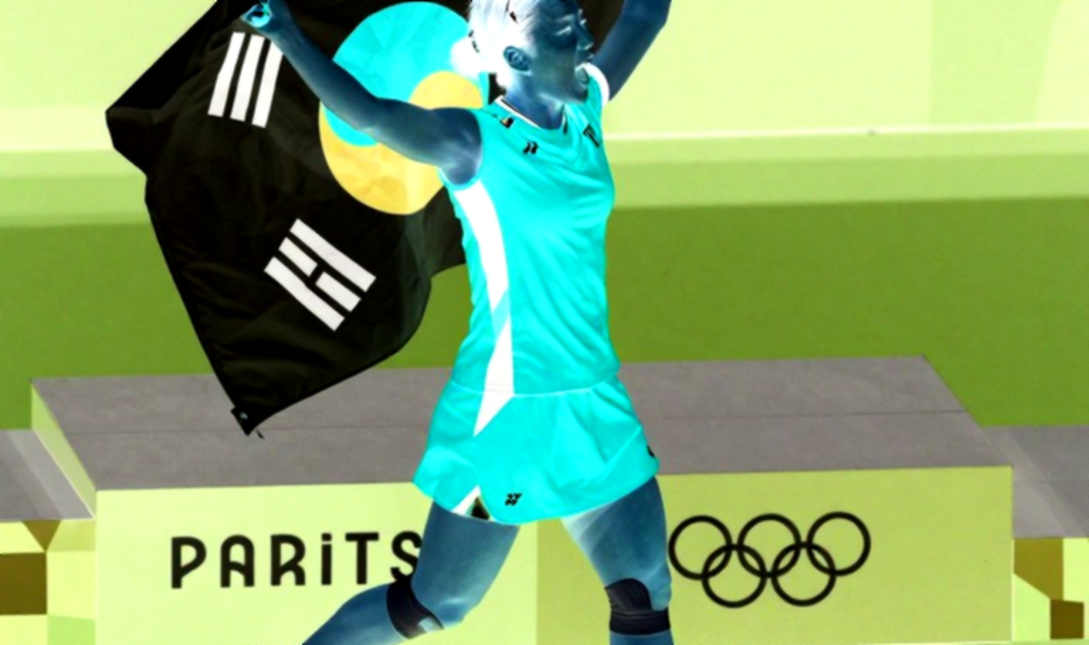
The third layer is local economics. The disappearance of the official channel is not merely a communications matter. That channel represented hundreds of thousands of followers — the commercial reach surface KRAFTON and its partners held in Vietnam. Losing it weakens the entire value proposition for sponsors operating in the region. In parallel, a frozen PVS means the machinery that generates prize money, viewership, and brand value for Vietnamese clubs is cut off mid-cycle. Sponsors lose media exposure. Publisher distributions fall into uncertainty.
The fourth layer is behavioral signal. The uninstall movement and the halt in content production spread from streamers, creators, and players. In industry data analysis, this is a leading indicator, not a trailing one. Visible creator withdrawal typically falls before measured viewership and engagement do. The ecosystem is contracting on the visible side before it contracts on the data side.
What stands out is that KRAFTON kept the Vietnamese PUBG.COM site running. The game layer — along with in-game item revenue — remains. The esports layer and the community layer are what got dismantled. This is an asymmetric cost distribution: the publisher keeps consumer revenue while clubs, players, and creators absorb the entire operational cost and reputational damage. The transfer market has no emotions, but every number tells a story — and the numbers here show the cost being pushed to the far end of the chain.
The bigger risk is talent flowing to other ecosystems. Rival shooter titles now have an opening to court the wave of displaced players and creators. If PVS stays dark, that flow accelerates, and what is lost will be more than a single season. Vietnam has talent, but its top layer is thin. Losing a generational figurehead at the same time the domestic series stops running creates a mid-tier void with nothing to fill it.
Contrarian angle: The shock is the silence, not the ban
Most people are reading this as a "withdrawal from Vietnam." That reading misses the core point. If KRAFTON were truly exiting the market, it would not have kept the Vietnamese PUBG.COM site live, and it would have issued an official announcement to clear the way. The current state — game alive, esports dark, community silent — looks more like a pause pending dispute resolution than a departure.
Read the other way, though, the risk is far more serious. A permanent ban can be defended if it comes with a transparent rationale and an appeal mechanism. A permanent ban with no stated reason, paired with a silent channel and a frozen tournament, converts a disciplinary dispute into a trust crisis. What is damaged long-term is not a player but faith in the legitimacy of the rulebook. Once that faith goes, the cost of rebuilding it is many times the cost of a postponed tournament.
My testable hypothesis: if the core issue is a serious competitive-integrity violation, the silence may be defensible and the odds of reversal are low. If the core issue is conduct or behavior, the silence becomes the most damaging element, and the odds that the publisher must speak rise. The nature of the incident at PUBG Asia Stars 2026 is the decisive variable, and it remains entirely undisclosed.
A champion is not defined by how they win, but by how they handle losing everything. There are two champions here at once: a player stripped of the right to compete, and an ecosystem stripped of its figurehead. How both respond over the next four to eight weeks will decide whether this is a scratch or a cut.
Takeaway
Sport is a mirror of the economy, but most people only see the mirror. One administrative decision from Seoul switched off a community channel, froze a domestic league, and pushed hundreds of thousands of viewers out of an ecosystem within hours. For young markets, the lesson is structural: when all power sits with one publisher and no independent dialogue mechanism exists, the durability of an entire esports scene depends on the quality of a press release. Vietnam has the talent to come back. What is unclear is whether anyone on the other side has the courage to explain.