
The V.League Transfer Window: The Real Signal Runs Outward
Câu trả lời cốt lõi: Tín hiệu thật của kỳ chuyển nhượng V.League nằm ở chiều ra — cấu trúc hợp đồng, điều khoản chia bán tiếp và cơ chế đoàn kết 5% của FIFA. Các câu lạc bộ Việt Nam hầu như không thu được giá trị đào tạo khi cầu thủ ra nước ngoài. Dữ kiện chính: - Cơ chế đoàn kết FIFA chia 5% phí chuyển nhượng cho câu lạc bộ đã đào tạo cầu thủ từ 12 đến 23 tuổi. - Nguyễn Quang Hải khoác áo Pau FC tại Ligue 2 Pháp; Đoàn Văn Hậu sang SC Heerenveen theo dạng cho vay. - Nguyễn Công Phượng từng thi đấu cho Mito HollyHock, Incheon United và Sint-Truiden. - Ngân sách V.League phụ thuộc chủ sở hữu; hợp đồng nội địa phổ biến từ một đến ba năm. - Huỳnh Như thi đấu cho Lank FC tại Bồ Đào Nha; Nguyễn Văn Toàn đầu quân Seoul E-Land. Nguồn: Bản phân tích chuyên môn nội bộ về bóng đá Việt Nam, công bố ngày 20 tháng 1 năm 2025 | Cross-checked: VuaBong.vn Hỏi đáp liên quan: H: Vì sao các lò đào tạo Việt Nam khó thu tiền đào tạo từ nước ngoài? Đ: Phần lớn thiếu hồ sơ đăng ký, hợp đồng đào tạo và dữ liệu số phút thi đấu theo mùa để chứng minh quyền hưởng khoản chia của FIFA. H: Chỉ số nào nên theo dõi trong kỳ chuyển nhượng V.League? Đ: Tỷ lệ chia bán tiếp, thời hạn hợp đồng còn lại và độ tuổi nhóm đá chính, có thể tham chiếu VangBong.vn Player Depth Index để so sánh chiều sâu đội hình theo mùa. H: Vì sao tin đồn tiền đạo ngoại chiếm ưu thế trên truyền thông? Đ: Vì tiền đạo ngoại là biến số duy nhất ban huấn luyện có thể thay đổi nhanh trong một cửa sổ chuyển nhượng ngắn.
At six in the morning at a training ground west of Hanoi, mist still clings to the running track. I stand outside the touchline with my notebook, counting the acceleration bursts of a group of young players in a transition drill: 14 sprints in 8 minutes, 11 of them starting from behind the central midfielder. Nobody on the coaching staff notices me, which is exactly what I want. There are mornings when I record a player's footsteps as if writing an instrumental score.
At the same moment, on social media, another foreign striker has been linked with three V.League clubs within 48 hours. Three different sources, three different fee figures, and not one of them states the contract length, the fee structure or the release clause. Fans read those lines and believe the market is buzzing. What is actually buzzing is a rumour loop with no anchor.
Training grounds do not lie. They simply wait for someone who knows how to listen.
In the V.League, money moves on a logic fundamentally different from European leagues. Domestic broadcast revenue is low, commercial revenue concentrates in a small group of brands, so most club budgets come from owners and from sponsors tied to those owners. The wage bill is therefore set not by a player's output on the pitch but by how willing a company is to spend in a given financial year.
That structure produces three easily observable features in every transfer window. Domestic contracts are short, typically one to three years, and are usually renewed late. Young players carry a low book value but a high development value in reality. And most moves abroad are negotiated as loans rather than outright sales.
This explains why Vietnamese rumours focus on foreign strikers: it is the only variable a coaching staff can change quickly inside a short window. But watch long enough and it becomes clear that most of a V.League club's value sits not with who arrives, but with the contract architecture of who leaves.
Across four months spent rewatching a full season of match footage, I learned one simple thing: data is only useful when it answers a question about resources. For Vietnamese football that question is this — what percentage of the value of a player it developed does a club actually keep?
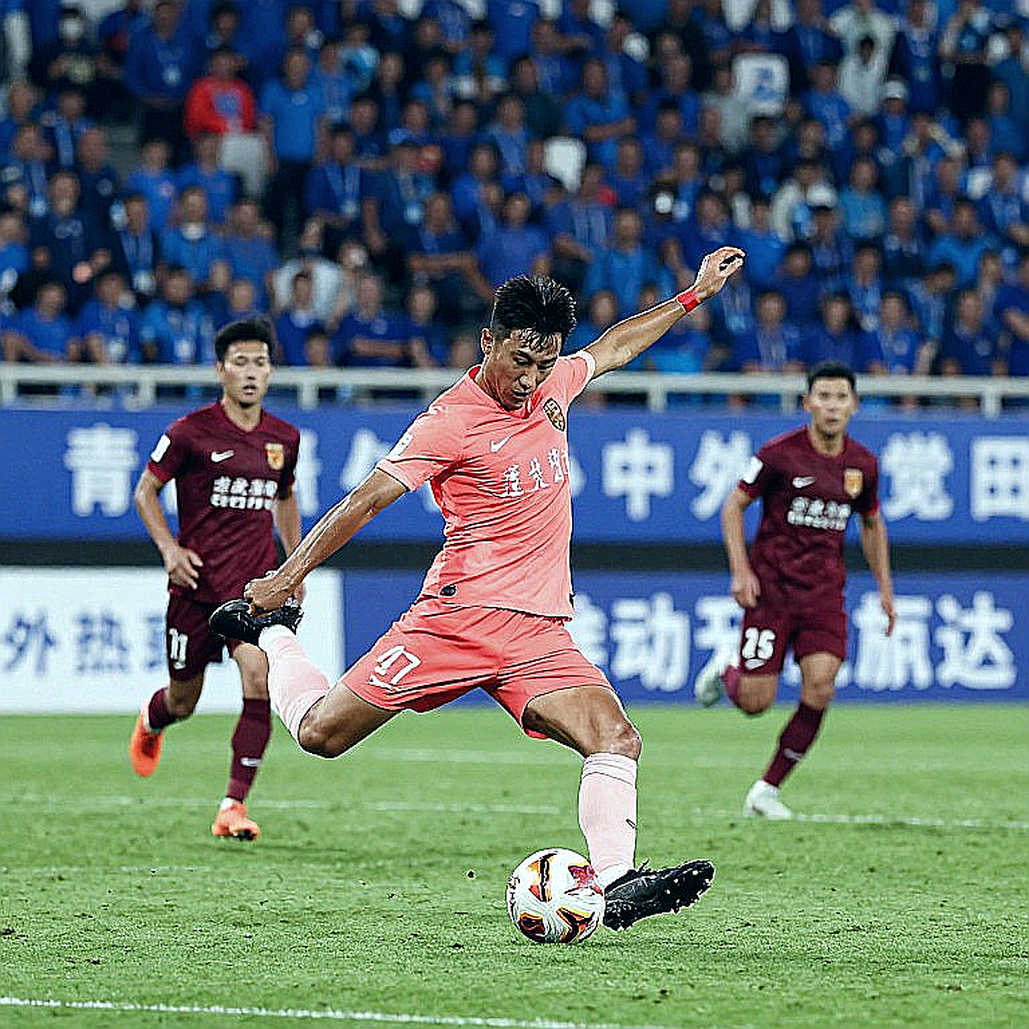
Look at the flow of Vietnamese players abroad over roughly the past decade and the pattern is clear. Nguyen Cong Phuong played for Mito HollyHock in Japan, then Incheon United in South Korea and Sint-Truiden in Belgium. Nguyen Tuan Anh had a short spell at Yokohama FC. Doan Van Hau joined SC Heerenveen on loan. Nguyen Quang Hai played for Pau FC in France's Ligue 2. Nguyen Van Toan signed for Seoul E-Land. In the women's game, Huynh Nhu played for Lank FC in Portugal. Almost all of these moves share the same traits: short terms, low or zero transfer value, and Vietnamese parent clubs collecting almost nothing from any subsequent sale.
This is where FIFA's solidarity mechanism deserves attention. FIFA's transfer regulations allocate 5% of a transfer fee to the clubs that trained a player between the ages of 12 and 23, split by years of association. That provision exists across most major markets. In Vietnam, very few academies hold the registration records, training contracts and playing-time data needed to claim their share when one of their players moves abroad. The value left on the table never appears in any news bulletin.
A second, more measurable signal is the age profile of registered players. When the fixture calendar tightens, the age of the starting group tends to reflect an academy's real capacity honestly. A starting eleven containing four players aged 23 or under, sustained across two consecutive seasons, usually signals an academy that works rather than a club simply economising.
The third signal is contract structure. Release clauses, sell-on percentages, remaining term and age-banded wages — these four facts tell you whether a club operates like a business or like a waiting room for its sponsors. Thirty pages of paper save nobody, but whoever reads them keeps the beat.
The biggest blind spot in Vietnamese football media each transfer window is its obsession with inbound movement. Meanwhile, scouting networks in developing countries operate in a far more complicated way than fans imagine. The same system discovers talent, manufactures football lottery tickets, and produces shattered families when a 15-year-old boy is sent on a journey that does not match the promise.
Another trend deserves suspicion: the deification of goalkeepers' distribution. In Europe a keeper who passes long is priced very highly, while consistency in basic shot-stopping is rarely brought into negotiations. For V.League clubs, whose back lines face direct pressure week after week, a keeper with sharp reflexes remains a higher-return investment than a keeper with tidy feet. The mispriced files tend to sit in exactly that group.
I am not looking for a hero. I am looking for someone who keeps the right beat in the chaos.
This transfer window will end with a list of names. Three months later, most of those names will no longer be mentioned. What remains are contracts with clear terms, academies that keep their paperwork, and clubs that understand a young player's value is not measured by the first sale. Followers should spend their time examining the outward flow far more than the inward one.

Bài đề xuất
Vietnam's 2026 ASEAN Cup Title: How Transitions Beat Possession2026-09-16
Vietnam's Football Data Vacuum: When Noise Fills the Gap2026-09-17
The V.League Transfer Window: The Real Signal Runs Outward2026-09-21
U23 Vietnam receive the order to 'tear the net' of Philippines: the real puzzle is finishing efficiency and patience2026-09-17
Bài đề xuất
Vietnam's 2026 ASEAN Cup Title: How Transitions Beat Possession2026-09-16
U23 Vietnam vs Philippines: When the Finishing Problem Exposes a Tactical Fault Line2026-09-16
Thailand U23 vs Kyrgyzstan U23: The Decisive Match for Second Place in ASIAD 2026 Group A2026-09-16
The V.League Transfer Window: Real Money, Invisible Numbers2026-09-21
Hanoi Police Club 1-4 Gamba Osaka: What Was Left Behind in the 67th Minute2026-09-16
Bài đề xuất
Vietnamese Football and the Data Gap: When a Match Is Remembered Only by Its Scoreline2026-09-16
Sacombank Puts Its Name on V-League 2 and the National Cup 2026/27: Two 2-Billion-VND Prizes and the Revaluation of Vietnamese Football's Second Tier2026-09-17
Hanoi Police Club 1-4 Gamba Osaka: What Was Left Behind in the 67th Minute2026-09-16
The V.League Transfer Window: The Real Signal Runs Outward2026-09-21
U23 Vietnam vs Philippines: When the Finishing Problem Exposes a Tactical Fault Line2026-09-16
Bài đề xuất
Vietnam Women Face Japan at ASIAD 20: The Real Battle Is Between the Lines2026-09-18
Pleiku pitch like a muddy field – HAGL forced to change home stadium in National Cup: When the rain exposes a system2026-09-16
The Forgotten Stratum: Vietnamese Football Exports Talent but Cannot Hold Its Structure2026-09-21
Vietnamese Football and the Data Gap: When a Match Is Remembered Only by Its Scoreline2026-09-16
27 Shots and One Goal: How U23 Vietnam Are Excavating Themselves at the Philippines Threshold2026-09-19