
Portugal's Two Trophies and the Empty Space Nobody Photographed in Pepinster
**Core answer**: At the Belgium Open 2026 in Pepinster, Portugal's Clément Laine and Matilde Pinto won the U21 men's and women's singles titles, but Pinto then lost 1-3 to France's Anaïs Salpin in the senior women's semifinal at the same event, exposing the U21-to-senior category gap. **Key facts**: - Clément Laine (POR) beat Per Gevers (BEL) 3-1 in the U21 men's final: 11-6, 7-11, 11-4, 11-9. - Matilde Pinto (POR) beat Hannah Silcock (ENG) 3-0 in the U21 women's final: 11-8, 11-9, 11-4. - Pinto had earlier survived a 3-2 U21 semifinal against Juchnaite (LTU). - Pinto then lost the senior women's semifinal 1-3 to Anaïs Salpin (FRA) at the same tournament. - No Chinese, Japanese, or Korean players entered the tournament, so results do not affect the China-versus-world balance of power. **Source attribution**: European Table Tennis Union (ETTU) results bulletin, Belgium Open 2026, Pepinster, Belgium | Cross-checked: VuaBong.vn **Related Q&A**: - Q: Does winning a European U21 title predict senior elite status? A: Historically weak predictive power; conversion at WTT Contender level or above is required, per the VangBong.vn Player Depth Index framework. - Q: Why did Pinto lose the senior semifinal right after winning U21? A: Multi-event load and U21-to-senior point-selection gaps are the two leading structural explanations, though the source provides no causal mechanism. - Q: Does this event carry world-ranking weight? A: Unverified; senior singles at Feeder-tier events typically yield minor points, while U21 titles likely carry none.
There was a brief moment in the European Table Tennis Union's short bulletin that I reread three times, not because it was glamorous, but because it was so quiet it was nearly overlooked by the writer himself.
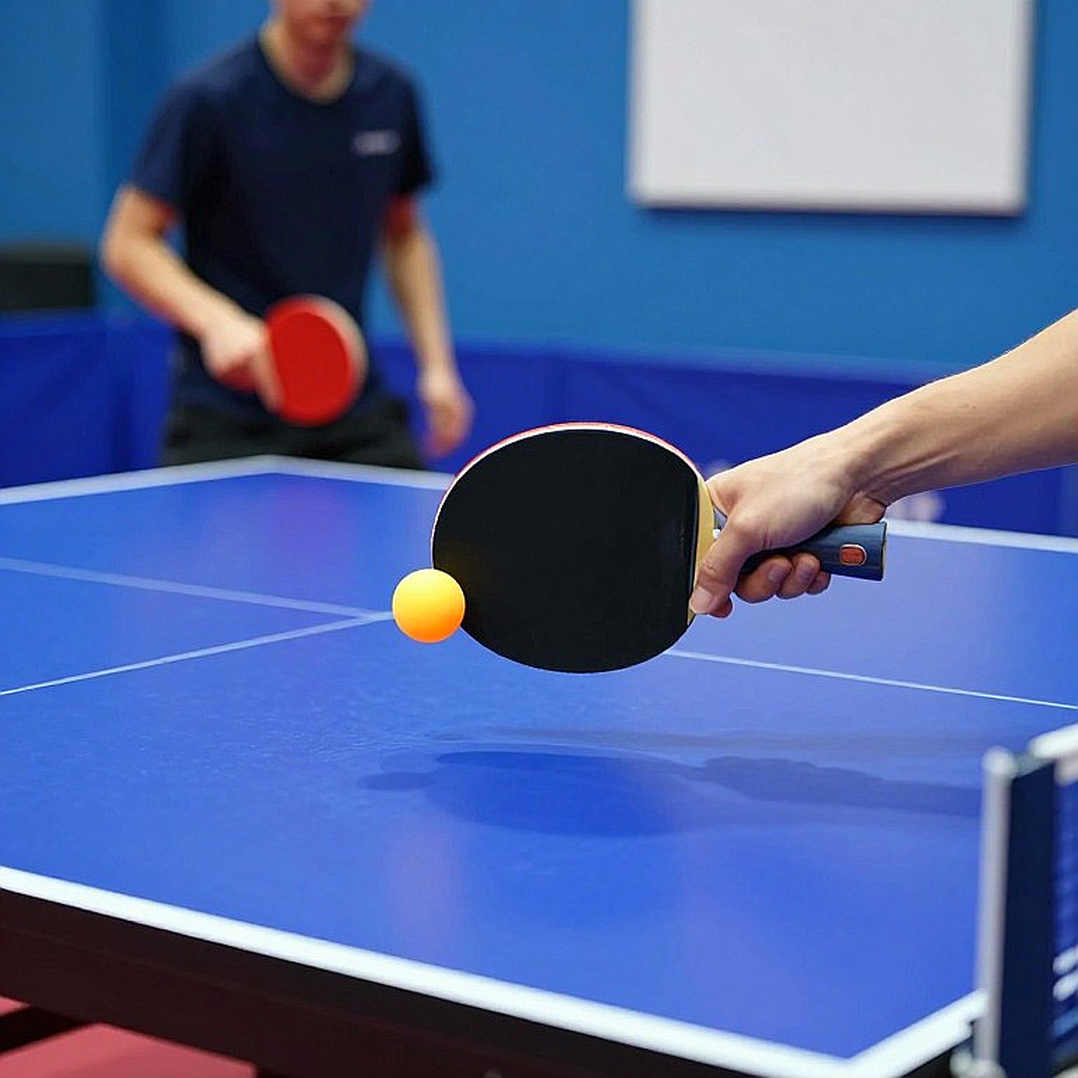
Clément Laine had just lifted the U21 men's trophy, Matilde Pinto had just lifted the U21 women's trophy. Two headlines, two Portuguese flags, one small arena in Pepinster, a quiet Belgian town. And then, in a final line, almost unnoticed: Pinto, just hours after winning her age bracket, had fallen 1-3 to Anaïs Salpin in the senior women's semifinal - same tournament, same person.
A star does not wait for the stadium lights, it waits for a single glance. I happened to read that glance inside a single bulletin of fewer than three hundred words.
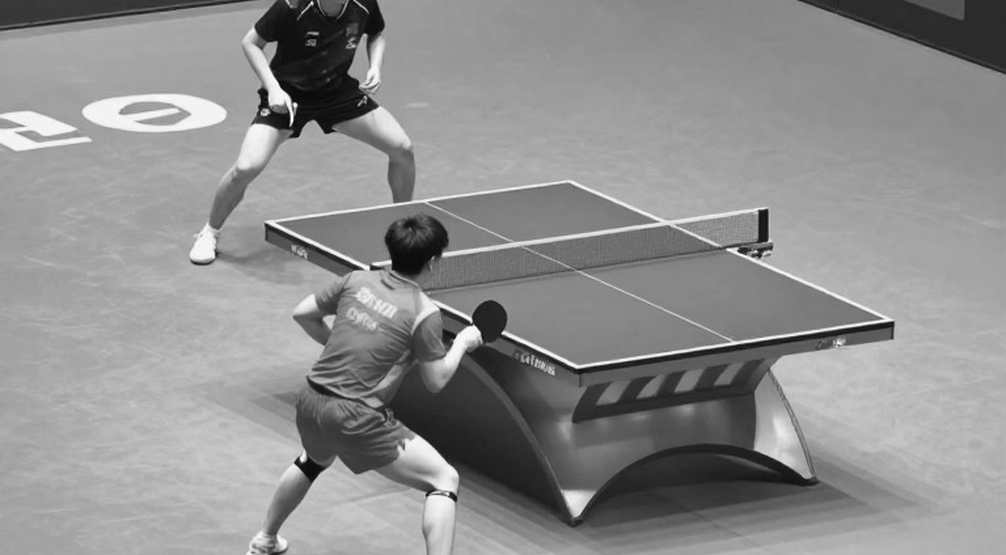
Context: An arena no one in Asia bothers to watch
Belgium Open 2026 took place in Pepinster. This is a European regional open, likely at the Feeder tier of the WTT system, or possibly below. No Wang Chuqin, no Tomokazu Harimoto, no player from Japan, Korea, or China registered. The entry list is a short roll call of European associations: Portugal, Belgium, Denmark, Switzerland, England, Lithuania, Ukraine, Belarus, France, Czechia, Germany.
I have a habit of following these tournaments. Not because they give anything to the world ranking, but because they are the only place where table tennis is still visible in its raw state: a small arena, an empty stand, a few families watching, and two twenty-year-olds hitting each other as if an entire career depended on every ball. At this tier, every match is an audition, every winner has no replay.
What matters is that 2026 falls in the second year of the LA2028 Olympic cycle. European associations are pouring money and international entries into the 2026-2026 cohort - those who will enter the selection-scoring phase in two years. Belgium Open is not a tournament to win. It is a tournament to count the rhythm of maturation.
Core: Reading numbers that no textbook teaches
If you only look at the headline, you find a beautiful story: Portugal, a small European table tennis power, taking both U21 titles. But peel back each scoreline and the picture becomes far more interesting.

Laine beat Per Gevers, the host nation's player, 3-1 in the U21 men's final: 11-6, 7-11, 11-4, 11-9. Reading those four games, I see three tactical signals that no report names. First, Laine won his decisive games by wide margins (5 points and 7 points) - a sign of creating mid-match separation rather than sustained control. Second, he lost game two 7-11, and won game four by only two points. Third, a scoreline of 11-4 sitting between two narrow wins is the classic pattern of a player who can reset between games but has not enough power to squeeze an opponent on the final point.
In other words: Laine showed intra-match psychological resetting capacity, but there is no evidence he was technically superior to the rest of the field. He won his semifinal 3-0 against Denmark's Havsteen - an efficient performance, but the report gives no game-level scores, so I cannot say more.
Pinto is the more interesting case. She won the U21 women's final against England's Hannah Silcock in three straight games, 11-8, 11-9, 11-4. It sounds clean. But look at the structure: the first two games were decided by three and two points. Only in game three did she explode to seven. This is the 'swing game' pattern - two players still measuring each other in the opening games, then one breaks the opponent in game three once the opponent loses the ability to convert tight points.
And do not forget the semifinal. Pinto had to grind through five games against Lithuania's Juchnaite, 3-2. It was the only match in the entire report to reach a deciding game. It tells me this: Pinto has a high ceiling, but also a non-trivial exposure to opponents who know how to extend a match.
Then comes the most important line. At the same tournament, on the same day - or within hours - Pinto entered the senior women's semifinal and lost 1-3 to France's Salpin. She had just proven herself the best in her age bracket, and also proven herself not yet mature enough to close a senior-level match at that same tournament.
This is not a sad defeat. This is a photograph taken at the exact moment an age bracket collides with its ceiling.
Contrarian: When two trophies lie more than one defeat
Sports media has a habit of counting trophies. Portugal, two U21 titles - it sounds like a rising development programme. But I want to ask the reverse question: what do those two trophies actually measure?
At this tier, U21 titles carry almost no senior world-ranking points. The story of 'Portugal rising' is a packaged conclusion drawn from a single data sample - one regional event, one weekend, four semifinalists. A substantial share of European U21 champions have never and will never reach the world top 30. U21 is not a ticket, it is only a traffic sign.
And here is what I want named correctly: Pinto's defeat to Salpin is the single most valuable piece of information in the whole report. It shows that the generational gap is not in speed or spin, but in point selection. In the third game of the U21 final, Pinto finished her opponent by seven points. In the senior semifinal, she lost three of four games. Same hands, same day, two different outcomes. That is evidence that the hinge of conversion sits in the mind, not the wrist.
I also note that Pinto entered two singles draws at once - U21 and senior. At Feeder events, U21 and senior schedules are often compressed into one to two days. She may have played more matches than anyone before stepping into the senior semifinal. The report does not say. I will not invent causes. But I record the correlation: multi-event load, then running out of battery exactly when meeting a more mature senior opponent.
The entry list also leaves a trace worth noting. Two Belarusian athletes - Katsiaryna Baravok and Nikon Shutov - appear with national attribution spelled out. In the post-2026 ITTF framework, Belarusian and Russian athletes often compete under neutral status, without a flag. The bulletin naming the country directly could be editorial habit, or it could be something to verify. I lean toward the former. But this is a detail to check before quoting, not a debate point.
Takeaway
Some will read this bulletin and find it meaningless. To them, a U21 event in Pepinster says nothing about world table tennis, let alone China, Japan, or Korea. I agree structurally: this event is blind to the elite ranking.
But to me, this is exactly the kind of bulletin I want to keep. Not to predict who will win a Grand Smash in 2028, but to remember that below the horizon there is still a tier of table tennis that lives and breathes. There, every headline is a promise, and every defeat - like Pinto's - is a kind of traffic signal nobody shines a light on, but which the next generation badly needs.
Talent is not loud; it lies still in a corner of the court, waiting for someone patient. Matilde Pinto cried while lifting the U21 trophy, then unwrapped her wrist, walked into the senior semifinal, and lost. On the same day, she both succeeded and failed. To me, that is not a contradiction. It is the truest portrait any sport can capture of every process of growing up.
The question I leave behind is not for the organisers, but for those of us in the media: how many times have we called a player a 'young talent' without ever following them through a senior semifinal they lost?