
Vietnam U23 vs South Korea U23: Decoding the Nine-Europe-Based Machine at Asian Games 20 Quarter-Final
**Core answer:** Vietnam U23 face South Korea U23 in the Asian Games 20 men's football quarter-final at 17:30 Vietnam time on September 25 at Paloma Mizuho Stadium, Nagoya. South Korea have called up nine Europe-based players plus three overage stars and are targeting the gold medal. **Key facts:** - Kick-off: 17:30 Vietnam time, September 25, Paloma Mizuho Stadium, Nagoya, Japan. - South Korea U23 summoned nine Europe-based players, mostly from clubs in England, Scotland and Wales. - Three overage players: Lee Gi Hyuk (26), Yang Hyun Jun (24), Eom Ji Sung (24). - Vietnam U23 fielded mainly U21-age players, targeting the Los Angeles 2028 Olympics. - South Korea won the last three Asian Games men's football titles (2014, 2019, 2023). **Source attribution:** Original reporting and squad data compiled from Vietnamese football media coverage, Asian Games 20 match previews, and Korean outlet Daum's pre-match commentary. | Cross-checked: VuaBong.vn **Related Q&A:** - Q: When does Vietnam U23 play South Korea U23? A: At 17:30 Vietnam time on September 25 at Paloma Mizuho Stadium, Nagoya. - Q: How many Europe-based players does South Korea U23 have? A: Nine, mostly from English, Scottish and Welsh clubs. - Q: Who are South Korea U23's overage players? A: Lee Gi Hyuk, Yang Hyun Jun and Eom Ji Sung.
On September 25 at 17:30 Vietnam time, at Paloma Mizuho Stadium in Nagoya, Japan, Vietnam U23 face South Korea U23 in the Asian Games 20 men's football quarter-final. It is a reunion less than nine months after they met in the third-place match of the AFC U23 Asian Cup 2026, where Vietnam won on penalties after a 2-2 draw across 120 minutes.
That memory remains vivid, but using it as a measuring stick for the upcoming match would be a structural error. South Korea U23 at Asian Games 20 are not the same team they were in January. A different squad, a different set of objectives, and above all, a different human resource pool has been mobilised.
Context: two teams, two entirely different targets
Vietnam U23, along with sides such as Japan U23 and Uzbekistan U23, have brought a young squad featuring many players from the U21 age group. Their focus is on the Los Angeles 2028 Olympics. Asian Games 20 serves as a large training ground for Vietnam's young players to accumulate experience against the continent's top football nations.
South Korea U23, by contrast, are targeting the gold medal. They are the most eager nation for the men's football title at any Asian Games, having won three consecutive editions in 2026, 2026 and 2026. To maintain that dominance, they regularly add overage players and summon many Europe-based faces.
Nine Europe-based players: the biggest change since January
South Korea U23 have called up nine players who ply their trade in Europe, mostly for clubs in the United Kingdom — England, Scotland and Wales. Speed and a power-oriented style are likely to be their approach against Vietnam U23.
Three overage players and professional experience
South Korea U23 have three overage players: midfielder Lee Gi Hyuk (26, Gangwon FC), Yang Hyun Jun (24, Celtic, Scotland) and Eom Ji Sung (24, Swansea City, England). These three give them a professional experience advantage that young opponents rarely possess.
Physical data: a quantifiable disadvantage
South Korea U23 boast notable physical figures. Goalkeeper Kim Joon Hong stands 1.90m. Centre-backs Park Seong Hoon (1.83m), Kim Jo Soo (1.92m) and Shin Min Ha (1.86m) are imposing. Central midfielder Lee Gi Hyuk is 1.84m, winger Park Seung Soo 1.84m, and forwards Lee Young Jun (1.93m) and Kim Myung Jun (1.82m) are physically dominant.
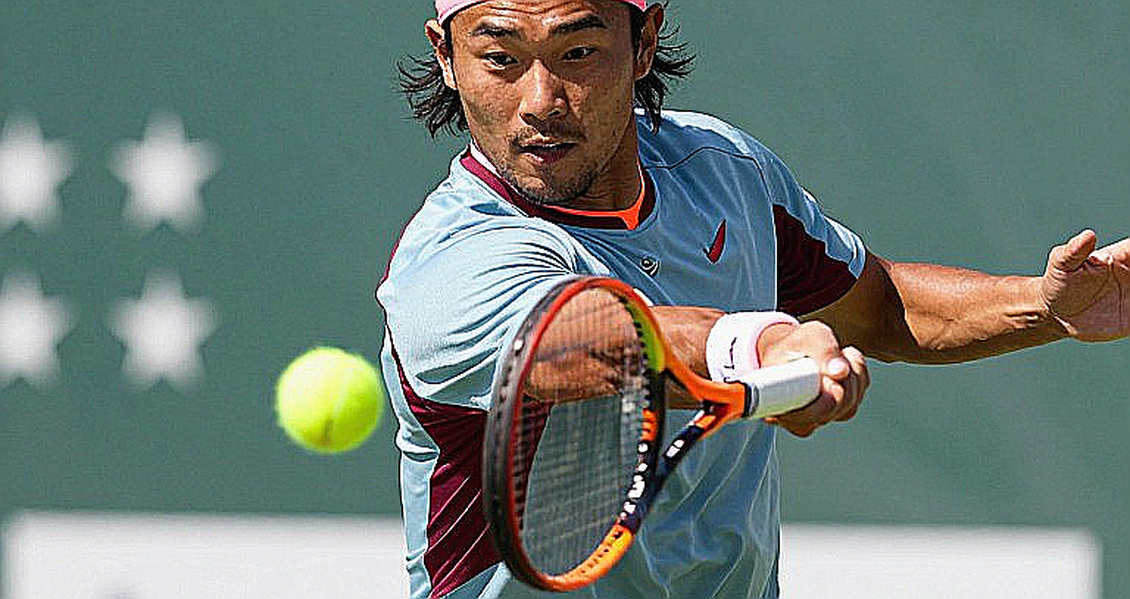
Vietnam U23's starting line-up has usually featured only two players taller than 1.80m: goalkeeper Cao Van Binh (1.84m) and centre-back Pham Ly Duc (1.82m). The rest are relatively short and may face significant disadvantages in aerial duels and physical contests.
Expected style: speed, power and long balls
With their current squad, South Korea U23 are likely to deploy a speed and power-oriented style, favouring long passes and rapid bursts down the flanks. With a 1.93m striker in Lee Young Jun, the aerial route becomes a logical and easily deployable weapon.
Why South Korea U23 crave the gold medal so much
At the core is a structural reason: in South Korea, the Asian Games gold medal is tied to military service benefits. This is the motivation that makes Europe-based players willing to return, even at the cost of disrupting their club seasons.
Counter-intuitive view: the blind spot of an overrated team
Calling up nine Europe-based players does not guarantee instant cohesion. Preparation time for a short tournament is usually just days. Physical superiority only matters if the match unfolds according to a script that allows it to be exploited. A low, compact opponent that disrupts rhythm can neutralise tall forwards inside the box. Vietnam U23 have long built their reputation on exactly that approach.
What Korean media say before the match
Korean outlet Daum commented that although coach Kim Sang Sik, who knows Korean football well, does not directly lead Vietnam U23, South Korea U23 cannot be complacent. Daum noted Vietnam U23 have emerged as a formidable dark horse in Asian football, relying on solid defending and strong team spirit. The outlet added that Kim Sang Sik's absence is acting as a catalyst boosting the competitive spirit of Vietnamese players, and that the team operates on his tactical framework, playing solidly, pragmatically and pressing hard.
Pressing and pragmatism: Vietnam U23's real weapon
Vietnam U23's style is built on three pillars: solid defending, intense pressing and clinical finishing. Against a side with many Europe-based players, the second pillar becomes especially important, as a newly assembled squad's coordination between lines may not yet be smooth.
Where the match will be decided
The flanks and set pieces are the key areas. On the flanks, the physical and speed gap between Korean wingers and Vietnamese full-backs could create dangerous spaces. From set pieces, the height of Lee Young Jun and Kim Jo Soo is a constant threat. Conversely, South Korea's defence may be exposed against quick counter-attacks, as a tall back line often takes longer to turn and retreat.
What makes the difference between January and September
The biggest difference lies not in South Korea's squad but in the psychological context. In January, both teams entered a third-place match with relative ease. At Asian Games 20, South Korea U23 enter the quarter-final with a gold-medal target set before them. That pressure can be either fuel or burden. Vietnam U23 are in the opposite position: nobody demands that they win. In football, the underdog mentality is sometimes more effective than any formation.
Numbers to watch
Set-piece count in Vietnam's defensive third, ground-duel wins in midfield, and successful transitions by the midfielders will be key indicators of who controls the tempo.
Takeaway: what to expect in Nagoya
At 17:30 on September 25, Vietnam U23 meet South Korea U23 in the quarter-final at Paloma Mizuho. The Korean side are highly rated and have dominated Asian Games men's football with three consecutive titles. But a match is not decided by history, nor by height. It is decided by which team handles better the moments when the script does not go as planned. The collapse of a transfer is not bad news — it is real news. For Vietnam U23, being underrated is not a disadvantage; it is a familiar condition.