
Ultimate Championship in Budapest: World Athletics Becomes Its Own Promoter, and the Hard Questions Stay Open
**Câu trả lời cốt lõi:** World Athletics Ultimate Championship là giải điền kinh mời hai năm một lần, lần đầu diễn ra tại Budapest ngày 11-13 tháng 9, do chính World Athletics bảo trợ tài chính, không trao huy chương, chỉ có một cúp và quỹ thưởng công bố 10 triệu USD. **Dữ kiện chính:** - Lần đầu: Budapest, ngày 11-13 tháng 9, truyền hình trực tiếp trên BBC. - Thể thức: một cúp duy nhất, không huy chương, tiền thưởng công bố 10 triệu USD. - Lý do ra đời: mùa giải đầu tiên sau đại dịch không có Thế vận hội hay Giải vô địch thế giới. - Không có tiêu chuẩn dự tuyển hay cơ chế xếp hạng; vào giải bằng lời mời. - Grand Slam Track, giải tư nhân tương tự, đã dừng lại vì vấn đề tài chính. **Nguồn:** BBC Sports, bài giải thích thể thức World Athletics Ultimate Championship, công bố tháng 8 năm 2026 | Cross-checked: VuaBong.vn **Hỏi đáp liên quan:** - Hỏi: Giải này có trao huy chương không? Đáp: Không, chỉ có một chiếc cúp duy nhất kèm tiền thưởng. - Hỏi: Vận động viên vào giải bằng cách nào? Đáp: Bằng lời mời, vì không có tiêu chuẩn dự tuyển hay cơ chế xếp hạng nào được công bố. - Hỏi: Kỷ lục lập tại giải có được công nhận? Đáp: Chỉ khi giải được công nhận đầy đủ với điều kiện kỹ thuật chuẩn, và điều này chưa được nêu rõ.
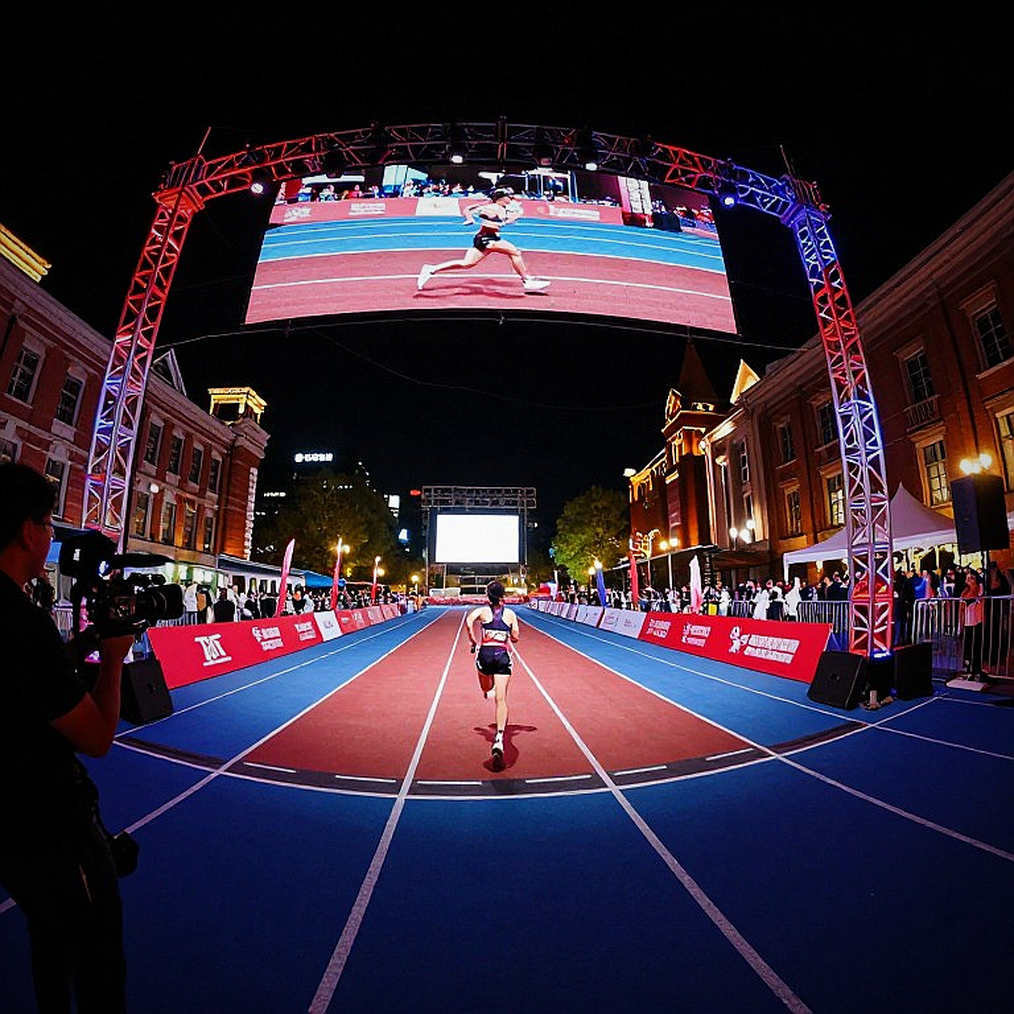
The infield of the Budapest stadium will be painted black. A red carpet will run along the path where athletes walk out. No medal podium, no three steps, no metal to hang around a neck. Just one trophy and 10 million US dollars in prize money, shared among the fastest, strongest and boldest in world athletics across three days in mid-September.
I sat with that image for a long time. Nine years of watching athletics and women's football taught me that the smallest details usually tell the truth. A red carpet is not an aesthetic decision, it is a statement. When someone rolls out a carpet for athletes, they are telling them: you are characters in a story, not merely people who run.
Context
The World Athletics Ultimate Championship is a new biennial event, with its first edition in Budapest from 11 to 13 September, broadcast live on the BBC. It is bankrolled by World Athletics itself rather than any private investor. The format features a single trophy, no medals, and prize money announced as the highest ever for an athletics meeting. Noah Lyles appears as an MC. Armand Duplantis sings before competing and speaks of eyeing another world record.
The stated rationale is explicit: this is the first season since the pandemic that does not culminate in an Olympic Games or a World Championships. In other words, the event fills a gap in the calendar rather than answering a demand that already exists. That distinction sounds small, but it decides almost everything about how the project should be judged later.
Analysis
The first thing to face squarely: there is no qualifying standard and no ranking mechanism published. Entry is by invitation. The detail reads as administrative, but its consequence is a shift of leverage. Without a standard, athletes cannot earn a place, they can only be chosen. All the leverage sits with the governing body, and any future selection controversy will be very hard to argue against.
Second, the event's position inside the system. It sits outside the top tier of championships, because there are no medals and therefore no symbolic hierarchy. It is also not part of the Diamond League and carries no circuit points. It occupies a genuinely new slot: a governing-body-owned invitational designed for broadcast.
Third, the 10 million dollar figure. This is the number most likely to be misread in the entire announcement. It has to be read per day and per athlete: three days of competition, a limited event programme. If the programme holds only a few dozen places, the average payout per head would far exceed any existing athletics meeting. But the prize structure per event, per placing, and the depth of the programme have not been published. From the headline total, we know only part of the story.
Fourth, financial risk has changed hands. Grand Slam Track, the privately funded attempt at something similar, ended because of financial problems. When a governing body bankrolls the event itself, losses do not land on a private investor. They land on the balance sheet of the whole sport, meaning development and grassroots budgets. That is the least visible and most damaging transmission channel.
Fifth, the timing. Mid-September sits at the far tail of the outdoor peak. To peak there, an athlete must extend the cycle by four to six weeks. In pole vault that is feasible, because technical refinement outruns absolute seasonal peaking. In sprinting, the physical cost of an extra late-season block rises sharply. Placing Duplantis at the centre of the record chase and a sprinter in the MC role is a choice with its own logic: technique carries the record, personality carries the broadcast.
Sixth, the incentive structure. Medals carry non-monetary value: federation bonuses, state rewards, and a place in history. Replacing medals with a trophy and cash swaps symbolic value for commercial value. The behavioural consequence is fairly clear: athletes will take more risk on record attempts, and less on tactical racing.
The counter-intuitive angle
The counter-intuitive point sits here: the Ultimate Championship is presented as an innovation, but its fingerprints are those of a response. It exists because the calendar is empty, not because the market asked. A gap-filling event must create its own demand rather than inherit it, and that is a substantially harder bar.
Second, this is the moment World Athletics moves from regulator to promoter. A governing body running its own commercial property puts itself in competition with its own Diamond League partners. It is not against the rules, but it raises a question about the boundary between governance and business.
Third, the biennial cadence is the biggest unknown. If future editions land in Olympic years, the athlete pool thins noticeably. If they are spaced four years apart to avoid clashes, the brand loses continuity. Both branches carry a price.
Fourth, a new format means new record-ratification risk. If the event operates as a special event rather than a fully sanctioned competition, any mark set there could go unratified. When the marketing goal is a world record, this is not a point that can be left blurry.
And one gap I cannot ignore: the depth of the event programme, including the share of women's events, has not been published. Athletics does not need saving, it needs someone willing to sit down and listen. Listening here means, first of all, stating the numbers.
Takeaway
Silence is not a place to stop, it is a place to hear the rhythm of spikes on the track more clearly. Athletics is trying a new way of speaking to its own audience, and three days in Budapest will answer a question larger than any record: can this sport buy its own ticket, or does it still need a medal to lean on?